Bangladesh is projected to overtake India in per capita gross domestic product (GDP) in 2026, but the narrow lead offers only a partial picture of the two neighbors economic realities.
According to the International Monetary Fund’s October 2026 World Economic Outlook, Bangladesh’s per capita GDP is expected to reach $2,886, compared with India’s $2,749. Yet India’s economy, valued at $4.15 trillion, is nearly eight times larger than Bangladesh’s projected $506.4 billion economy.
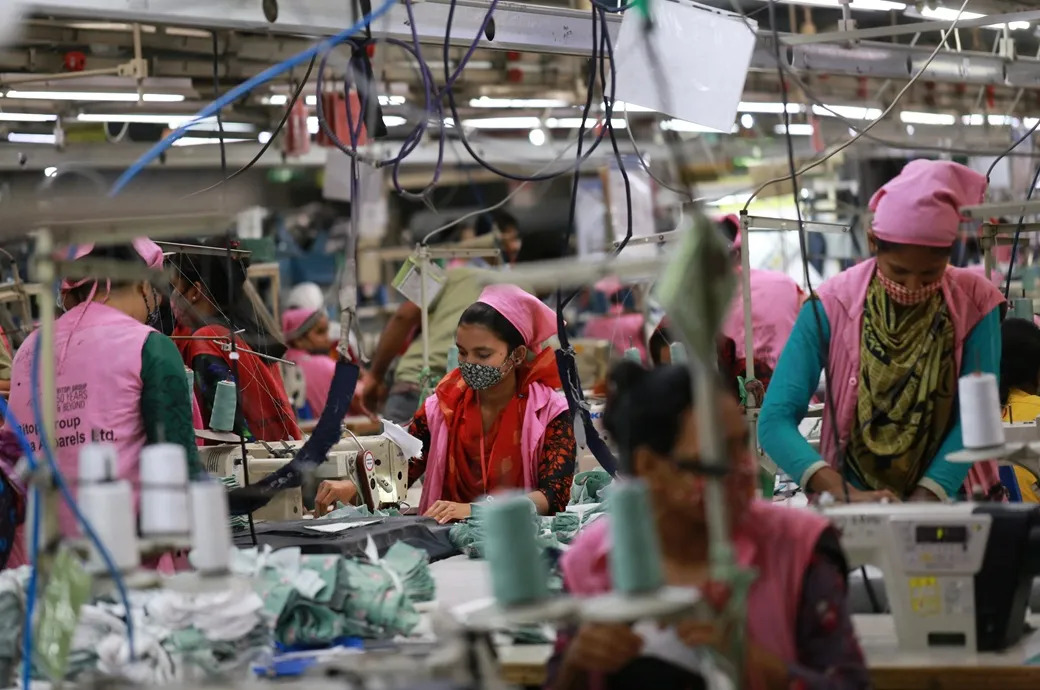
The figures reflect Bangladesh’s progress in export-oriented manufacturing, particularly its ready-made garment industry, alongside remittances from millions of overseas workers. Women’s growing participation in the workforce has also contributed to the country’s economic transformation over the past two decades.
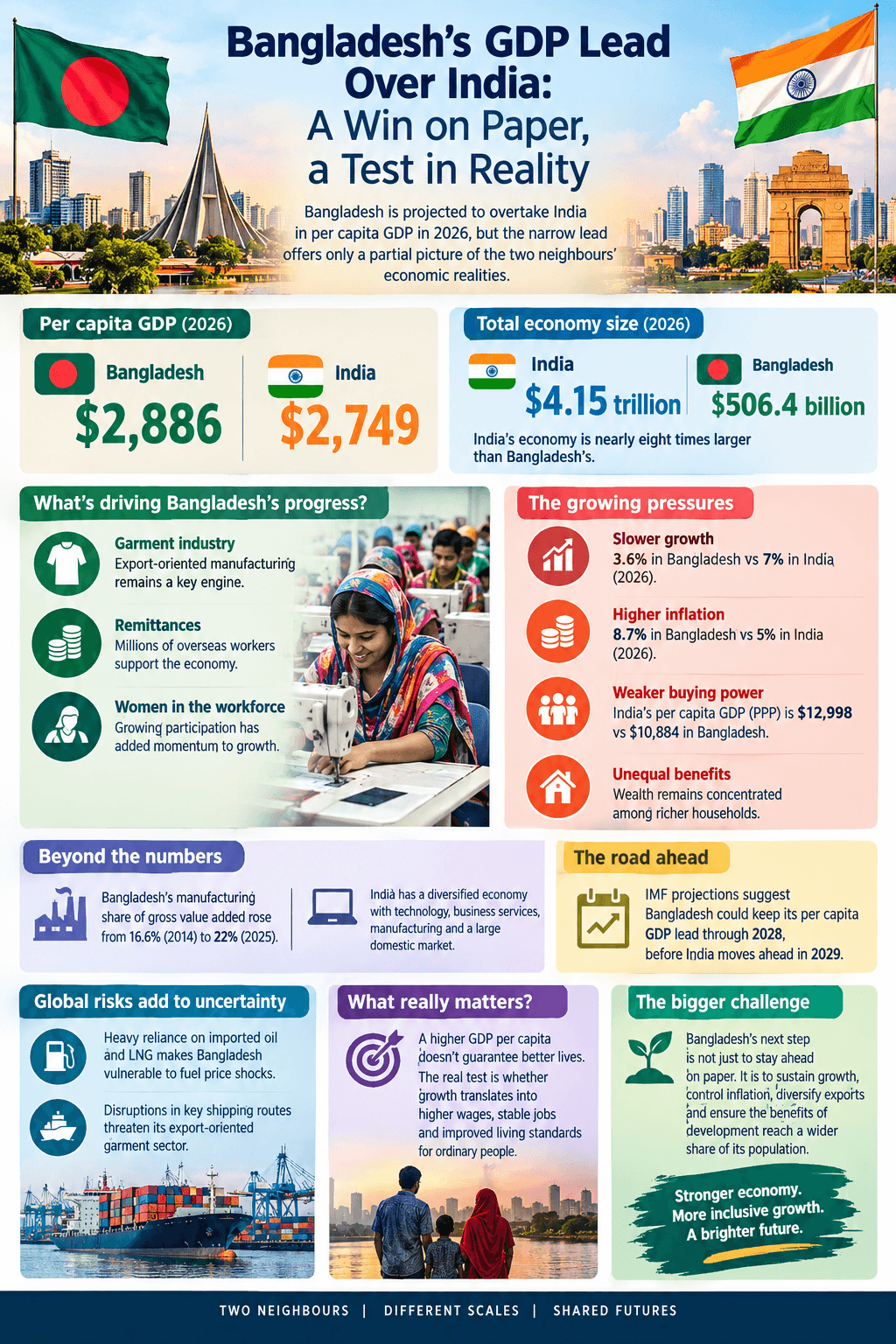
However, the headline numbers conceal mounting pressures. Bangladesh is projected to grow by 3.6 percent in 2026, well below India’s expected 7 percent expansion. Inflation in Bangladesh is also forecast at 8.7 percent, compared with 5 percent in India, putting greater pressure on household budgets and purchasing power.
According to Al Jazeera, Bangladesh’s manufacturing contribution to gross value added rose from 16.6 percent in 2014 to 22 percent in 2025. India, meanwhile, has a more diversified economy, supported by technology, business services, manufacturing and a vast domestic market.
The comparison also changes when purchasing power is considered. India’s per capita GDP at purchasing power parity is projected at $12,998, against Bangladesh’s $10,884, indicating that income goes further on average in India after accounting for differences in local prices.
Bangladesh’s economic outlook faces further uncertainty from global energy market disruptions. Heavy dependence on imported oil and liquefied natural gas leaves the country vulnerable to rising fuel costs, while instability along major shipping routes threatens its export-oriented garment sector.
The IMF projections suggest Bangladesh could retain its per capita GDP lead through 2028, before India moves ahead in 2029. But the more important question is whether Bangladesh can translate economic growth into better wages, stable employment and improved living standards.
GDP per capita is an average, not a measure of what every citizen earns. With wealth concentrated among richer households and living costs rising, a higher national figure does not necessarily mean ordinary Bangladeshis are better off.
Bangladesh’s next economic challenge, therefore, is not simply to remain ahead of India on paper. It is to sustain growth, control inflation, diversify exports and ensure that the benefits of development reach a wider share of its population.
BOB Post