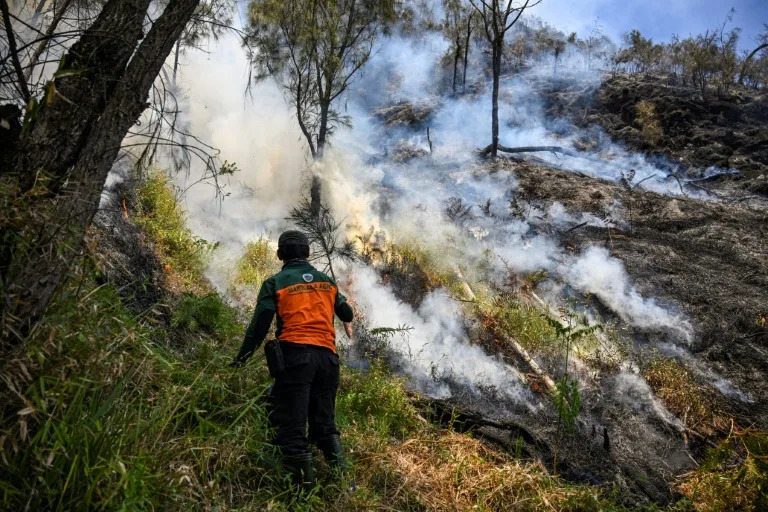
El Niño is a natural climate phenomenon occurring every few years, where warmer-than-average sea surface temperatures in the eastern Pacific Ocean disrupt the typical pattern of trade winds and ocean currents. This disruption leads to a warming of the ocean, releasing extra heat into the atmosphere and impacting global weather patterns. Picture the Pacific Ocean as a conveyor belt; El Niño causes warm water to accumulate in the east, altering precipitation patterns worldwide. While it can bring drought to regions like Australia and Indonesia, it often increases rainfall in areas such as California and the southern United States. Although El Niño is temporary, lasting nine to 12 months, its effects are exacerbated by the long-term warming trend attributed to human activities. Understanding El Niño is crucial for predicting and preparing for extreme weather events amid the complex dynamics of climate change.
The United Nations is issuing a warning about the potential for 2024 to surpass the record-shattering temperatures experienced in 2023, attributing the looming heatwave to the El Niño weather phenomenon. The World Meteorological Organization (WMO) reported that monthly temperature records were consistently broken from June to December 2023, and this pattern is anticipated to continue due to the influence of El Niño. The UN's WMO further stressed the need for urgent and drastic cuts in emissions to address the escalating impact of climate change.
Experts from the US National Oceanic and Atmospheric Administration (NOAA) echoed concerns, predicting a one in three chance that 2024 could be hotter than 2023. There is a 99 percent certainty, according to NOAA, that 2024 will rank among the five warmest years ever recorded. NASA climatologist Gavin Schmidt suggested a 50-50 chance, emphasizing "mysterious" changes in Earth's climate systems that necessitate more data for confirmation or refutation.
The WMO declared 2023 as the warmest year on record, with a global average temperature 1.45 degrees Celsius above pre-industrial levels. The 2015 Paris Climate Agreement aimed to restrict global warming to below two degrees Celsius, with an aspirational target of 1.5 degrees Celsius. The WMO's secretary-general, Celeste Saulo, warned that the El Niño phenomenon, which emerged in mid-2023, is likely to exacerbate temperature increases in 2024.
Climate scientists emphasize the urgency of the situation, characterizing climate change as humanity's "biggest challenge." UN Secretary-General Antonio Guterres cautioned that the actions of humanity are "scorching the Earth," and the extreme conditions experienced in 2023 are a mere preview of a potentially catastrophic future. The WMO report highlighted the continuous escalation of climate change due to human activities, emphasizing the need for global cooperation to address this pressing issue.
As the world braces for the impact of a potentially record-breaking hot year, experts urge proactive measures to mitigate the consequences. Recommendations include strengthening early warning systems, investing in climate-resilient infrastructure, and accelerating the transition to renewable energy. The combination of El Niño and ongoing climate change underscores the critical need for international cooperation and coordinated efforts to protect vulnerable communities from the intensifying impacts of a warming planet.
BOB Post