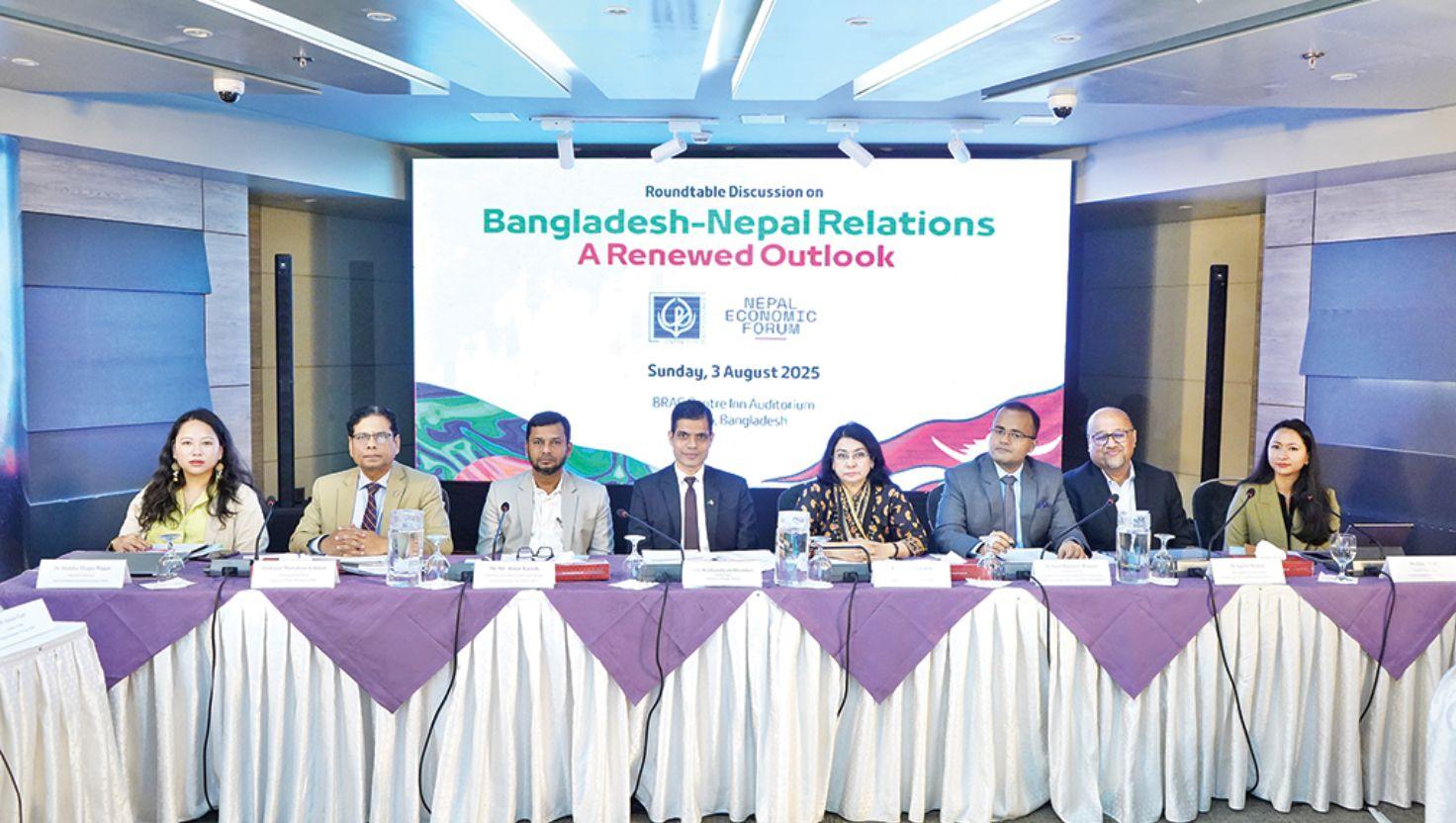
Bangladesh and Nepal are set to sign a Preferential Trade Agreement (PTA) aimed at enhancing bilateral trade and addressing the growing trade imbalance between the two nations, Nepal’s Ambassador to Dhaka Ghanshyam Bhandari announced on Monday.
The envoy made the statement during a roundtable discussion titled “Bangladesh-Nepal Relations: A Renewed Outlook,” organized by the Centre for Policy Dialogue (CPD). He stated that talks between the two countries are progressing, with a formal agreement expected soon.
“There is a huge potential for expanding trade between our two nations. Bangladeshi companies such as Pran, Akij, and several pharmaceutical firms are already operating in Nepal,” said Ambassador Bhandari.
The ambassador also emphasized the prospects for energy cooperation. “Currently, 40 MW of electricity is scheduled to come from Nepal to Bangladesh. But in the future, this could rise to as much as 9,000 MW,” he noted.
The discussion also featured a keynote presentation by Aman Pant, Senior Fellow at Nepal Economic Forum (NEF), and Afrin Mahbub, Program Associate at CPD, highlighting trade trends over the decades.

According to the presentation, Bangladesh’s exports to Nepal, once minimal during the 1980s and early 2000s, peaked at over $100 million in 2021. However, they plummeted to just $40 million in 2024. Similarly, Nepal’s exports to Bangladesh reached $66.5 million in 2008 but have since declined to about $6 million in 2024.
Speakers emphasized that both countries are approaching a critical juncture as they prepare to graduate from Least Developed Country (LDC) status by 2026, which could affect access to global trade benefits such as duty-free market entry.
“In the post-LDC era, the quota-free and duty-free benefits will decline. That’s why strengthening bilateral and regional trade is essential,” said CPD Executive Director Dr. Fahmida Khatun in her concluding remarks.
The 2018 energy cooperation agreement between Nepal and Bangladesh was also spotlighted, under which Bangladesh is expected to import up to 9,000 MW of electricity from Nepal by 2040. The first phase, involving 40 MW, is set to begin in June 2025.
CPD Honorary Fellow Professor Mustafizur Rahman stressed the need for regional coordination. “To increase electricity imports from Nepal, we must rely on India’s grid. Transit through India is vital for expanding both electricity and trade cooperation,” he said.
He added that in light of global tariff hikes, Bangladesh must diversify its export markets by focusing more on neighboring countries.
BOB Post