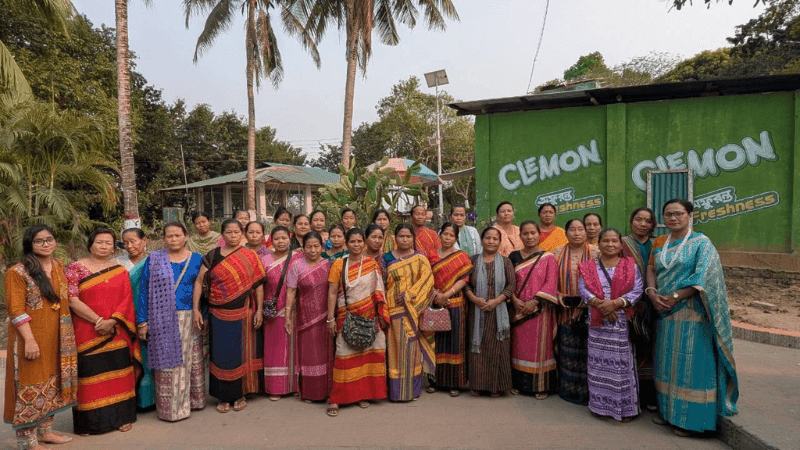
For decades, leadership in Bangladesh’s Chittagong Hill Tracts (CHT) remained firmly in male hands. In the region’s misty hills and forested valleys, traditional authority was shaped by custom and custom rarely made space for women. That reality is now beginning to change.
Women are increasingly taking on leadership roles within the CHT’s local governance system, marking a quiet but significant shift in one of the country’s most tradition-bound regions.
In 2013, only 11 women served as headpersons across the Chakma, Mong and Bomang circles. Today, that number has risen to 20. The change is even more striking at the grassroots level: the number of women karbaris, or village administrators, has jumped from just five a decade ago to around 650.
The figures were shared at a national consultation held recently in Rangamati, where community leaders, policymakers and rights activists gathered to discuss ways to make traditional institutions in the CHT more inclusive and gender-sensitive. The event was organised by Bangladesh Nari Progati Sangha (BNPS) in collaboration with local organisations Progressive, Khagrapur Mahila Kalyan Samiti and Ononna Kalyan Sangathan.
Chakma Circle Chief Debashish Roy, one of the most influential traditional leaders in the region, said the change reflects a necessary evolution in customary governance. “Ensuring women’s rights and leadership is not just about equality,” he said. “It is essential for the progress of our communities. Traditional leadership must now take responsibility for this transition.”
Home to 11 tribal communities, the Chittagong Hill Tracts has long been shaped by struggles over land, autonomy and governance. Years of conflict and marginalization have left deep social and political scars. Against that backdrop, the growing presence of women in leadership roles signals a broader cultural shift.
Educationist and CHT Women Activist Forum adviser Nirupa Dewan said progress will depend on more than policy changes alone. “These developments show the resilience of tribal women,” she said. “But social attitudes and institutions need to change faster to support them.”
The dialogue was moderated by Tuku Talukder, president of the CHT Women Activist Forum, and brought together traditional chiefs, gender-rights advocates and government representatives. Participants broadly agreed that greater inclusion of women in local governance could strengthen peacebuilding and social cohesion in the hills.
In his keynote presentation, BNPS coordinator Sanjoy Majumder highlighted how women’s involvement in local justice mechanisms and administrative roles has already improved dispute resolution and community welfare in several areas.
Closing the consultation, Sucharita Chakma, executive director of Progressive, described the moment as both symbolic and practical. “Each woman headperson represents a shift in how power is understood in the hills,” she said. “The future stability of the Chittagong Hill Tracts depends on inclusive governance and women are central to that future.”
From remote hill villages in Rangamati to the valleys of Bandarban, the rise of women leaders is gradually reshaping long-held traditions, offering a reminder that cultural continuity and social change do not have to stand in opposition.
BOB Post