Australia has committed US$11.4 million (AUD16 million) in multi-year funding to UNICEF to help sustain life-saving humanitarian assistance for Rohingya refugees and vulnerable host communities in Bangladesh, as growing global funding shortages threaten essential services in the camps.
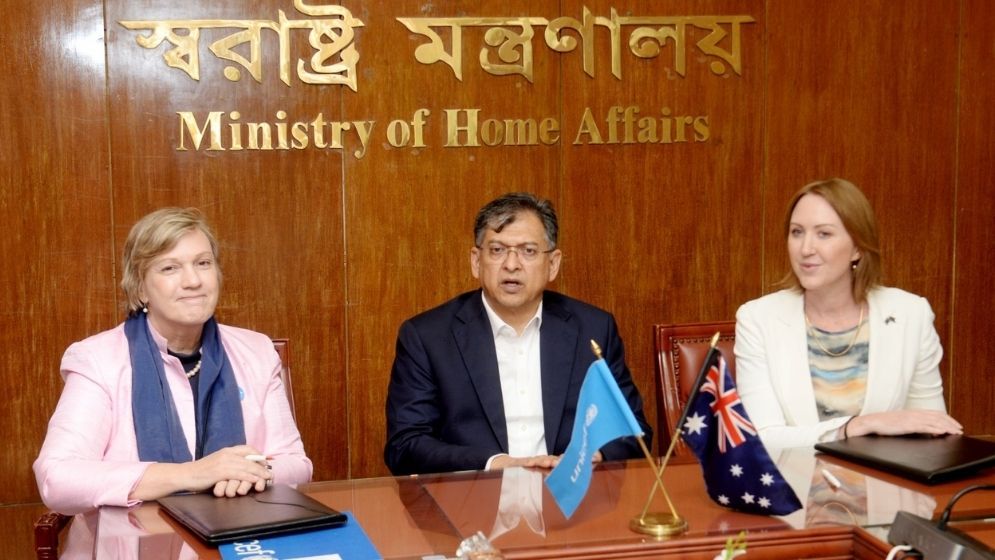
The funding package, covering the 2026–2028 period, was announced during a meeting between Home Minister Salahuddin Ahmed and Australian High Commissioner to Bangladesh Susan Ryle at the Secretariat on Wednesday, according to an official press release.
Expressing appreciation for Australia's continued humanitarian support, the home minister said Bangladesh hopes Australia and the broader international community will maintain assistance until the Rohingya people can return to Myanmar through a voluntary, safe, dignified and sustainable repatriation process.
The new contribution, which took effect in April this year, will enable UNICEF to continue providing critical health care, nutrition, education, water, sanitation and child protection services to Rohingya children and families living in Cox's Bazar and Bhasan Char, where humanitarian needs remain severe despite declining international funding.
According to the Daily Sun, humanitarian agencies operating in the Rohingya camps have repeatedly warned that shrinking donor support is putting essential services at risk, increasing concerns over malnutrition, limited access to education and deteriorating living conditions for nearly one million displaced Rohingyas sheltering in Bangladesh.
"Australia remains committed to supporting Rohingya and host communities in Bangladesh as the crisis continues," Australian High Commissioner Susan Ryle said, reaffirming Canberra's long-standing commitment to humanitarian assistance.
UNICEF Representative in Bangladesh Rana Flowers stressed that Rohingya children remain among the world's most vulnerable populations and require sustained international support to safeguard their future.
"Without sustained access to essential services, there is a real risk of a lost generation and a lost culture," she said.
The Rohingya crisis, now entering its ninth year since the mass displacement from Myanmar in 2017, continues to place immense pressure on Bangladesh, particularly in Cox's Bazar, home to the world's largest refugee settlement. The government has consistently called on the international community to increase humanitarian assistance while intensifying diplomatic efforts to create conditions conducive to the refugees' safe return to their homeland.
BOB Post