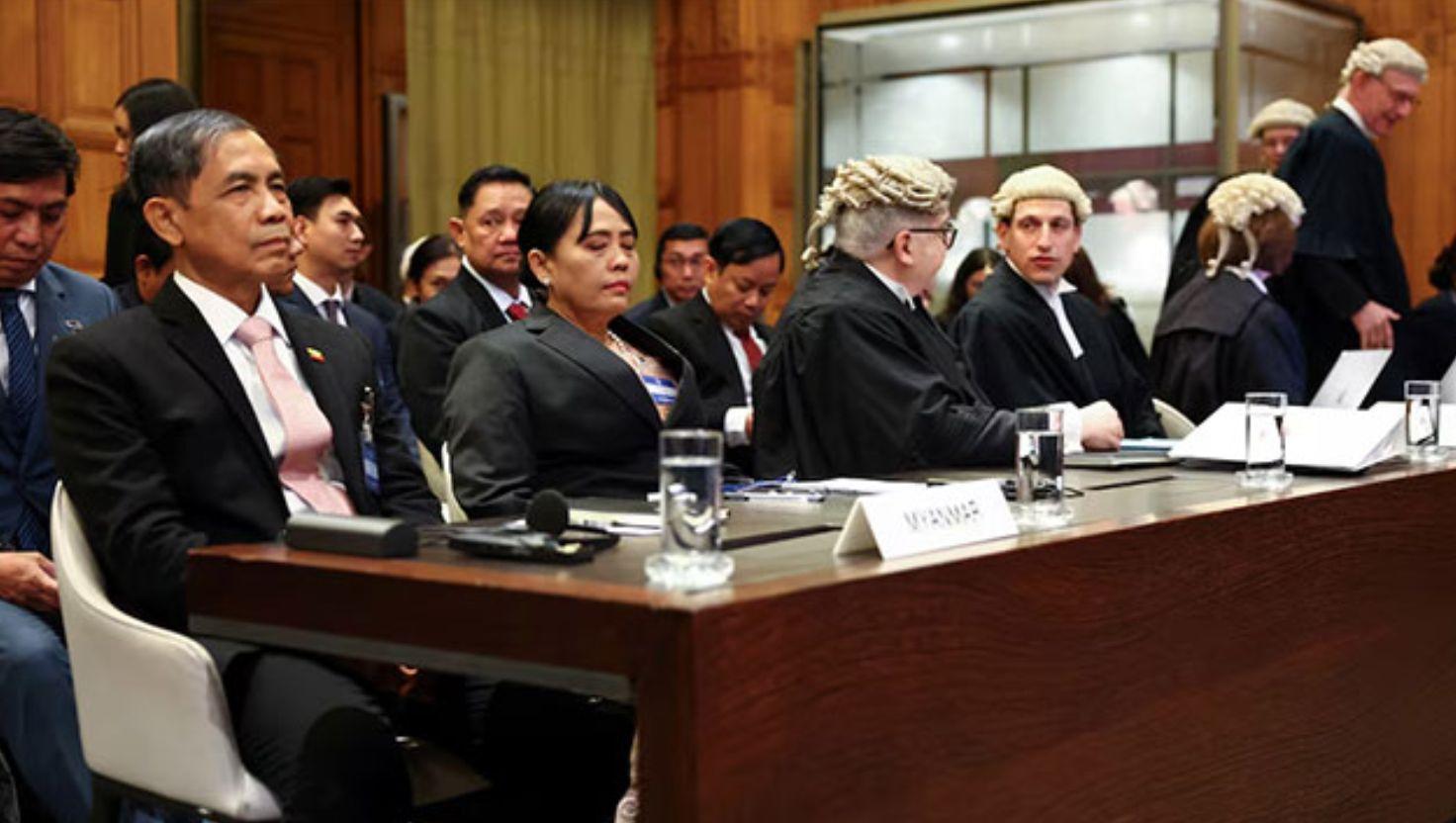
Hearings at the International Court of Justice (ICJ) in The Hague have revealed fresh evidence of hate speech and military incitement to violence against Myanmar’s Rohingya Muslim minority, as Gambia continues its genocide case against the Southeast Asian nation.
Presenting arguments before the UN’s top court on Thursday(January 15), Gambia’s legal counsel Jessica Jones detailed how senior Myanmar military officials allegedly used dehumanizing rhetoric, calling Rohingya people Muslim dogs and urging soldiers and civilians to make them extinct. The remarks, she argued, reflected a systematic campaign to erase an entire ethnic group in violation of the 1948 Genocide Convention.
Citing a 2017 Facebook video, Jones described how a Myanmar soldier encouraged villagers to attack Rohingya civilians, saying, We have guns, we have bullets. Carry whatever you can and bravely face these animals. The Gambia’s legal team said such statements exemplified the genocidal intent that fueled mass atrocities, including the killing of an estimated 10,000 civilians, widespread sexual violence, and the burning of hundreds of villages in Rakhine State between 2016 and 2018.
According to UN News, the Rohingya crisis forced over 700,000 people to flee into Bangladesh, creating one of the world’s largest refugee camps. Then-UN human rights chief Zeid Ra’ad al-Hussein had described the Myanmar military’s campaign as a textbook example of ethnic cleansing, while multiple UN investigations since have gathered evidence pointing to crimes of genocide and crimes against humanity.
Gambia, a Muslim-majority nation in West Africa, filed the case in 2019 seeking to hold Myanmar accountable and ensure reparations for victims. The ICJ in 2020 ordered provisional measures instructing Myanmar to prevent acts of genocide and preserve evidence of atrocities.
The current hearings, running until 29 January, are expected to include testimonies from three Rohingya survivors who witnessed the killings of their family members. Legal experts say the proceedings mark a landmark moment in international justice the first genocide case brought by a country not directly affected by the alleged crimes.
If proven, the court’s ruling could set a powerful precedent in holding states responsible for systematic ethnic persecution, reaffirming global accountability under international law.
BOB Post