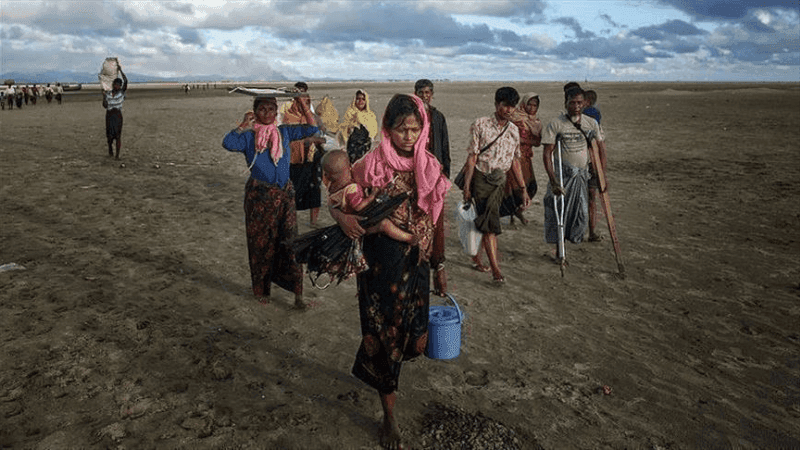
In a deeply disturbing revelation, a fresh writ petition has been filed before the Supreme Court of India alleging that 43 Rohingya refugees—including women, children, and elderly persons—were forcibly deported by Indian authorities and abandoned in international waters near Myanmar.
The petition, filed by two Rohingya refugees residing in Delhi, claims that the detainees held valid United Nations High Commissioner for Refugees (UNHCR) identity cards, yet were rounded up by police under the pretext of biometric data collection. According to the petitioners, they were unlawfully detained in various Delhi police stations before being transported by air to Port Blair and subsequently forced aboard naval vessels. Onboard, their hands were allegedly tied and their eyes blindfolded before being left adrift at sea—some forced to swim ashore to an unknown part of the Myanmar coast.

This latest legal challenge comes even as the Supreme Court, under a bench comprising Justice Surya Kant, Justice Dipankar Datta, and Justice N. Kotiswar Singh, is actively hearing a case concerning the treatment and deportation of Rohingya refugees in India. When the matter was last heard on May 8, the court was informed that this very group had already been deported—just hours after the matter was officially listed. Shockingly, the court opted not to issue any interim relief and scheduled the case for hearing on July 31.
"The actions by the Indian state are in clear violation of international humanitarian law and India's obligations under the principle of non-refoulement," said a lawyer close to the petitioners. "This is not just illegal—it is inhuman."
According to the petition, families were torn apart in the process. Mothers were separated from their children, and several elderly individuals—some requiring medical assistance—were left to fend for themselves in treacherous maritime conditions.
The petitioners have urged the Supreme Court to immediately intervene and direct the Government of India to cease arrests of Rohingya refugees holding UNHCR documentation. They are also seeking ₹50 lakh in compensation for each affected refugee and the reinstatement of residency permits in line with domestic refugee protocols.

Human rights advocates have denounced the incident as part of a broader pattern of hostility and indifference toward one of the world’s most persecuted communities. With aid cuts looming in Bangladesh refugee camps and shrinking protections elsewhere, Rohingya across South Asia are increasingly left without refuge.
"This is a humanitarian crisis, not a criminal issue," said one refugee rights activist. "The Indian government must be held accountable for its blatant disregard for human rights."
As India prepares to defend its actions before the nation's highest court, global eyes will be watching. For the 43 deported souls—and the thousands still seeking dignity and safety on Indian soil—the fight for justice is far from over.
Bob post