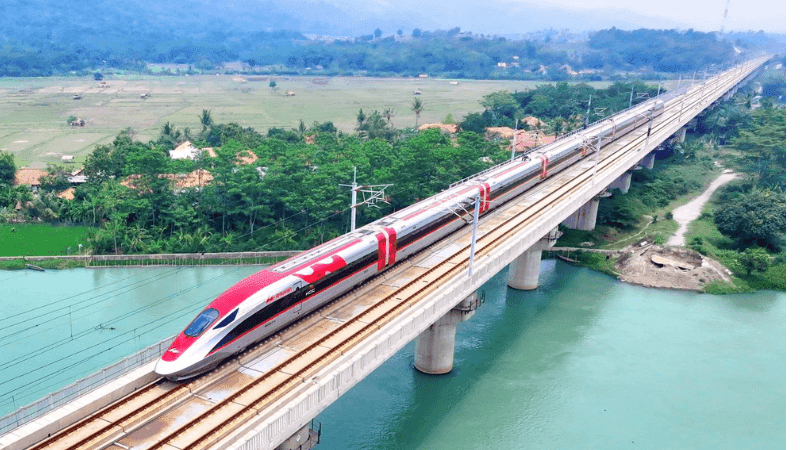
The Indonesian government is exploring strategies to manage the multi-billion-dollar debt from its Jakarta-Bandung high-speed rail project without resorting to state funds, according to officials. The announcement comes as the administration grapples with the financial obligations of the $7.3 billion project, which was largely financed by Chinese loans.
State Secretary Prasetyo Hadi confirmed that while the government is actively seeking a solution to the financial burden, there are no plans to use the national budget for the repayment. "The government has discussed finding a scheme to find a solution to get out of the financial burden," Prasetyo stated on Sunday(October 12), following a cabinet meeting. He emphasized the success of the train, known as "Whoosh," which has served 6 million passengers in 2024.

The responsibility for settling the debt has been directed towards Indonesia's sovereign wealth fund, Danantara. Finance Minister Purbaya Yudhi Sadewa asserted that Danantara, which oversees all state-run enterprises, is capable of managing the debt using its own revenue. "The issue can be resolved through Danantara’s dividends without burdening the state fiscally," Purbaya said, noting the fund generates approximately Rp 80 trillion ($4.8 billion) in annual dividends.
Danantara's Chief Operating Officer, Dony Oskaria, confirmed that the fund is in negotiations with the Chinese government. Among the options being considered is a proposal for the Indonesian government to acquire parts of the train's infrastructure, potentially converting it into a public service entity.
The project's financing was primarily covered by a loan from the China Development Bank, which financed 75% of the total cost at a 2% annual interest rate. However, the project incurred a $1.2 billion budget overrun due to pandemic-related delays and land acquisition challenges. This additional debt carries a higher interest rate of 3.4% from Beijing.
The rail is operated by KCIC, a joint venture between a consortium of Indonesian state-owned enterprises, which holds a 60% stake, and China's Beijing Yawan HSR, which holds the remaining 40%.
Despite the financial challenges, the government remains committed to its long-term vision for the high-speed rail network. Prasetyo confirmed plans to extend the line from Bandung to Surabaya in East Java, although financing details for the expansion have not been disclosed.
Information for this report was sourced from the Jakarta Globe.
BOB Post