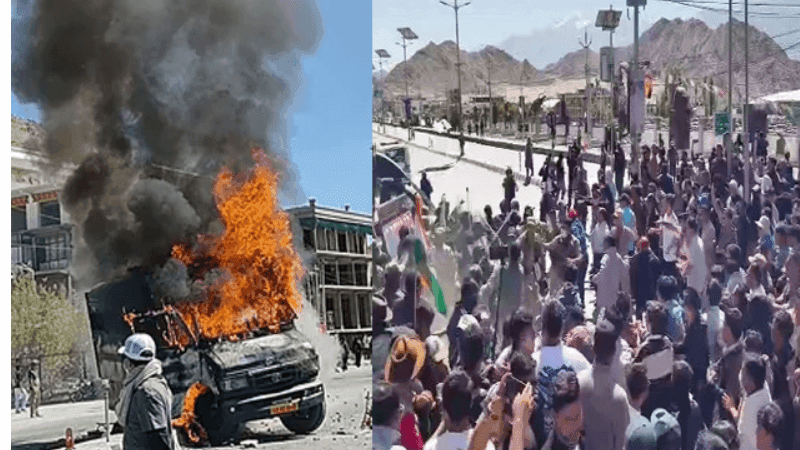
At least four protesters were killed and dozens injured on Wednesday (September 24) as violent demonstrations erupted in Leh, the capital of Ladakh. Its marking the bloodiest day in the region since it was carved out as a separate federally governed territory in 2019.
The unrest, led largely by disillusioned youth, broke out after two senior activists were hospitalized during a hunger strike that had entered its 15th day. Demonstrators torched the local office of Prime Minister Narendra Modi’s Bharatiya Janata Party (BJP) and clashed with security forces, who responded with firing after police vehicles were set ablaze. Authorities confirmed more than 30 security personnel were injured.
“This is the bloodiest day in the history of Ladakh. They martyred our young people,” said Jigmat Paljor, coordinator of the Ladakh Apex Body, a coalition of socio-religious and political groups spearheading the protests. The body later called off the hunger strike, urging a return to calm.

The government has accused prominent educator and activist Sonam Wangchuk of provoking unrest by invoking “Arab Spring-style” protests, though Wangchuk denied encouraging violence. “The youth felt peace was not working. I only warned that their anger could spill over,” he said in a video statement.
Demands and Grievances
Protesters are demanding either statehood or constitutional protections under the Sixth Schedule, which would grant Ladakh greater autonomy and safeguard local jobs, land, and culture. Since the revocation of Jammu and Kashmir’s semi-autonomous status in 2019, Ladakh has been governed directly from New Delhi without a legislature.
Despite its high literacy rate of 97 percent, Ladakh faces rising unemployment with nearly 27 percent of graduates jobless, double the national average. Many youths complain of being left without opportunities or representation.
“Unemployment and loss of democratic rights are a recipe for social unrest,” Wangchuk warned.
Why It Matters
Ladakh, a high-altitude Himalayan region bordering China, Pakistan, and Indian-administered Kashmir, has strategic significance in South Asia’s geopolitics. The protests come at a time of heightened India-China tensions along the disputed border, raising concerns in New Delhi over instability in the frontier region.
“Ladakhis feel their identity and rights have been eroded since 2019,” said political analyst Siddiq Wahid. “The youth anger is particularly worrisome. They see no future for themselves.”
For now, Ladakh remains tense, with fresh deployments of armed forces in Leh and calls from community leaders for restraint. But the eruption of violence after years of peaceful demonstrations signals a deeper frustration that New Delhi may struggle to contain without addressing long-standing demands.
BOB Post