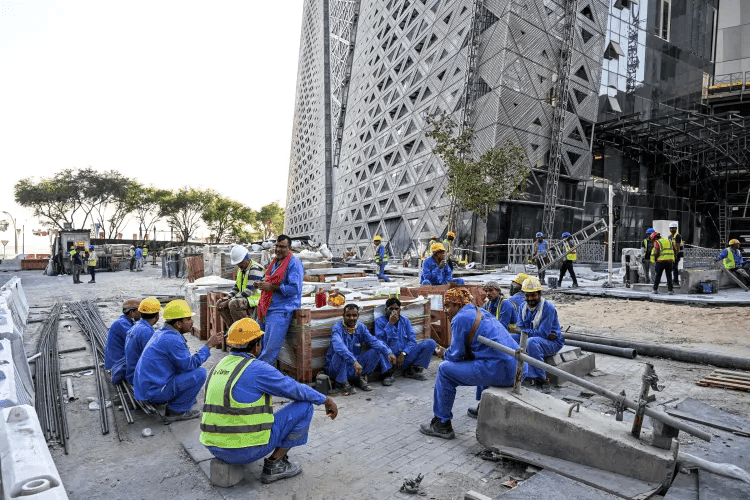
The escalating conflict involving the US, Israel, and Iran has thrown the Gulf into one of its most tense periods in years. While missiles and military moves grab the headlines, there's another crisis brewing quietly: the strain on the migrant labor system that keeps Gulf economies running and supports countless families back in Asia.
Right now, millions of workers from places like Bangladesh, India, Indonesia, and the Philippines are carrying on with their shifts building skyscrapers in Dubai, cleaning homes in Riyadh, or working factory lines in Bahrain even as air raid sirens wail and airports shut down temporarily. They're not fleeing in droves. Many are choosing to stick it out because these jobs are their families' main source of income.
For countries in South and Southeast Asia, the Gulf isn't just a job market, it's a lifeline. Remittances from these workers prop up entire economies. In Bangladesh, the money sent home helps cover everything from groceries to school fees and keeps the country's foreign reserves from tanking. India pulls in massive sums too recent figures show over $135 billion in total remittances last year, with a big chunk coming from the Gulf.

The fighting has brought real fear. Airspace closures, flight cancellations, and security lockdowns have made everyday life harder. Governments back home are fielding calls from worried citizens asking for help to get out. Some evacuation flights have started, and embassies have set up emergency lines. But despite all that, there's no mass rush to leave.
Workers are doing the math. Walking away now could mean losing hard-earned contracts, paying steep fees for last-minute tickets they can't afford, or facing the risk of never getting back in once things calm down. One worker summed it up bluntly: "If I don't do this job, someone else will." For many low-wage earners, the terror of going home jobless hits harder than the threat of war.
The Gulf states feel the pressure too. Their construction booms, hotels, hospitals, and logistics all depend heavily on foreign labor often making up the bulk of the workforce. A big exodus would stall mega-projects and hurt growth plans.
That's why many observers think any disruption might not last long. The Gulf labor system has bounced back from past crises wars, oil crashes, political flare-ups because the incentives line up on both sides. Gulf countries need the manpower for their ambitious developments, and Asian nations need the overseas jobs and the cash they bring.

Huge ongoing projects like new cities and tourism hubs aren't going to stop forever; they might pause, but the demand for workers will return. History suggests the flows of people and money resume pretty quickly once the dust settles
Still, the stakes are high, especially for South Asia. A long-drawn-out crisis could hammer domestic job markets that are already stretched thin, leaving families without that crucial monthly support for basics like food, education, or medical care.
In Bangladesh and similar places, this has reignited talk about spreading risks looking for jobs in East Asia, Europe, or other spots instead of relying so heavily on the Middle East. Others push for better training so workers can land safer, better-paid roles abroad.
For the moment, though, the Gulf is still the main hub. Cranes keep swinging, hotels stay open, and workers clock in despite the uncertainty. Under the noise of geopolitics, this huge network of people is just trying to hold things together.
How long the fighting drags on will decide how much damage gets done. But if the past is anything to go by, this resilient system built on decades of mutual need could pull through again.
For the Asian workers caught in the middle, it's straightforward: stay safe if possible, keep earning, and hope the connection between the Gulf and their homes doesn't break.
BOB Post