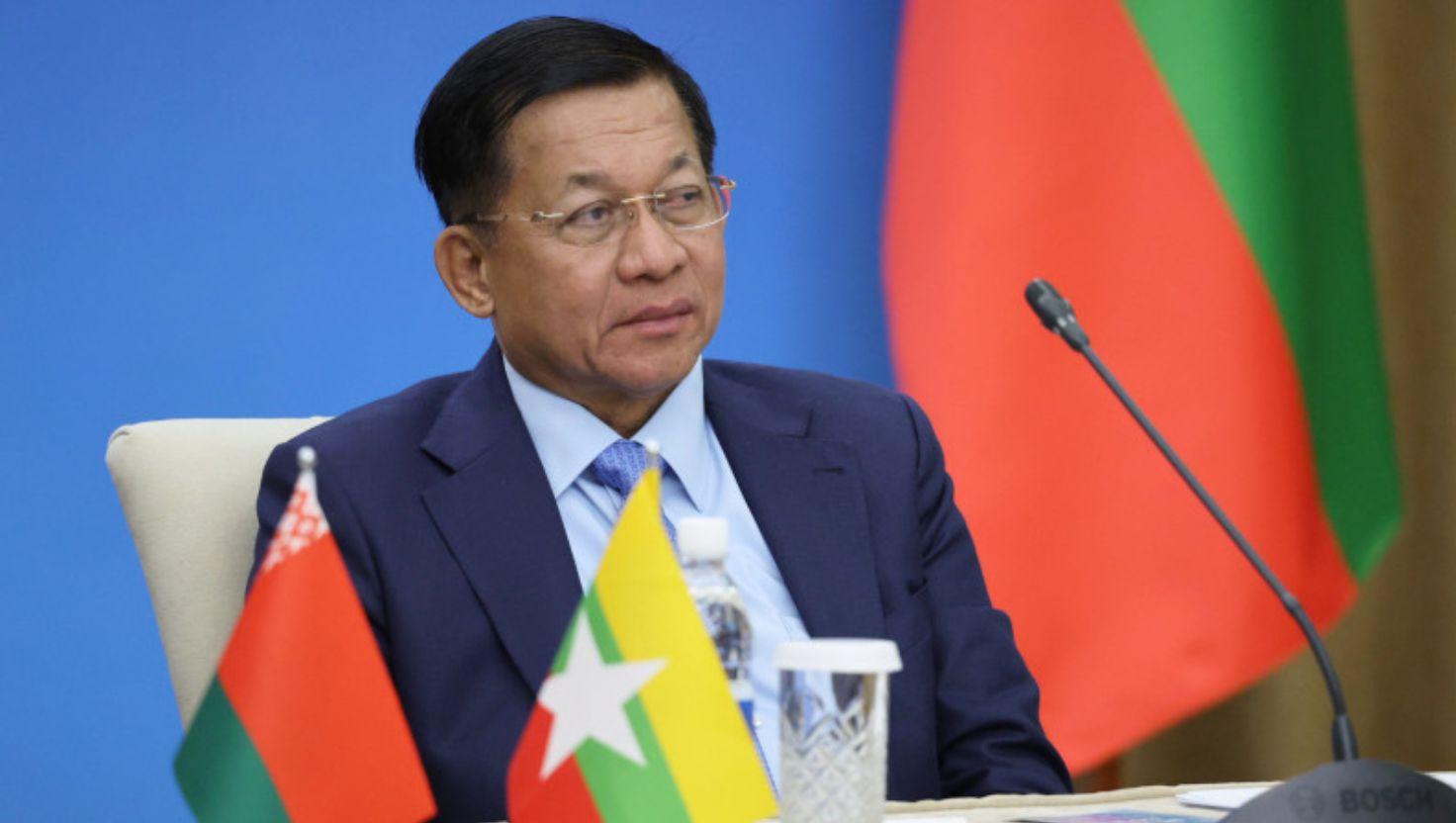
Myanmar’s junta chief Min Aung Hlaing has officially become the country’s president after winning a parliamentary vote on Friday, consolidating his grip on power five years after overthrowing an elected government.
The 69-year-old general led the 2021 Myanmar coup d'état against the administration of Nobel laureate Aung San Suu Kyi, who was subsequently detained. The coup triggered mass protests that later escalated into a nationwide armed resistance.
His elevation to the presidency follows a controversial election held between December and January, widely criticised by Western governments and opposition groups as lacking credibility. The vote was dominated by the military-backed Union Solidarity and Development Party along with military-appointed lawmakers.
During a live broadcast of the parliamentary vote count, Min Aung Hlaing comfortably secured the required majority, formalising his transition from army chief to head of a nominally civilian government.
Strategic Power Shift
Min Aung Hlaing’s rise comes after a major reshuffle within the armed forces he led since 2011. Earlier this week, he nominated Ye Win Oo, a former intelligence chief known for his loyalty, as his successor as commander-in-chief.
Analysts view the leadership transition as a calculated move to consolidate power while attempting to gain international legitimacy under a civilian façade, all while safeguarding the military’s long-standing influence in Myanmar’s politics.
Independent analyst Aung Kyaw Soe noted that Min Aung Hlaing had long sought the presidency, saying his ambition has now “become a reality.”
Ongoing Civil War
Despite the political transition, Myanmar remains engulfed in civil war. Anti-junta forces, including factions linked to Suu Kyi’s party and various ethnic armed groups, have recently formed a united front to challenge military rule.
In a statement, the alliance said its objective is to dismantle all forms of dictatorship and establish a federal democratic system.
Experts warn that resistance groups may face intensified military operations, alongside shifting regional dynamics as neighbouring countries potentially seek closer ties with the new administration.
Analyst Sai Kyi Zin Soe cautioned that economic hardships, including global fuel shortages and financial instability, could further strain coordination among opposition forces, making sustained resistance more difficult.
BOB Post