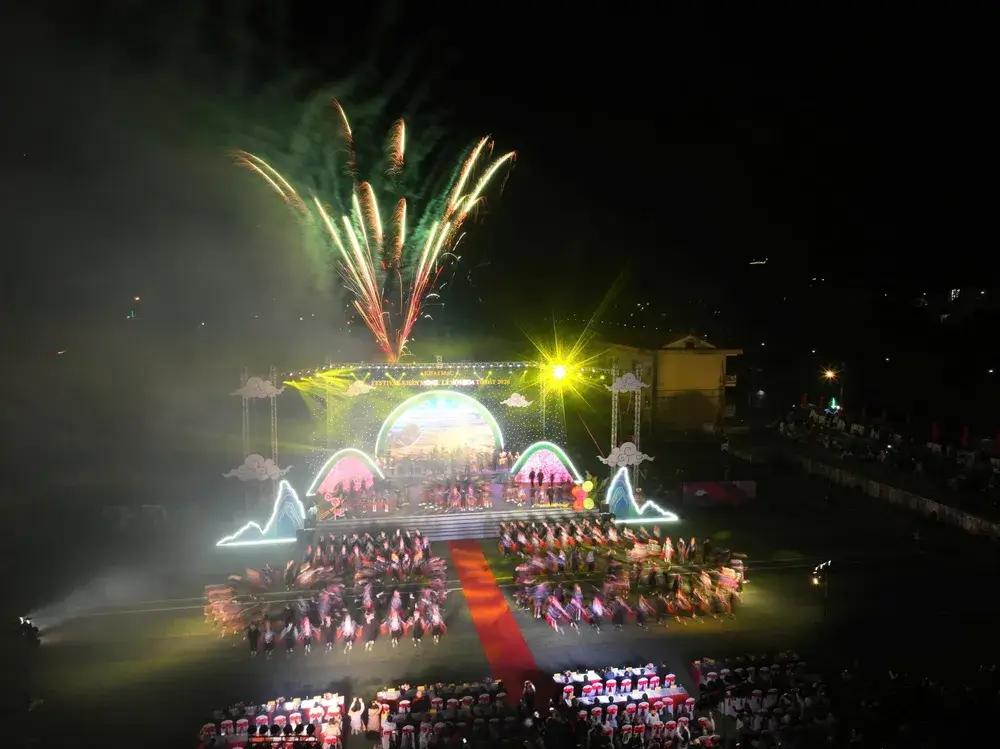
The Mông Khèn (panpipe) Festival and Tớ Dày Flower Festival 2026 officially opened in Mù Cang Chải Commune in Việt Nam’s northwestern province of Lào Cai, drawing large crowds with a spectacular mass performance by 500 artists and a vibrant display of highland culture.
The annual festival is emerging as a key platform for Mù Cang Chải to highlight its tourism potential, from dramatic terraced rice fields to deep-rooted ethnic traditions. Local authorities see the event as part of a broader effort to position the mountainous district as a flagship destination in the northwestern region, blending nature-based tourism with cultural heritage experiences.
Speaking at the opening ceremony, Chairman of the Mù Cang Chải Commune People’s Committee Trần Ngọc Hiệp said the area’s four-season landscapes and rich cultural life of ethnic minorities have long made it a magnet for visitors. According to a VNA report, he emphasized that festivals such as this play a vital role in preserving cultural identity while creating sustainable economic opportunities through tourism.

A major cultural highlight is the Mông khèn, a traditional panpipe that was recognised as national intangible cultural heritage in 2023. The instrument holds deep meaning for the Mông community, serving not only as music but also as a form of expression and connection within social and spiritual life. According to VNA, the recognition has helped elevate awareness of the khèn’s historical and artistic significance at both national and local levels.
Adding to the festival’s appeal is the blooming of Tớ Dày flowers wild peach blossoms that paint mountain slopes in soft pink hues during early spring. The blossoms are considered a symbol of renewal in the highlands and have become a distinctive feature in Mù Cang Chải’s tourism branding, closely tied to eco-tourism and cultural exploration.

This year’s festival has expanded in both scale and content, with stronger coordination among communes across the district. According to VNA, organisers aim to create a unified cultural–tourism space that honours ethnic heritage while laying the groundwork for distinctive, sustainable tourism products in Mù Cang Chải and neighbouring areas.
Within the festival framework, visitors can enjoy a wide range of activities, including a street parade, a sticky rice cake pounding contest, Mông khèn competitions, traditional folk games, cultural space recreations, art photo exhibitions, and booths showcasing local products. These events help promote intangible cultural practices such as khèn performance and beeswax pattern-making on fabric, both closely linked to the everyday life of the Mông people.
Coinciding with the peak blooming season of Tớ Dày flowers, the festival is expected to leave a lasting impression on visitors, offering an immersive journey into the natural beauty and cultural richness of Việt Nam’s northwestern highlands.
BOB Post