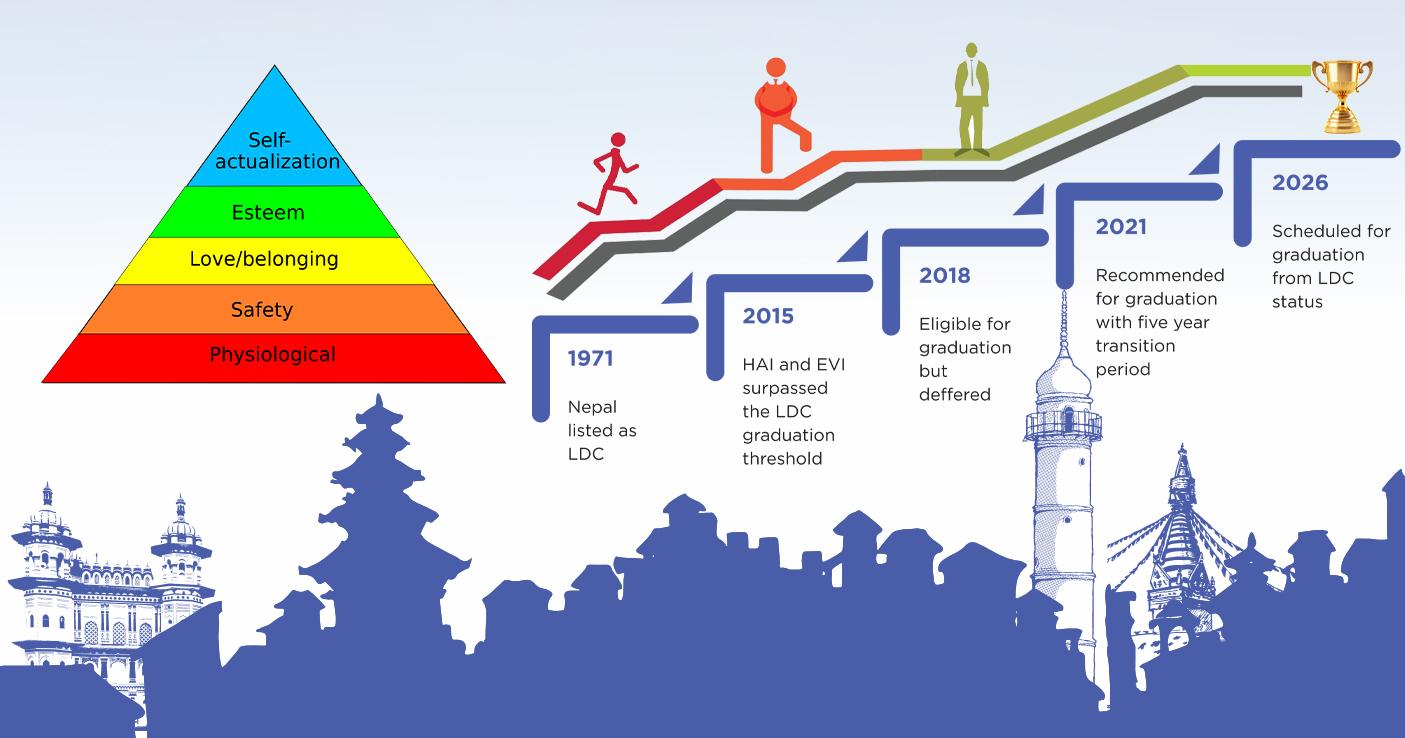
Nepal is preparing to formally request the United Nations to defer its scheduled graduation from the category of Least Developed Countries (LDCs) by three years, citing concerns over economic vulnerability and insufficient preparation to lose key international support measures.
The government of Prime Minister Balendra Shah is expected to send a formal letter seeking postponement of the UN decision that currently schedules Nepal’s graduation for November 2026.
Officials said the move comes amid fears that Nepal is not yet ready to forgo preferential trade access, concessional financing, and other facilities available to LDCs. Rising economic uncertainty linked to tensions in West Asia, weak domestic growth, declining investor confidence, and pressure from the private sector also contributed to the decision.
According to the Kathmandu post, the government believes Nepal needs at least two to two-and-a-half more years to build a stronger economic foundation before transitioning out of LDC status.
Finance Minister Swarnim Wagle and senior government officials have reportedly agreed that graduation should proceed only after improving the country’s economic condition. Nepal’s National Planning Commission has already recommended seeking a three-year extension, while the Ministry of Foreign Affairs is preparing to advance the proposal diplomatically.
The private sector has also backed the move. The Federation of Nepalese Chambers of Commerce and Industry urged the government to request a reassessment from the UN, warning that key export sectors such as garments, pashmina, carpets, and handicrafts could suffer from higher tariffs and stricter trade rules after graduation.
Trade experts say Nepal still lacks adequate preparation in areas including free trade negotiations, market diversification, and compliance with international conventions required to retain preferential access to markets such as the European Union.
Economists further argue that Nepal’s sluggish growth, weak investment climate, low productivity, and limited foreign direct investment expose deep structural weaknesses in the economy. Concerns have also intensified following political unrest last year and Nepal’s placement on the Financial Action Task Force (FATF) grey list in February 2025.
Nepal first met the UN graduation criteria in 2015 and has remained eligible in subsequent reviews. However, experts note the country has never crossed the minimum income threshold required under one of the key graduation criteria, raising questions about the sustainability of its transition.
Graduation from LDC status would result in the gradual loss of several international support measures, including duty-free market access and pharmaceutical patent flexibilities currently available to least developed nations.
BOB Post