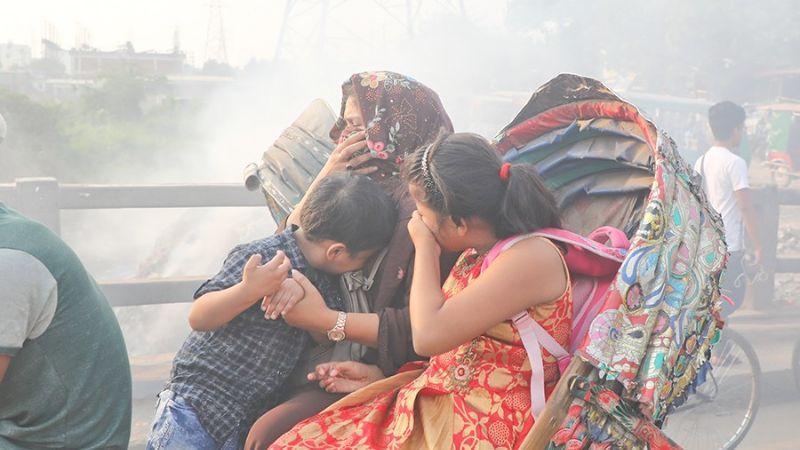
A recent report by the World Bank, titled the Bangladesh Country Environmental Analysis (CEA), reveals that environmental factors such as air pollution, unsafe water, poor sanitation, and lead exposure contribute to over 272,000 premature deaths and 5.2 billion days of illness in Bangladesh each year. In 2019, the economic cost of these environmental issues amounted to 17.6% of the country's GDP.
The report highlights that household and outdoor air pollution are the most significant contributors to health problems, responsible for nearly 55% of premature deaths in the country. The economic loss from air pollution alone was equivalent to 8.32% of GDP in 2019.
Abdoulaye Seck, the World Bank’s Country Director for Bangladesh and Bhutan, emphasized that addressing environmental risks is critical for Bangladesh’s development and economic sustainability. "When economic growth comes at the cost of the environment, it cannot be sustained. However, it is possible to grow cleaner and greener without slowing down," Seck stated. He stressed that environmental protection is essential for the country to continue on its path of strong growth and achieve its goal of becoming an upper-middle-income nation.
One of the most alarming findings of the report is the impact of lead poisoning, particularly on children. Lead exposure has caused significant damage to brain development, resulting in an estimated loss of 20 million IQ points annually. Additionally, household emissions from cooking with solid fuels contribute heavily to air pollution, disproportionately affecting women and children.
The report also raised concerns about water pollution, noting that Bangladesh's major rivers have experienced a drastic decline in water quality due to industrial waste, plastic pollution, and untreated sewage.
The World Bank report emphasizes that timely interventions could prevent over 133,000 premature deaths each year. Solutions include controlling air pollution, improving water, sanitation, and hygiene (WASH) systems, and reducing lead exposure. Investments in cleaner energy sources, such as clean cooking fuels, and stricter regulations on industrial emissions were recommended to combat pollution.
Ana Luisa Gomes Lima, Senior Environmental Specialist at the World Bank and co-author of the report, noted that with the right policies, Bangladesh can reverse its environmental degradation. She recommended stronger enforcement of environmental regulations, increased investment in green initiatives, and greater awareness efforts to drive change.
The report also calls for strengthening governance and institutional capacity to manage environmental issues. It emphasizes the need for evidence-based priorities, diversified policy tools, and green financing to protect Bangladesh’s environment while promoting sustainable growth.
BOB Post