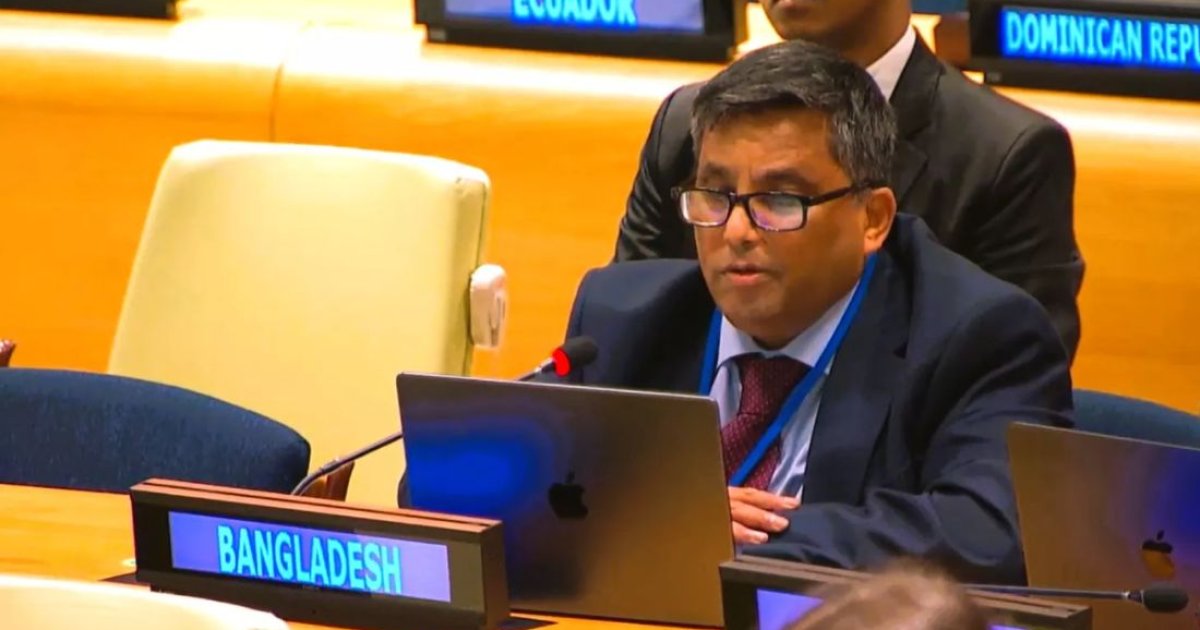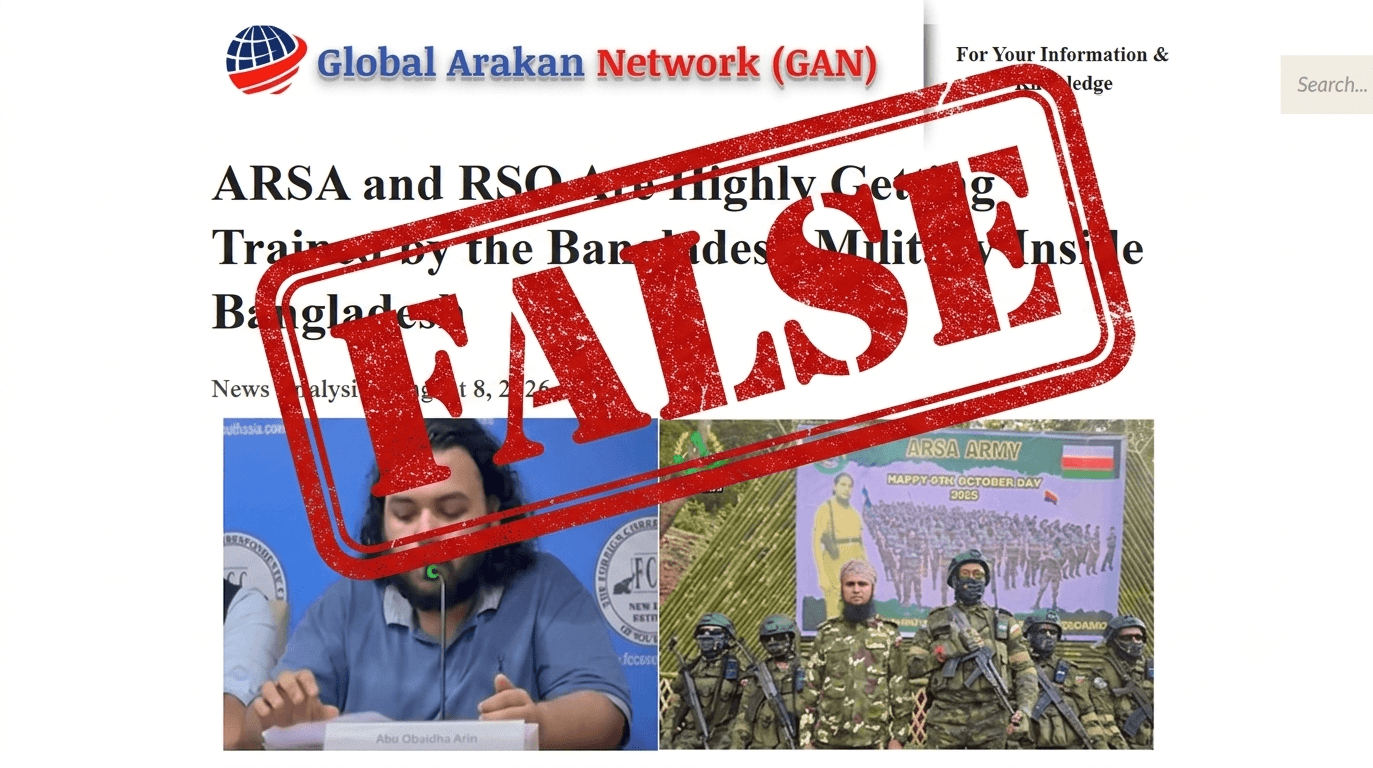
The Bangladesh-Myanmar frontier is once again at the centre of competing narratives, with a report alleging that Rohingya armed groups are receiving military training inside Bangladesh while allegations of Arakan Army activities along the border remain largely unaddressed. The conflicting claims have added a new layer to an already volatile security situation stretching from Cox’s Bazar to Myanmar’s Rakhine State.
A recent report by the Global Arakan Network cited remarks by counter-terrorism analyst Abu Obaidha Arin, who alleged during a press briefing hosted by the Foreign Correspondents' Club of South Asia that the Arakan Rohingya Salvation Army (ARSA), Rohingya Solidarity Organisation (RSO) and other Rohingya armed groups were being trained inside Bangladesh with assistance from elements of the Bangladesh military.
Arin further claimed that militants were being prepared to carry out attacks beyond the region and referred to alleged cases involving Rohingya militants in Malaysia.
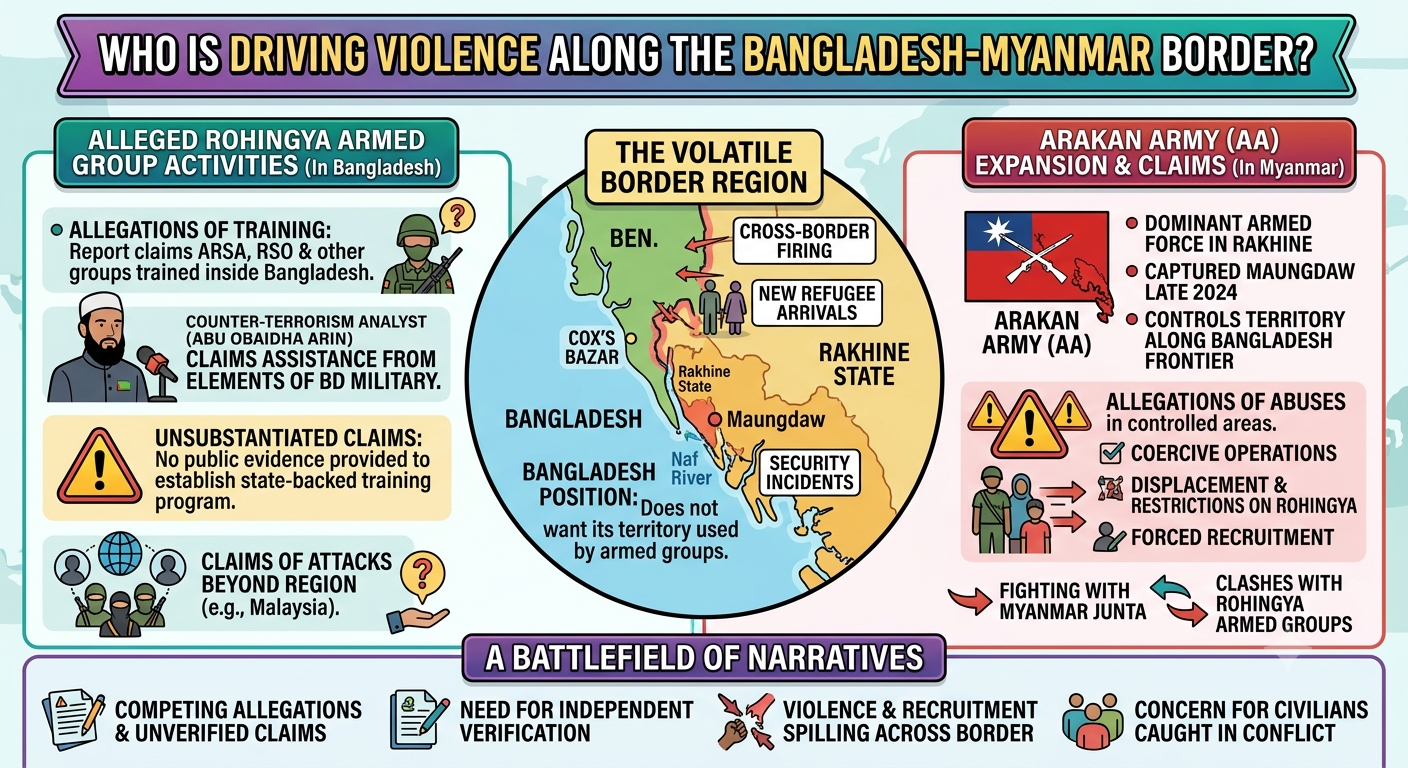
The allegations, however, have not been independently substantiated, and no evidence was presented publicly to establish that the Bangladesh military is training ARSA, RSO or other armed groups.
The report comes amid continuing accusations over armed activity on both sides of the Bangladesh-Myanmar border. While ARSA and RSO have been accused of recruiting and carrying out armed operations, the Arakan Army (AA) has also been accused by opponents and rights groups of conducting coercive operations and committing abuses in areas under its control in Rakhine State.
The AA, which has emerged as the dominant armed force in much of Rakhine, captured Maungdaw in late 2024 after months of fighting with Myanmar junta forces. Its growing control of territory along the Bangladesh frontier has transformed the security dynamics on the other side of the border.
Bangladesh has repeatedly faced the consequences of the conflict, including new refugee arrivals, cross-border firing and security incidents. Dhaka has maintained that it does not want its territory used by any armed group to conduct operations against Myanmar.
The competing allegations also obscure a more complicated reality on the ground. Rohingya armed groups have fought one another and clashed with the AA, while the Myanmar military and other armed actors have also been involved in fighting across Rakhine. In such an environment, claims made by one side against another need to be independently verified rather than accepted as evidence of state policy.
The allegation of Bangladeshi military involvement is particularly serious because any official support for armed groups operating against the AA or Myanmar would have major implications for Bangladesh’s border security and its diplomatic relations with both Myanmar and regional countries. Yet no publicly available evidence cited in the report establishes such a state-backed training programme.
At the same time, focusing exclusively on alleged Rohingya militancy risks overlooking allegations concerning the conduct of the Arakan Army in territory it now controls. Reports of restrictions on Rohingya communities, displacement, forced recruitment and other abuses have generated concern among humanitarian and rights observers. These allegations, like those involving ARSA and RSO, require credible investigation and independent verification.
For Bangladesh, the central concern is no longer simply which armed group controls the latest stretch of territory. It is whether violence, recruitment and organised armed activity are being allowed to spill across a border already burdened by one of the world's largest refugee crises.
As competing actors trade accusations across the Naf River, the border is becoming a battlefield of narratives as much as a frontier of conflict. Separating documented evidence from propaganda will be crucial not only for Bangladesh’s security, but also for the fate of civilians caught between the guns of Myanmar’s war.
BOB Post