Myanmar’s jade, tin, gold and heavy rare earth resources are increasingly tied to the country’s civil war, providing revenue to both the military and armed groups while linking the conflict to global industries, according to a new report by the International Crisis Group.
The report, published on September 10, said Myanmar’s mineral resources are vital to industries ranging from electronics and artificial intelligence to clean energy, defence and luxury goods. Control over mining areas has also become a source of political and economic leverage for rival armed actors.
The impact is already being felt in global markets. The Man Maw tin mine in northeastern Myanmar, controlled by the United Wa State Army, once supplied most of Myanmar’s tin output and accounted for more than 90% of China’s tin ore imports. Mining was suspended in 2023, contributing to tighter global supplies and higher prices.
According to TBS, Myanmar’s tin exports to China recovered in late 2025, making the country China’s largest single supplier by June 2026, with a 37% share of imports.
Gold mining has also expanded since the 2021 military coup as conflict, economic hardship and rising global prices pushed more people into informal extraction. The Crisis Group estimates informal gold production at more than ten times official output. Military authorities and resistance groups both collect taxes and other payments from mining operations.
Jade remains another major source of income. Hpakant in Kachin State produces some of the world’s most valuable jade, while billions of dollars’ worth of stones move towards China each year. Despite intensified fighting, satellite imagery reviewed by Crisis Group indicates that mining has continued, with armed groups and military-linked actors benefiting from extraction and trade.
Myanmar has also become a major source of heavy rare earths such as dysprosium and terbium, which are essential for electric vehicles, wind turbines and advanced weapons. China became heavily dependent on Myanmar for these minerals, giving armed groups controlling mining areas greater leverage over an important global supply chain.
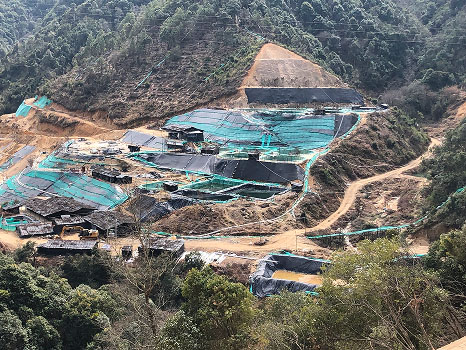
But the expansion of mining is also worsening environmental damage. Rare-earth extraction has polluted waterways linked to the Mekong system, with contamination detected in areas of Thailand and Laos.
The report said Myanmar’s mineral trade has therefore become more than a domestic war economy. It now connects the country’s conflict directly to global technology, energy and defence supply chains, while leaving local communities to bear much of the environmental and social cost.
BOB Post