Thousands of Rohingya refugees in southeastern Bangladesh are facing a worsening healthcare crisis as over a dozen medical facilities have suspended operations following a U.S. foreign aid freeze.
Among those affected is 40-year-old Mohammed Hasan, who lost a leg after being shot by Burmese soldiers during Myanmar’s brutal 2017 crackdown on the Rohingya. A physiotherapy program run by Handicap International had given him hope of walking again—until the organization ceased its services.
“Physiotherapy and other treatments revived my hope of standing up again. But now, that hope is gone,” Hasan told BenarNews.
At least 14 healthcare centers have shut down in recent weeks, leaving tens of thousands of refugees without essential medical care. The closures come after the Biden administration’s recent decision to temporarily halt foreign aid for 90 days, pending a review.
Bangladeshi officials say the funding freeze has impacted critical services, including healthcare, sanitation, education, and livelihood programs for the refugees. Three facilities run by the International Rescue Committee (IRC) have already closed, with two more at risk of shutting down by March. Other organizations, including the International Centre for Diarrhoeal Disease Research, Bangladesh (ICDDR,B), have also suspended operations.
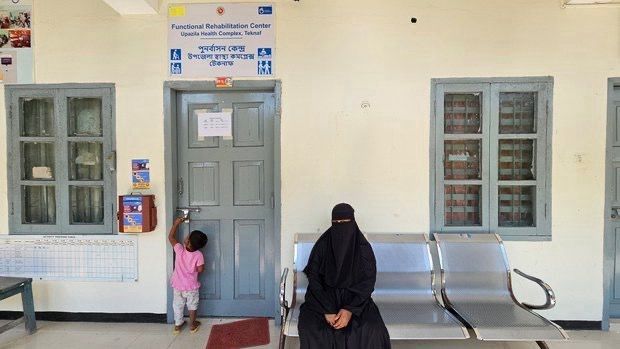
“With these centers shut down, patients are facing extreme difficulties,” said Dr. Enamul Haque, a medical officer at Teknaf Upazila Health Complex. “There is no other hospital except for the government hospital.”
More than one million Rohingya refugees live in camps around Cox’s Bazar, some of the largest and most overcrowded in the world. There are 120 healthcare facilities across 34 camps, but the aid freeze has already led to a 25% reduction in services, according to humanitarian agencies.
“We have observed service disruptions, including in life-saving interventions,” said Syed Md Tafhim of the Inter Sector Coordination Group (ISCG), which oversees humanitarian efforts in the camps.
In Camp 16, Rohingya father Kabir Hossen is among those struggling to find medical help for his son, who has a paralyzed leg and a neurological disorder. The CDD facility where they once received treatment shut its doors on February 1.
“I don’t know where to take my son now,” Hossen said. “Uncertainty is gripping me.”
As the U.S. aid freeze continues, officials warn that more critical services may be at risk, leaving vulnerable refugees in an increasingly desperate situation.
Original Source : Benar News
𝐁𝐎𝐁 𝐏𝐨𝐬𝐭