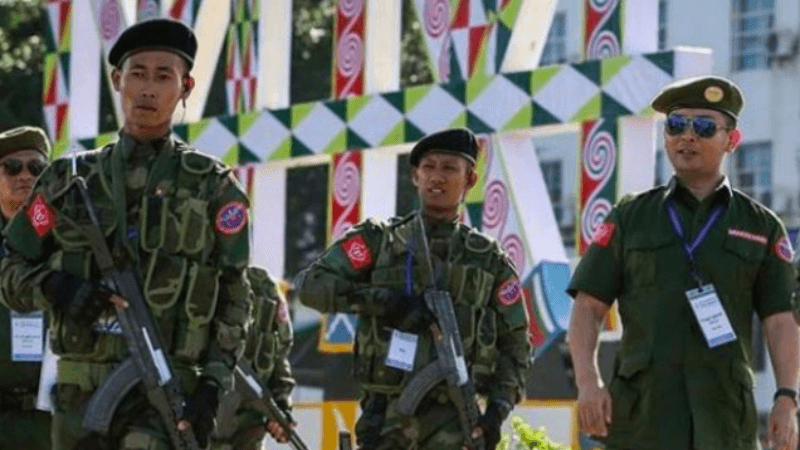
In a troubling development underscoring growing repression in Myanmar’s Rakhine State, the Arakan Army has released 17 Rohingya families from its custody after extracting ransom payments, only to forcibly push them across the border into Bangladesh, local sources and rights monitors report.
According to Arakan News Agency, each detained individual had to pay 2 million kyat to secure their release after being held in dire conditions for over four months. The families were originally arrested by the Arakan Army in the Maungdaw township area, where the group has exercised increasing control since taking full administrative and military authority in December 2024.
Eyewitness accounts reveal that a total of 78 individuals were detained, including 36 men and 42 women and children. The detainees were reportedly held in overcrowded conditions, fed only once daily, and denied basic medical care. Two children died of diarrhea during the detention period, highlighting the appalling humanitarian situation in custody.

One of the released individuals told Arakan News that even after paying ransom, they were prohibited from returning to their villages and warned that reappearing in Maungdaw would result in prison sentences of six to eight years. Additional payments of up to 5 million kyat per adult and 2.3 million kyat per child would be required for future “permissions.”
Following their release, the victims were reportedly handed over to a human trafficking network affiliated with the Arakan Army, known locally as the Hlaing Kone Group. This syndicate charged an additional smuggling fee of 700,000 kyat per person to arrange for their illegal transport across the Naf River into Bangladesh. Boats were seen stationed off the coast of Latya Island, prepared for the forced crossing.
Observers say these actions illustrate the Arakan Army’s transition from a pro-autonomy ethnic insurgent group to a repressive authority mimicking the brutality of previous military regimes. Since seizing control of Maungdaw on December 8, 2024, the group has carried out systematic oppression against the Rohingya population, including arbitrary arrests, extortion, and asset confiscation.
Thousands fled Maungdaw following the Arakan Army takeover, though some residents returned hoping for stability. Instead, Rohingya families have faced disproportionate targeting, with their homes sealed, movements restricted, and freedom subject to extortion.
Travel restrictions have become especially severe. All Rohingya villages are now encircled with military-style checkpoints, and residents must pay additional “fees” even for routine movement. Human rights groups warn that these coercive policies risk further displacement of Rohingya and could lead to another wave of refugee influxes into neighboring countries, especially Bangladesh.
The incident adds to growing concerns that the Arakan Army is imposing a discriminatory ethnic order under the guise of regional governance. The group’s rhetoric of equality and self-determination now stands in sharp contrast to its actions on the ground, especially against stateless Rohingya communities.
BOB Post