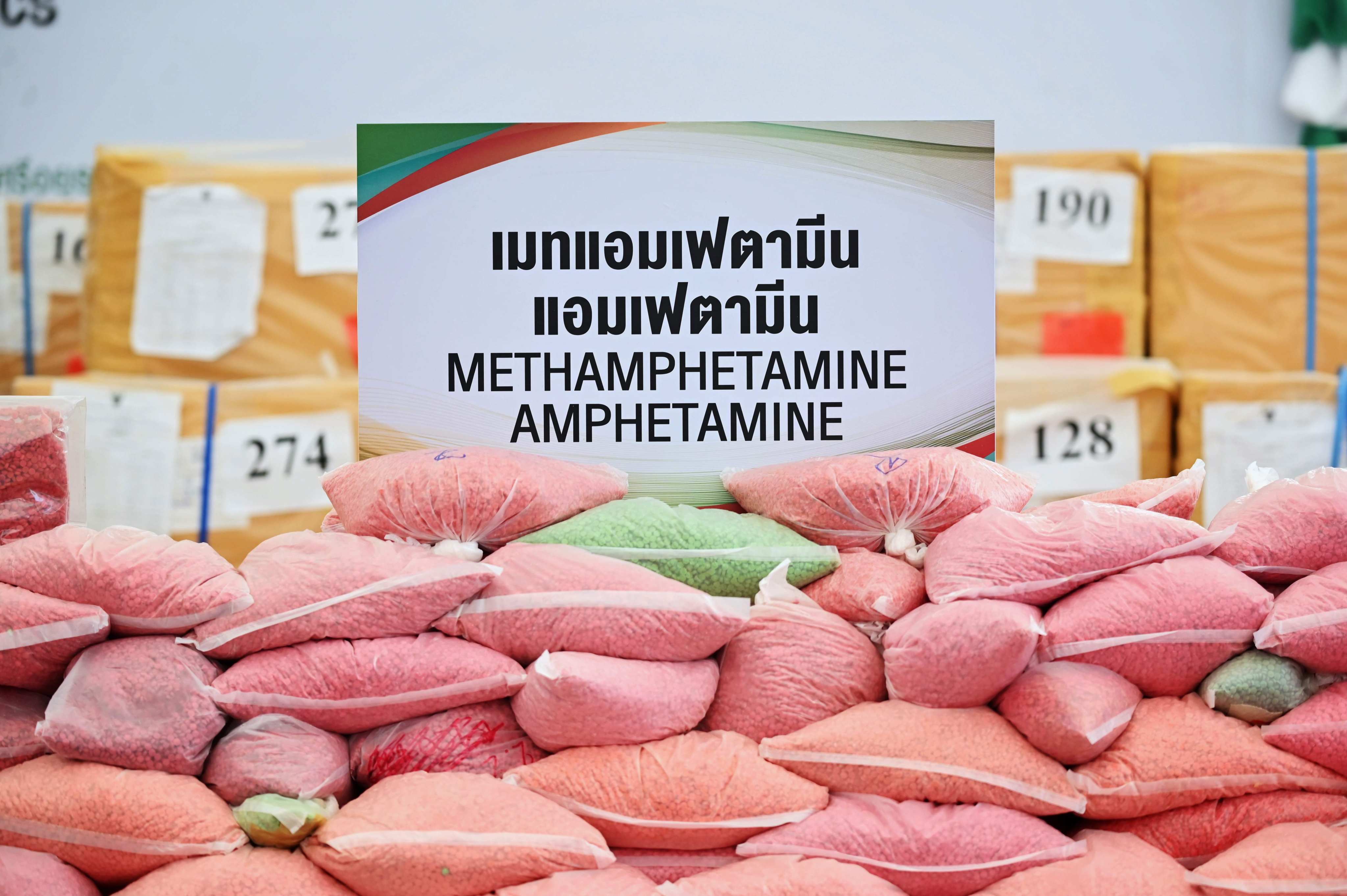
Methamphetamine trafficking across East and Southeast Asia has reached record levels as political instability in Myanmar allows drug production and smuggling networks to expand, raising concerns about the growing regional security threat.
According to Nikkei Asia, seizures of methamphetamine across the two regions reached a record 349 metric tons in 2025, up 48 percent from the previous year, as cheap supplies from Myanmar flooded regional markets.
Myanmar’s prolonged conflict following the 2021 military takeover has weakened efforts to control the illicit drug trade. Since ethnic armed groups expanded their territorial control in October 2023, methamphetamine has increasingly become a source of revenue for armed actors seeking to finance their operations, while fighting has hampered law enforcement.
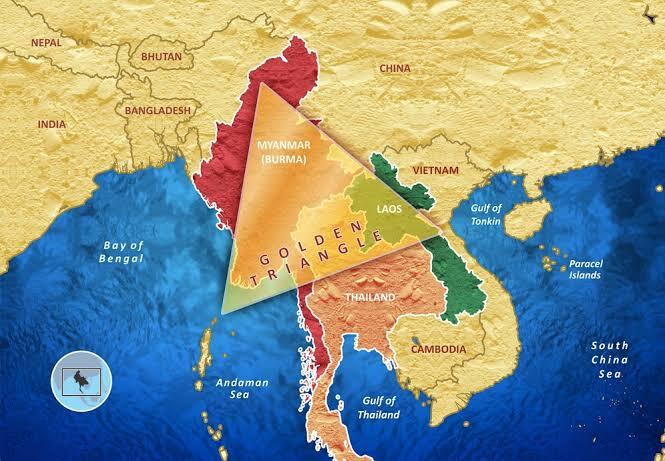
The Golden Triangle, where Myanmar borders Thailand and Laos, remains a major centre of illicit drug production. Unlike traditional opium and heroin trafficking, methamphetamine can be manufactured in large quantities in clandestine laboratories, allowing criminal networks to supply markets at increasingly low prices.
Thailand, the region’s largest methamphetamine market, recorded a 23 percent increase in seizures in 2025. Seizures also rose sharply in Malaysia, the Philippines and Indonesia, reflecting the widening reach of trafficking networks.
The supply chain extends beyond Myanmar, with China and India serving as major sources of precursor chemicals used in drug production. Criminal groups continue to exploit alternative industrial chemicals to bypass restrictions on substances commonly used in manufacturing methamphetamine.
Authorities have also uncovered links between drug production and online scam operations in Myanmar’s Shan State, highlighting the growing overlap between narcotics trafficking and other forms of organized crime.
Myanmar and Thailand pledged to strengthen cooperation against narcotics trafficking and precursor chemicals in a joint statement in August. However, continued conflict, weak enforcement and expanding cross-border criminal networks pose major obstacles to containing the trade.
Researchers warn that unless regional governments strengthen cooperation and disrupt production networks inside Myanmar, the growing flow of methamphetamine could become an even greater security and public health challenge across Asia.
BOB Post