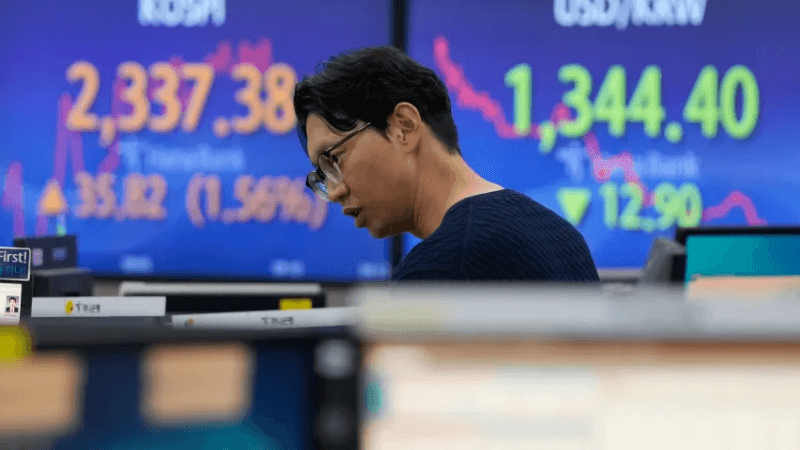
Asian markets experienced a robust rally on Tuesday, December 12th, 2023, with Hong Kong's Hang Seng Index leading the charge amid anticipation of the Federal Reserve's final meeting of the year. Investors worldwide are keenly awaiting the Fed's decision, expected on December 13th and 14th, with widespread predictions suggesting a maintenance of current interest rates following a series of hikes throughout 2022 and the majority of 2023.
The Hang Seng Index surged by 1.59%, closing at 21,021.64, marking its highest level since October 26th. The rally was notably fueled by gains in technology and property stocks, with Alibaba Group Holding Ltd. rising by 3.51%, Tencent Holdings Ltd. climbing by 2.44%, and Sun Hung Kai Properties Ltd., Hong Kong's largest developer, gaining 2.23%.
Other major Asian markets also witnessed positive momentum. Japan's Nikkei 225 rose by 1.05%, closing at 28,142.77, while the broader Topix index gained 0.82%, closing at 1,992.93. China's Shanghai Composite Index rose by 0.38%, closing at 3,183.54, and the Shenzhen Composite Index gained 0.52%, closing at 2,190.76.
The optimistic atmosphere in Asian markets can be attributed to several factors:
1. Expectations of Steady Interest Rates: Analysts widely anticipate that the Federal Reserve will maintain current interest rates during its December meeting, providing relief to investors concerned about potential economic slowdown resulting from higher interest rates.
2. Positive U.S. Economic Indicators: Recent economic indicators from the United States, including a robust November jobs report and better-than-expected retail sales figures, have contributed to the positive sentiment in Asian markets. These indicators suggest continued economic growth in the U.S., alleviating concerns about a potential recession that could impact Asian economies.
3. Weakening U.S. Dollar: The recent decline in the U.S. dollar has made Asian stocks more attractive to investors. The weakened dollar enhances the appeal of investing in Asian markets.*
Despite the prevailing optimism, potential risks loom over the positive outlook for Asian markets:
1. Unforeseen Fed Actions: While the consensus is for the Fed to maintain interest rates, there is a small chance of an unexpected rate hike, which could trigger a market sell-off.
2. U.S.-China Tensions: The easing of trade tensions between the United States and China could reverse, introducing uncertainty and potentially leading to a downturn in Asian markets.
3. Global Economic Recession: While not considered highly likely in the near future, the possibility of a global recession cannot be entirely dismissed. Such an event would have severe repercussions on Asian economies.
Investors, despite acknowledging these risks, appear cautiously optimistic about the coming months. The Fed's decision on interest rates remains a key factor influencing market sentiment, alongside other determinants such as the trajectory of the U.S. economy and the state of U.S.-China relations.
The rally in Asian markets is supported by several sources, including Reuters, CNBC, Bloomberg, and The Wall Street Journal. These outlets provide ongoing coverage of market developments and expert analyses, contributing to a comprehensive understanding of the current market dynamics.
As the Fed meeting unfolds and global economic conditions evolve, investors will closely monitor developments, weighing potential opportunities and risks in the ever-changing landscape of Asian markets.
BOB Post