A newspaper headline has become a police case in West Bengal. That, more than the controversy over the words themselves, is what has raised fresh questions about press freedom in India.
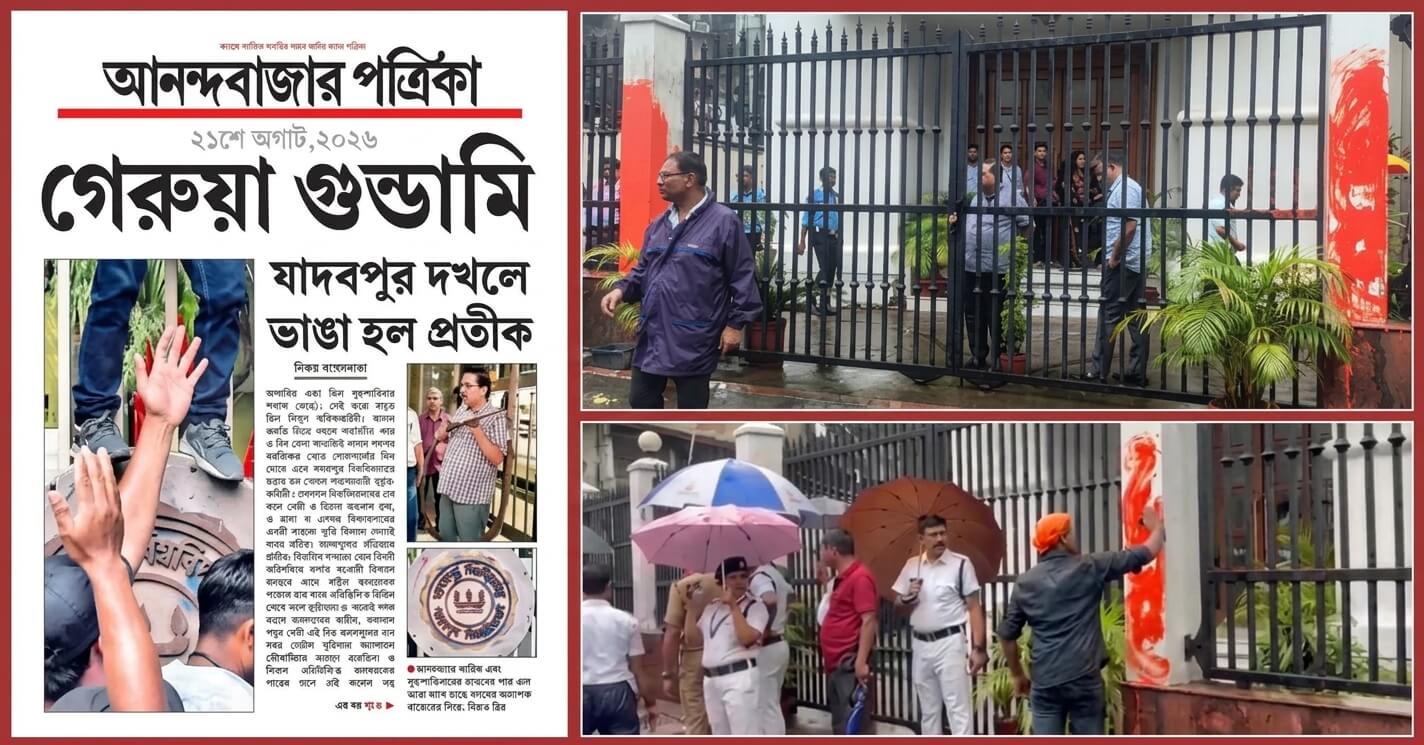
Anandabazar Patrika used the Bengali phrase “gerua gundami”, or “saffron hooliganism," in its coverage of violence at Jadavpur University. The headline referred to the violence and vandalism surrounding clashes on the campus.
The choice of words angered Hindu groups and BJP leaders. West Bengal Chief Minister Suvendu Adhikari publicly demanded an apology from the newspaper and warned of protests if it did not withdraw the wording. A complaint was then filed against the paper’s editorial team. Kolkata Police registered an FIR on August 28 against editor Ishani Dutta Roy, chief reporter Soma Mukherjee and others.
The complaint argues that saffron is a religious symbol and that linking it with “hooliganism” hurt Hindu sentiments. But that argument raises a more difficult question: Can a colour, symbol or political identity become so protected that journalists cannot use it while describing political violence?
The issue becomes even more troubling because the dispute did not end with criticism of the headline. On September 1, saffron-clad protesters gathered outside the Anandabazar Patrika office and painted parts of the building saffron. Police were present during the demonstration. The walls were later restored.
That sequence matters.
A newspaper headline can be criticised. It can be challenged. Editors can be asked to explain their choice of words. But turning an editorial decision into a criminal case creates a different kind of pressure.
India’s democratic tradition depends on the ability of newspapers to use sharp language when reporting political conflict. Journalism is not expected to make every political or religious group comfortable. Its job is to report events, question power and sometimes use language that provokes disagreement.
The Anandabazar Patrika case therefore goes beyond whether “saffron hooliganism” was a wise headline. The bigger issue is whether an uncomfortable headline should be answered with an FIR.
India does not have a shortage of political arguments. What it needs is space for those arguments to be made without the police becoming the referee of newsroom language.
The Indian Women’s Press Corps and the Press Association have called for the FIR to be withdrawn, warning that criminal cases against journalists for their professional work can intimidate the media and weaken democracy.
For a country that takes pride in being the world’s largest democracy, the test of press freedom is not whether newspapers publish agreeable headlines. It is whether they remain free to publish uncomfortable ones.
This version keeps the “gerua gundami” headline at the centre, while making the press-freedom criticism sharper and more natural rather than sounding like a generic defence of democracy.
BOB Post