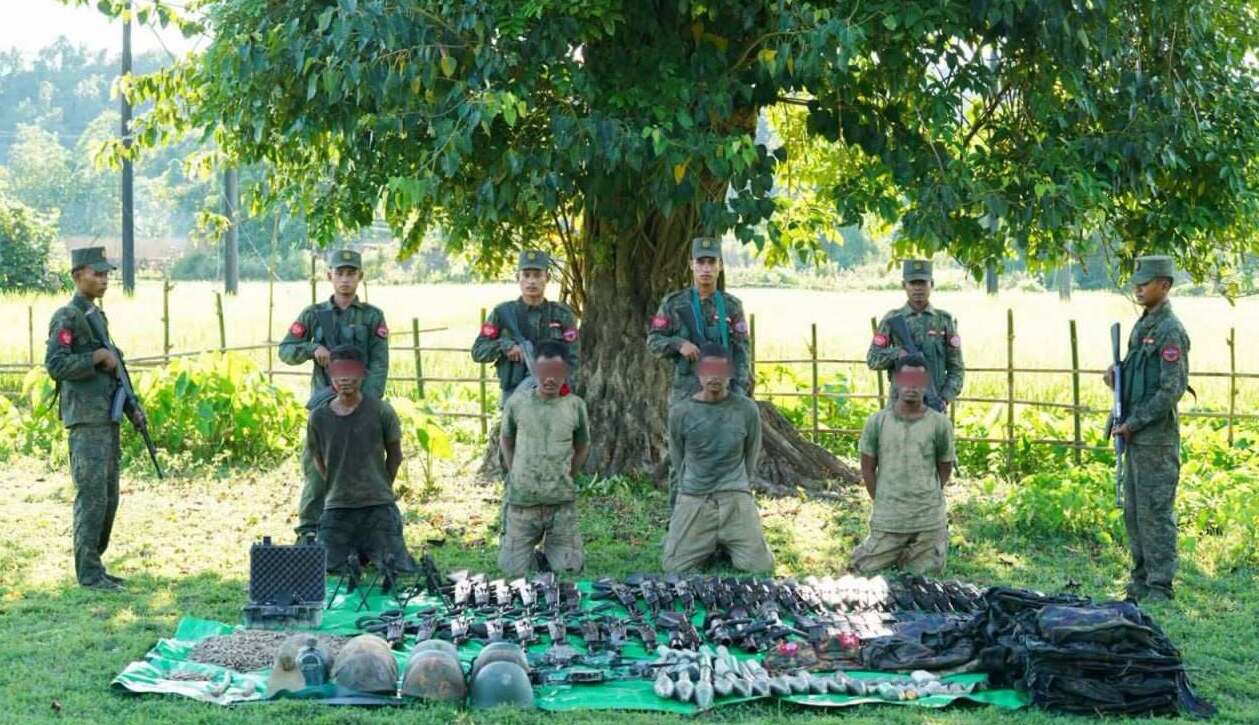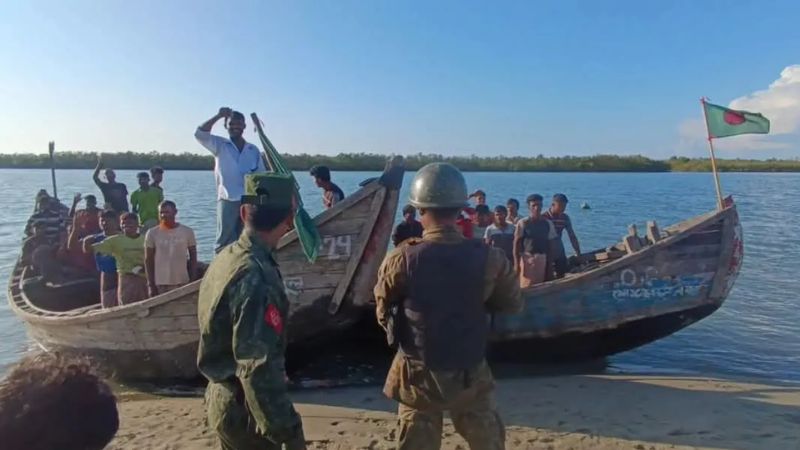
The Arakan Army (AA) has once again escalated its crackdown on cross-border fishing in the Naf River, further tightening its grip over the region. In a series of alarming incidents, the AA arrested 11 Bangladeshi fishermen and seized two fishing boats on February 24, reinforcing concerns about its growing authoritarian behavior in the conflict-ridden Rakhine State.
Escalating Crackdown on Fishermen
Local reports from northern Maungdaw indicate that AA patrols intercepted a motorized fishing boat near Sinbaw Kwe, a Rohingya village, detaining five Bangladeshi fishermen. Just minutes later, another boat with six fishermen met the same fate. The arrests follow a pattern of intensified restrictions on fishing activities in the Naf River, a critical lifeline for many communities on both sides of the Bangladesh-Myanmar border.
This is not an isolated incident. On February 21, AA forces detained 19 Bangladeshi fishermen and seized four boats. Earlier, on February 11, two Bangladeshi fishing trawlers carrying 10 fishermen were captured near Makaung Chaung.
The continued crackdown has sparked anxiety among fishing communities, who rely on the Naf River for their livelihood. Bangladeshi authorities have yet to receive any formal communication from the AA regarding the fate of those detained.
Rohingya Refugees Face Increased Persecution
In a separate development, the AA detained 24 Rohingya refugees on February 13. These individuals had left refugee camps in Bangladesh in search of work, primarily fishing, only to be arrested in the early hours. Their families remain deeply distressed, as the AA has provided no details about their condition or whereabouts.
Among the detained Rohingya are: Mamat Shofi (37), son of Abdul Ashim ,Sha Alam (20), son of Mamat Shofi, Abdul Hafez (25), son of Sha Alam, Abdus Salam (27), son of Abdus Shukur , Solim Ullah (30), son of Rahmat Ullah , Mamat Solim (28), son of Mohammad Rofiq.
Local Rohingya leaders have condemned these arbitrary arrests, calling for transparency and the immediate release of the detainees. “The AA’s actions are worsening the already dire conditions for our people. They are detaining innocent fishermen and refugees without justification,” a community elder told Bay of Bengal Post.
The Arakan Army’s Growing Authoritarianism
While the AA initially positioned itself as a resistance group against the Myanmar military, its recent behavior reflects an emerging autocratic rule. By imposing unilateral restrictions, conducting arbitrary arrests, and refusing to provide transparency, the AA is increasingly acting like a new authoritarian force in the region.
Human rights organizations have raised concerns that the AA is enforcing its own laws without due process, effectively replacing the Myanmar military’s repressive tactics with its own form of control. The group’s unwillingness to engage in dialogue or release detainees suggests a shift toward a militarized governance model that disregards fundamental rights.
Call for Action
The families of detained Bangladeshis and Rohingya refugees are calling for urgent intervention. They have urged the Bangladeshi government, international human rights organizations, and the United Nations to pressure the AA into releasing those held unlawfully.
The lack of official statements from the AA only adds to the uncertainty surrounding the fate of the detained individuals. As the Arakan Army tightens its grip on Rakhine State, many fear that its transformation into an unchecked authoritarian force will bring further suffering to both local and cross-border communities.
BOB Post