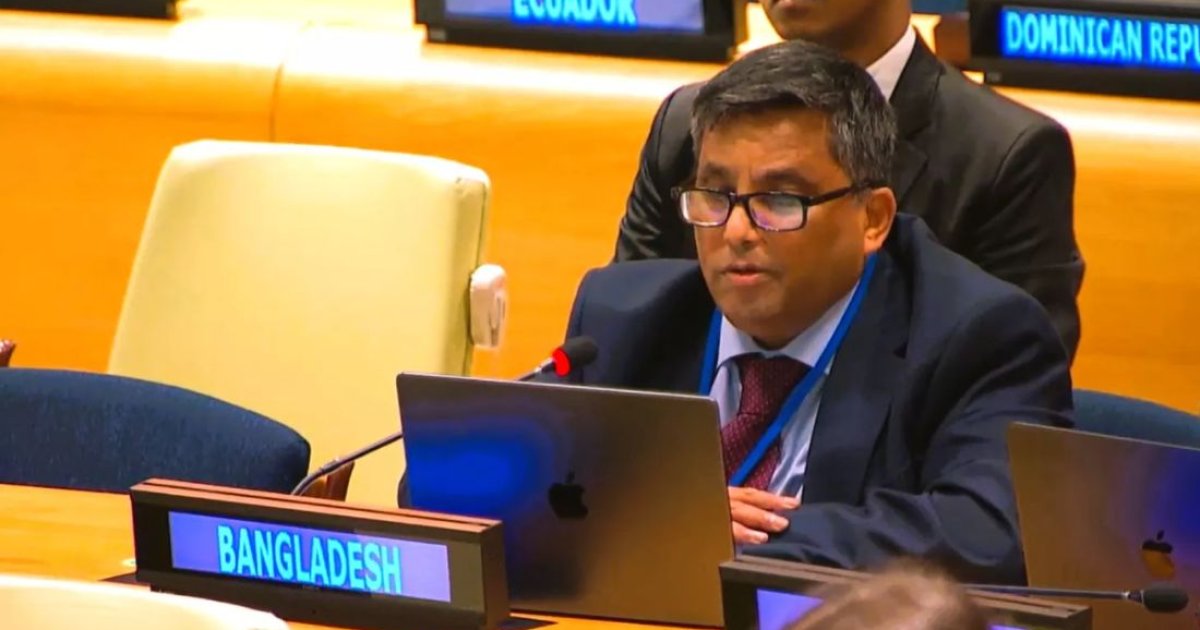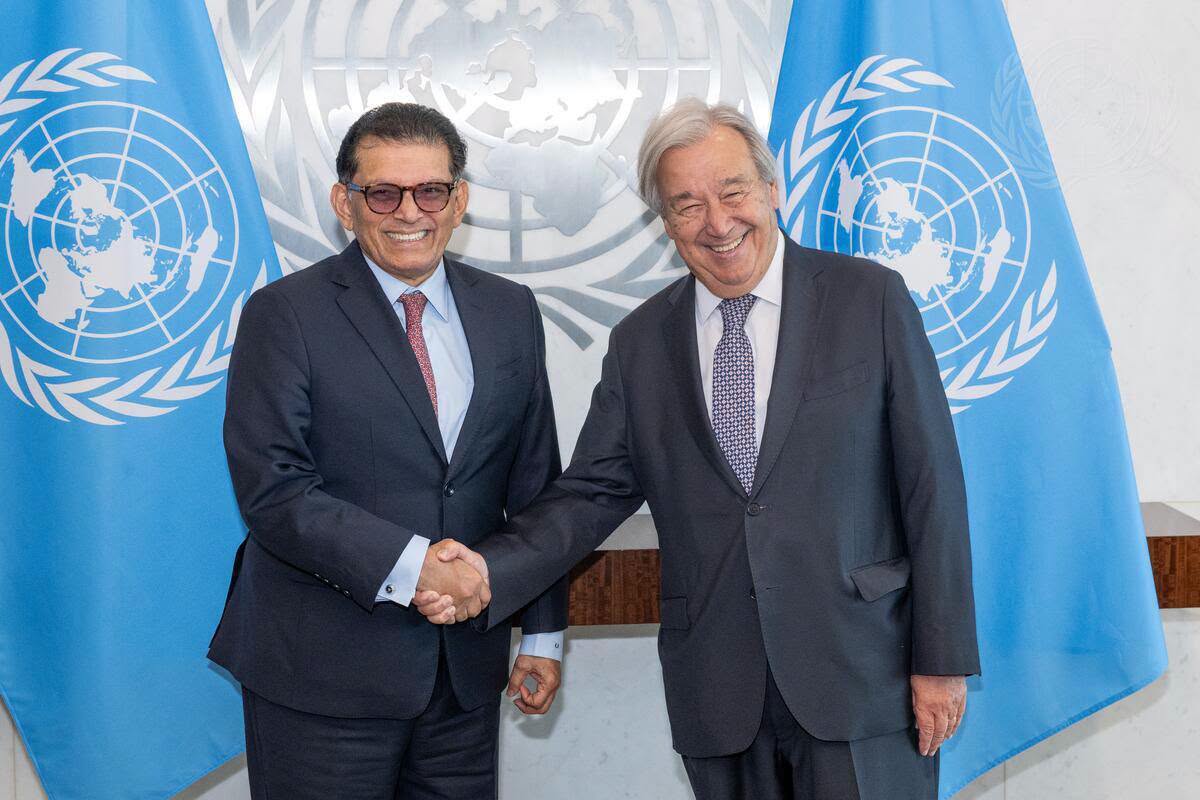
Restoring trust in the United Nations, advancing institutional reform and finding peaceful solutions to protracted conflicts will remain central to Bangladesh’s presidency of the 81st session of the UN General Assembly, Foreign Minister and General Assembly President Khalilur Rahman has said.
In an interview with UN News during the High-Level Week, Rahman said his presidency would focus on rebuilding confidence in the world body by addressing gaps between the expectations created at the UN’s founding in 1945 and its performance over the decades.
He said the United Nations had helped prevent another large-scale global war and supported the development of countries that were not represented when the organization was established. However, he acknowledged that the UN has struggled to prevent many conflicts and that progress on development has often been slow.
According to UN News, Rahman identified peace and security, development and human rights as three areas where the UN faces major unmet expectations. He said greater efforts were needed to make the Security Council work more coherently while strengthening the organization’s wider capacity to deliver on development and human rights.
“Restoring trust” is the central theme of Rahman’s one-year presidency. He said the views of world leaders attending the High-Level Week would help guide his efforts to advance the agenda.
The Bangladeshi diplomat also highlighted artificial intelligence as one of the major challenges distinguishing today’s international system from the world of 1945.
Rahman said AI could accelerate human development but could also create serious risks. He argued that innovation should continue while appropriate safeguards are established to ensure that technological development serves humanity. He stressed that governments, technology developers and users should all participate in discussions over the future governance of AI.
On criticism that the General Assembly lacks the enforcement power of the Security Council, Rahman defended the Assembly’s role as the only institution that brings together virtually the entire international community.
He pointed to the annual High-Level Week, when heads of state and government gather in New York, as evidence of the Assembly’s continuing diplomatic importance. He said the body provides leaders with a platform to discuss sensitive issues, establish international norms and provide direction to the international community.
Rohingya crisis shapes Bangladesh’s diplomatic approach
Rahman’s experience dealing with the Rohingya crisis in Bangladesh has also influenced his approach to his UN presidency.
He described the Rohingya situation as a grave humanitarian crisis and recalled meeting refugees who expressed a strong desire to return to their homeland.
According to the interview published by UN News, Rahman said the central lesson from the crisis was that violence cannot provide a lasting solution. He argued that dialogue, negotiation and engagement between parties remain essential to resolving conflicts.
His remarks place the Rohingya crisis within a broader diplomatic approach centred on negotiation and international cooperation. Bangladesh continues to host a large Rohingya refugee population after successive waves of displacement from Myanmar’s Rakhine State.
Rahman said the General Assembly’s convening role could be particularly valuable in such situations because it offers countries a setting to meet at the highest level and seek diplomatic solutions.
Looking ahead to the end of his one-year presidency, Rahman said he would measure his tenure by progress on several institutional priorities, including reform of the UN, maintaining its financial sustainability and accelerating the delivery of programmes and assistance at the local level.
He said achieving movement on any of those areas would allow him to hand over the Assembly presidency with satisfaction.
The remarks come as world leaders gather in New York for the 81st UN General Assembly High-Level Week, placing Bangladesh’s presidency at the centre of discussions over the future direction of the multilateral system.
BOB Post