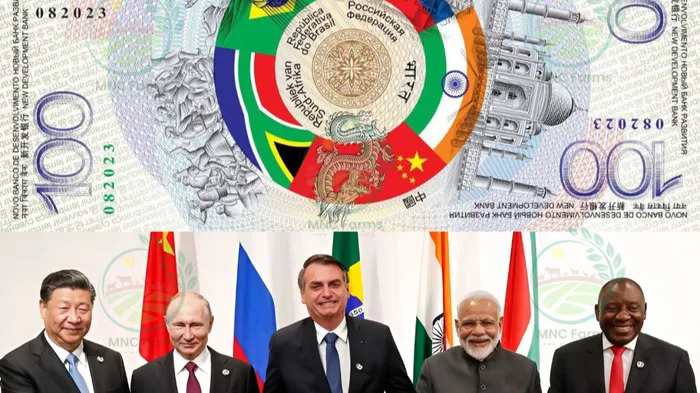
BRICS countries are not currently considering the creation of a common currency, India said on Saturday, while indicating that members will continue efforts to expand trade settlements in their own currencies.
Sudhakar Dalela, Secretary for Economic Relations at India’s Ministry of External Affairs, made the clarification during a media briefing after the first day of the two-day BRICS Summit in New Delhi.
“There is no proposal in the BRICS for a BRICS currency, as of now,” Dalela said, drawing a distinction between a shared currency and the use of national currencies for bilateral trade.
He said discussions on local-currency settlements had been underway for some time and could help reduce transaction costs while working alongside the existing international payment and settlement system.
According to the report, Indian Commerce and Industry Minister Piyush Goyal separately called for stronger links between the payment systems of BRICS members and greater use of local currencies. He also highlighted India’s Unified Payments Interface, or UPI, as an example of digital infrastructure that could support cross-border transactions.
The New Delhi Declaration adopted at the summit recognised ongoing discussions on trade settlements and investment using the local currencies of BRICS members. It also acknowledged that individual countries could adopt different approaches according to their national priorities.
The clarification comes after years of speculation that the expanding bloc could establish a common currency to reduce reliance on the US dollar. The idea has attracted particular attention in Washington, where US President Donald Trump has previously warned BRICS countries against creating a rival currency or promoting an alternative to the dollar.
Instead, the latest discussions point towards a more gradual approach focused on strengthening existing national currencies and payment networks rather than creating a single BRICS currency.
BRICS was originally formed by Brazil, Russia, India, China and South Africa and has since expanded to include 11 major emerging economies, alongside a wider group of partner countries.
With the bloc accounting for a significant share of the world’s population, economy and trade, its efforts to develop alternative payment arrangements could have wider implications for global financial and trade systems.
BOB Post