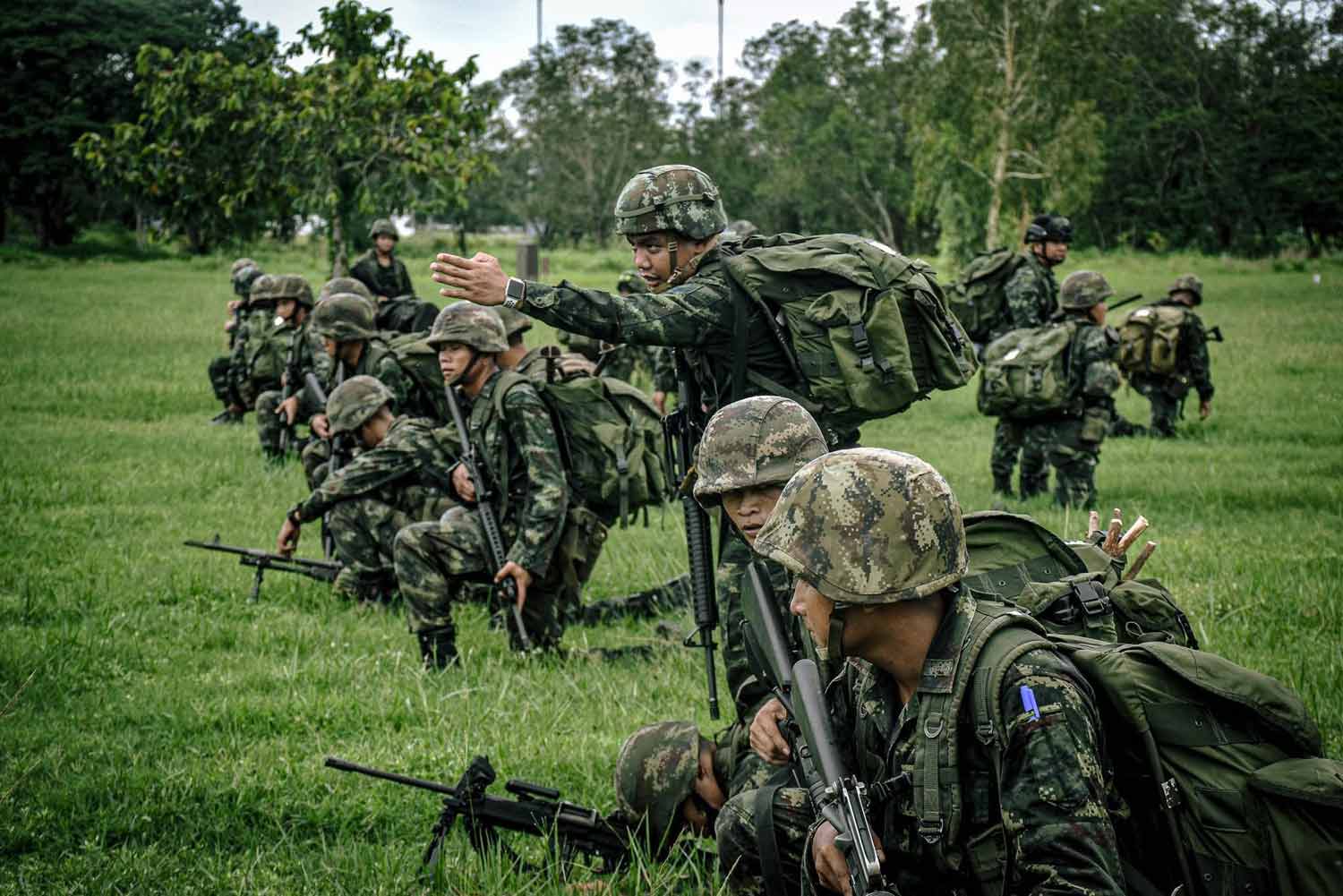
Fighting along the Cambodia-Thailand border escalated early Sunday despite a call from U.S. President Donald Trump for an immediate ceasefire, with both sides accusing each other of initiating fresh artillery attacks.
The renewed hostilities mark the most intense border clashes between the Southeast Asian neighbours in over a decade, pushing the death toll above 30—including at least 13 Thai and eight Cambodian civilians—and forcing over 200,000 people to flee from their homes.
Cambodian Prime Minister Hun Manet said his government "fully endorsed" President Trump's appeal and had agreed to an immediate and unconditional ceasefire. Thailand, however, maintained that no talks could proceed while Cambodian forces were "deliberately targeting civilians"—an allegation Phnom Penh has denied.

Thailand's acting Prime Minister Phumtham Wechayachai said the government appreciated U.S. concern but stressed that a ceasefire must be settled bilaterally. "We do not want a third country involved, but we’ve proposed foreign minister-level talks to determine conditions for drawing back troops and heavy weapons," he told reporters on his way to visit the affected border areas.
Cambodia's Defence Ministry accused Thai forces of launching artillery and ground attacks on several locations, including near the historic Preah Vihear temple, a UNESCO World Heritage site and long-standing flashpoint between the two countries. Thailand, for its part, said Cambodia initiated the attacks and had deployed long-range rocket systems along the border.
Journalists in Thailand’s Sisaket province reported shelling throughout Sunday, though it was unclear which side was responsible. Thai military officials claim the army is on high alert to "defend national sovereignty and protect civilian lives" until a clear agreement is reached.
Locals in both countries have expressed growing frustration. “If there is a ceasefire, things will be better,” said Thavorn Toosawan, a resident of Sisaket. In Phnom Penh, university student Sreung Nita said, “It is great if Thailand agrees to stop fighting so both countries can live in peace.”
On Saturday, Trump revealed he had spoken separately with the leaders of Cambodia and Thailand, claiming both agreed to meet immediately to discuss terms for a ceasefire. He added that tariff negotiations with both countries would be suspended until hostilities ceased.
Yet the diplomatic overture appears to have had little immediate impact, highlighting the difficulty of external mediation in a long-running territorial conflict. Cambodia has appealed to the International Court of Justice (ICJ) to resolve the dispute, but Thailand refuses to recognise the court’s authority in the matter and insists on bilateral negotiations.
The conflict centers on overlapping territorial claims along the 817-km (508-mile) border, especially around the ancient Preah Vihear and Ta Moan Thom temple complexes. Although the ICJ ruled in 1962 that Preah Vihear belongs to Cambodia, tensions escalated in 2008 when Phnom Penh sought UNESCO recognition for the site—sparking periodic skirmishes.
The latest flare-up follows the killing of a Cambodian soldier in late May, triggering a military build-up and political pressure within Thailand’s fragile coalition government.
BOB Post