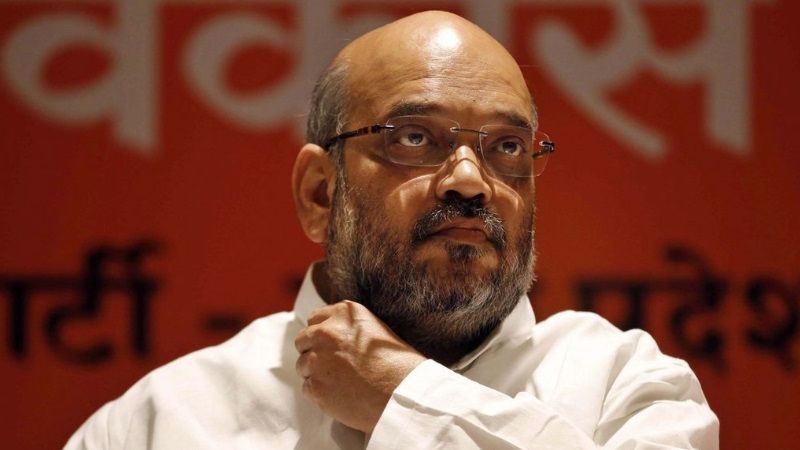
Indian Union Home Minister Amit Shah has directed the Delhi Police to adopt a swift and decisive legal approach in dealing with unauthorized migrants, including Bangladeshis and Rohingyas, residing in the capital city. In a high-level meeting held on Friday(February 28), Shah stressed that the issue of illegal intruders was directly linked to national security and should be addressed with strict action, NDTV reported.
An ongoing audit is being conducted in colonies with a significant presence of Bangladeshi and Rohingya migrants, following which authorities are set to take firm action. A senior official who attended the meeting disclosed that not only the illegal migrants but also those who facilitated their stay and helped them obtain false documents would face strict legal consequences.
“The illegal migrants in the city should be identified and deported,” Shah reportedly instructed officials, outlining a “top-to-bottom and bottom-to-top” approach to tackle unauthorized settlements in Delhi. The Home Minister also directed Delhi Police to take action against networks involved in enabling such migrants to stay illegally, emphasizing that citizens must feel reassured by the government’s firm stance on this issue.
Delhi Police has already started implementing these instructions at the grassroots level, with orders being circulated to local police stations. The meeting, which lasted over two hours, was attended by newly-elected Delhi Chief Minister Rekha Gupta, Home Minister Ashish Sood, and Delhi Police Commissioner Sanjay Arora. Officials were directed to ensure coordinated efforts between the Delhi government and police to expedite the process of deportation and law enforcement measures.
Additionally, Shah asked law enforcement agencies to crack down on interstate gangs operating in the Delhi-NCR region, emphasizing that street crime must be tackled aggressively to improve public perception of safety. He also called for the formation of new security committees in JJ clusters for the protection of women and children.
Furthermore, in a bid to expedite the judicial process regarding the 2020 Delhi riots, the Delhi government has been instructed to appoint special prosecutors to ensure swift disposal of riot-related cases.
India’s Strategy: Escaping Regional Responsibility?
While India intensifies its efforts to deport undocumented Bangladeshis and Rohingyas, the move raises questions about its approach to regional migration dynamics. India has long hosted refugees and undocumented migrants from neighboring countries, but recent years have seen a shift towards stricter immigration policies, particularly targeting Muslim migrants.
By focusing on deportation rather than addressing the root causes of migration, India effectively shifts the burden onto Bangladesh, which is already hosting over one million Rohingya refugees from Myanmar. While Bangladesh has repeatedly engaged in diplomatic discussions to manage the issue, India’s aggressive push for deportation places additional pressure on Dhaka to absorb undocumented returnees.
Despite its historical and economic ties with Bangladesh, India’s policy reflects a broader pattern of disengaging from its regional responsibilities. Instead of working collaboratively on migration management, India’s approach appears to offload the issue onto its smaller neighbor, expecting Bangladesh to bear the burden of reintegration without a comprehensive repatriation framework.
As India tightens its migration policies, the question remains: Will New Delhi engage in meaningful diplomatic negotiations with Dhaka, or will it continue to impose unilateral measures that complicate the region’s migration crisis?
BOB Post