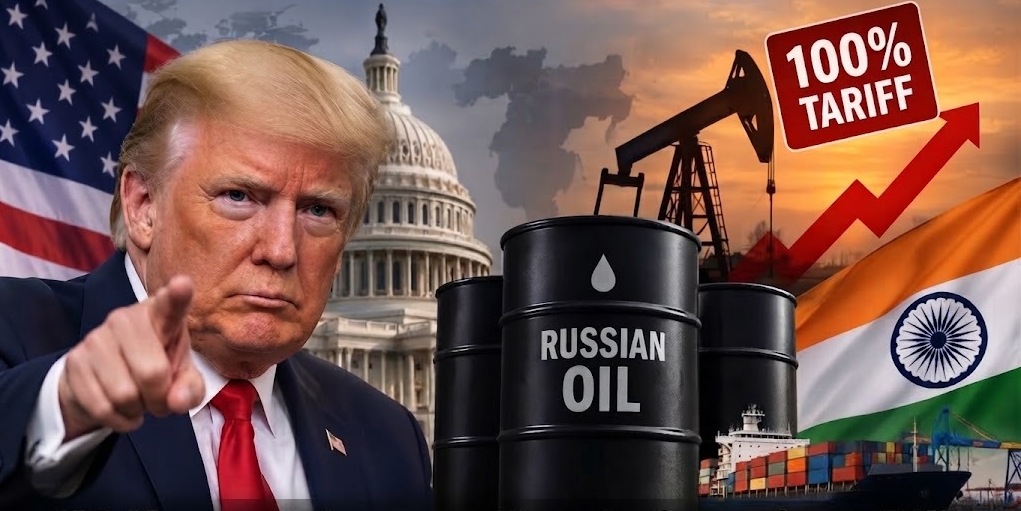
India’s reliance on Russian oil is facing a new test after the US House of Representatives passed a bill that could allow President Donald Trump to impose tariffs of up to 100% on countries buying Russian oil and gas.
The measure puts India in a difficult position. Russian crude has become a major part of its energy supply since Moscow’s invasion of Ukraine disrupted global oil trade. Indian refiners benefited from cheaper Russian crude, while Russia gained a major market for oil that was increasingly shut out of Western markets.
Russia supplied 30.3% of India’s crude imports in the 2025-26 financial year, worth about $40.8 billion, according to the Global Trade Research Initiative. In July, Russian oil made up more than half of India’s crude imports.
According to BBC, the US move could affect India well beyond the energy sector. Higher US tariffs could hit Indian exporters, put pressure on the rupee and weaken refinery margins and the country’s trade balance.
The issue is particularly sensitive because the US is a major market for Indian goods. India exported about $104 billion worth of goods to the US in 2025, including electronics, pharmaceuticals, machinery, textiles and petroleum products.
India has said it is monitoring the US legislation and remains committed to securing affordable and reliable energy for its population. New Delhi has also raised concerns that the measures could affect both bilateral relations and global energy markets.
For India, replacing Russian crude would not be simple. The country imports more than 85% of its crude oil, and shifting quickly to supplies from other producers could raise crude, shipping and insurance costs.
The economics of Russian oil have also changed. Discounts are smaller than they were in the early years of the Ukraine war, while competition for Russian crude and the costs linked to sanctions and shipping have increased.
The pressure comes as India and the US continue to discuss trade. Washington’s latest threat therefore puts New Delhi in a delicate position: maintaining a major source of crude while avoiding further damage to its access to the US market.
BOB Post