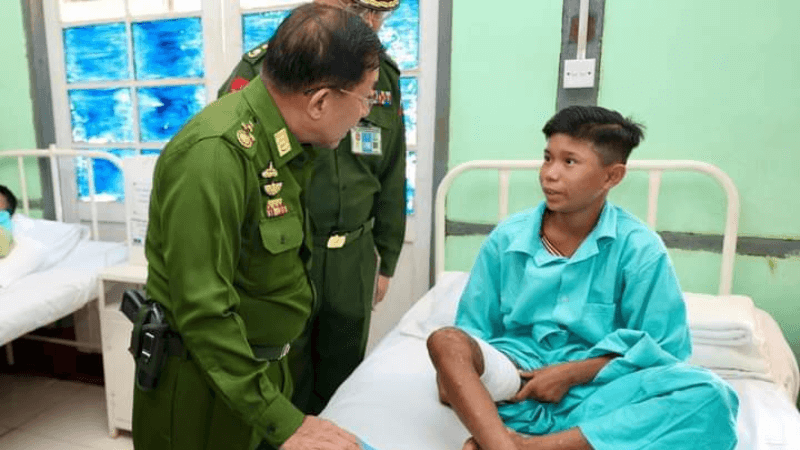
Myanmar's junta leader, Min Aung Hlaing, has come under scrutiny for his recent visit to Lashio in northern Shan State, where he met with injured soldiers and internally displaced persons (IDPs). While the junta portrayed the visit as a demonstration of support, critics argue that it was primarily a propaganda maneuver aimed at reshaping the regime's image in the face of recent military setbacks. The delayed visit, occurring a month and a half after significant defeats suffered by the junta's army in the region, raised questions about the regime's reluctance to acknowledge losses at the hands of ethnic armed groups. Some interpret this delay as a sign of internal disarray within the regime. Min Aung Hlaing's visit received extensive coverage in the junta's media outlets, depicting him as a compassionate leader deeply concerned about the well-being of both the military and civilians. The coverage included images of him shaking hands with injured soldiers and distributing food and supplies in IDP camps.
Critics, however, dismissed these actions as a cynical attempt to manipulate public opinion. They highlighted the junta's responsibility for the majority of civilian casualties in the conflict, emphasizing the regime's inadequate response to the humanitarian crisis it has triggered, forcing millions to flee their homes. The visit to Lashio by the junta's leader is significant given the recent setbacks faced by the military, the growing momentum of the National Unity Government (NUG), and international condemnation of human rights abuses by the regime.
The UN Office for the Coordination of Humanitarian Affairs (OCHA) estimates that over 1 million people have been displaced by the conflict in Myanmar, with urgent needs for food, shelter, and medical care. Despite this, critics argue that the junta's visit did not address the pressing humanitarian assistance required, revealing a lack of genuine concern for the well-being of the Burmese people. Min Aung Hlaing's delayed appearance in Lashio follows the loss of seven towns and over 250 military bases and outposts in northern Shan State within a little over a month. Critics see the visit as an attempt to counteract the regime's negative image following these defeats.
BOB Post