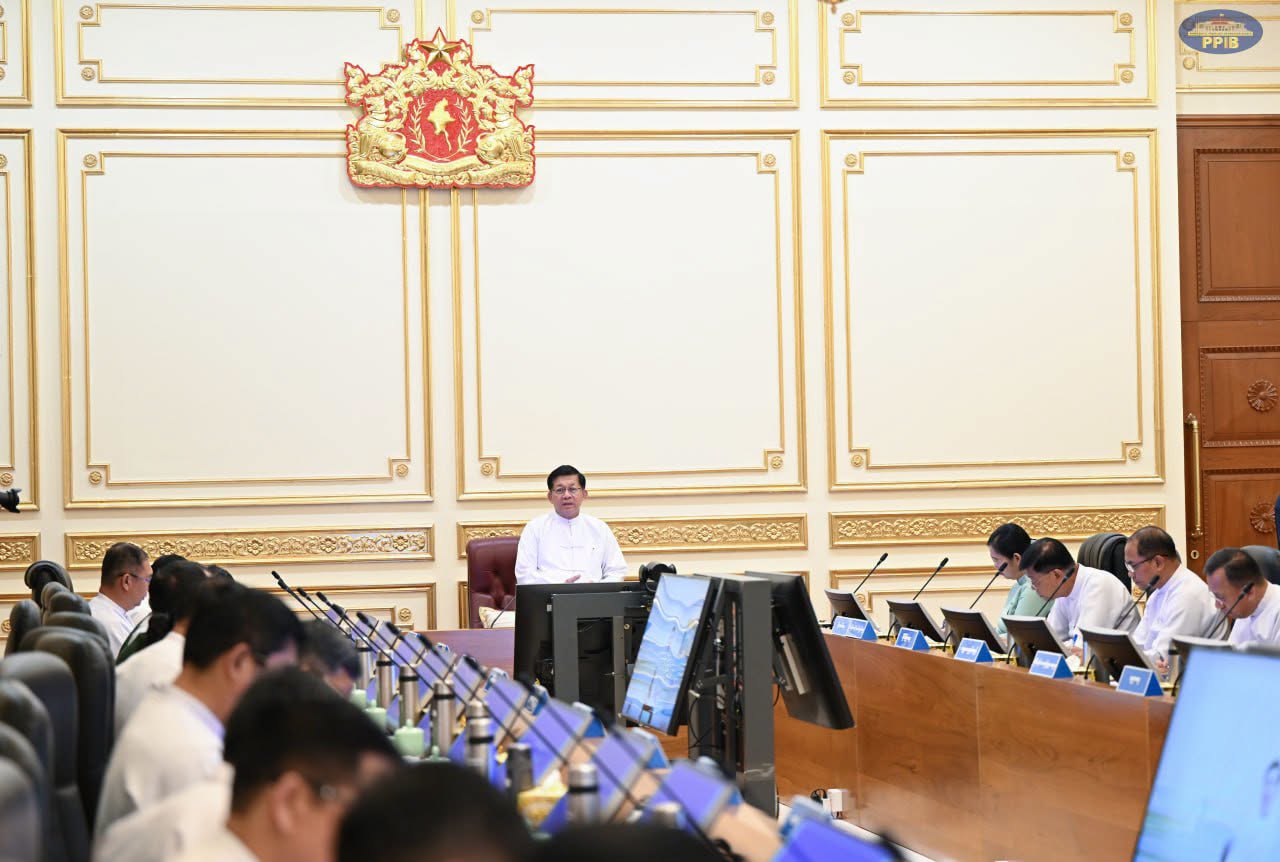
Myanmar’s military leader and Acting President, Senior General Min Aung Hlaing, has declared that ties between Myanmar and China are at their “highest level ever,” pledging further elevation of relations despite mounting political, financial, and economic pressures from the international community.
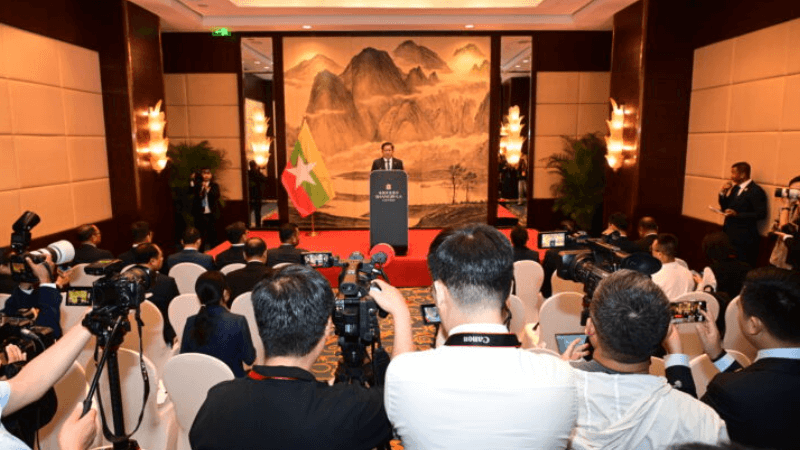
Speaking at a press conference on Saturday (September 6) with Chinese media in Chengdu, Sichuan Province, Min Aung Hlaing framed Myanmar and China as “family-like neighbors” with more than 1,300 miles of shared border and centuries of friendship. He stressed that both nations are strategic partners whose stability and development are mutually reinforcing.

The junta chief, who heads Myanmar’s State Security and Peace Commission, accused “powerful nations” of deploying political, economic, financial, and even military pressure against smaller states, citing U.S. sanctions on China as an example. He said Myanmar, too, had been subjected to such coercion, a reference to international sanctions imposed following the military’s 2021 coup and subsequent violent crackdowns on dissent.
Min Aung Hlaing endorsed Chinese President Xi Jinping’s five-point Global Governance Initiative (GGI), unveiled at the Shanghai Cooperation Organization (SCO), praising its emphasis on equality, international law, cooperation, and “people-centred” outcomes. He also expressed interest in aligning Myanmar with China’s green development agenda, promising adoption of similar practices in collaboration with Beijing.

The remarks capped Min Aung Hlaing’s week-long official visit to China, during which he sought to shore up political legitimacy and secure greater economic and strategic backing. He returned to Myanmar on the evening of September 6.
While Min Aung Hlaing celebrated deepening ties with China, the announcement comes against a backdrop of Myanmar’s worsening isolation on the global stage. Since the 2021 coup, the junta has faced sweeping sanctions, international condemnation, and escalating armed resistance at home. The regime’s heavy reliance on Beijing highlights its shrinking circle of allies, as Western nations and regional powers distance themselves from Myanmar’s military rulers.
China, meanwhile, views Myanmar as a critical partner in its Belt and Road Initiative, with projects such as oil and gas pipelines, special economic zones, and deep-sea ports advancing Chinese strategic interests in the Indian Ocean. Analysts caution that while the rhetoric of “family-like” relations masks an asymmetric partnership, the Myanmar junta’s dependence on Beijing leaves Naypyidaw with limited bargaining power.
BOB Post