In the blood-soaked shadows of Myanmar’s civil war, a quieter but equally brutal campaign is unfolding in Rakhine State. A new report by the Burmese Rohingya Organisation UK and recent investigations by The Washington Post confirm that the Myanmar junta has begun using starvation as a calculated weapon against the Rohingya population — a chilling evolution in the ongoing genocide.
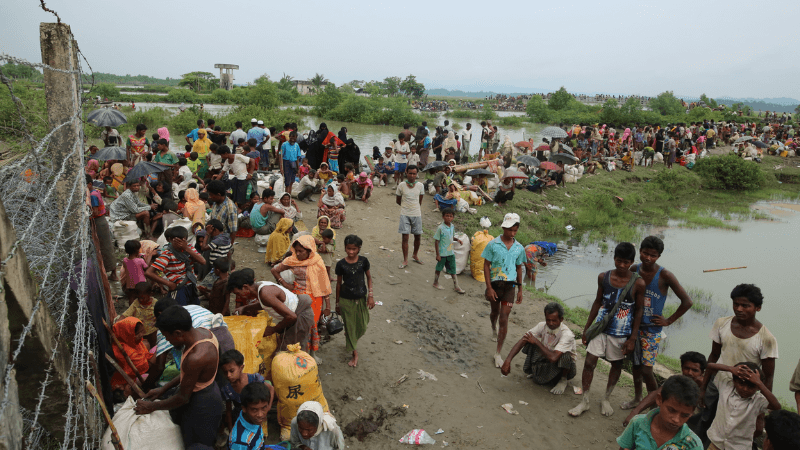
Since the resumption of conflict with the Arakan Army (AA) in late 2023, the military has imposed a near-total blockade on humanitarian aid to Rohingya areas such as Buthidaung, Maungdaw, and Sittwe. Rohingya civilians are denied food, medical supplies, movement, and even the right to flee. In the past few weeks alone, at least 25 people have died from starvation and another seven from lack of medical care. These are not wartime accidents — they are deliberate acts.
“The military are starving us to death. They are killing us without bullets,” one Rohingya civilian told field investigators. Entire families are reportedly surviving on little more than rice water, while elders and the sick die in silence. This is not collateral damage. It is a policy of extermination.

The 2025 report, "Starving to Death: The Latest Phase of the Rohingya Genocide", highlights the junta’s coordinated strategy to destroy the remaining 600,000 Rohingya trapped in Rakhine through engineered deprivation. Denied the right to fish, farm, or work, the community has been turned into a sealed-off target for bureaucratic annihilation.
But the military is not the only perpetrator in this dark chapter.
The Arakan Army — once seen as a possible ally by some Rohingya hopefuls — has increasingly mirrored the junta's cruelty. Despite initial outreach to Rohingya communities, the AA has been accused of burning villages, expelling civilians, and contributing to the blockade on aid. Far from liberators, the AA now appears complicit in the ethnic cleansing. Caught between a genocidal army and an ethno-nationalist insurgency, the Rohingya are left with no defenders and no escape.
International attention has faded, and funding for humanitarian aid has shriveled. US support for Rohingya programs has been drastically cut, and donor fatigue has set in as crises in Ukraine and Gaza dominate the headlines. But this neglect is costing lives. This is not just a failure of policy — it is a moral collapse.
What’s urgently needed is action. Sanctions under Magnitsky-style legislation should immediately target both Myanmar junta leaders and AA commanders involved in the siege of Rohingya areas. Humanitarian agencies must demand unfettered access to Rakhine — or, if blocked, initiate emergency airdrops to save lives. ASEAN must abandon its shameful “noninterference” excuse and pressure Myanmar to allow aid through. And countries like Malaysia, Indonesia, and the Gulf states must help Bangladesh shoulder the burden of supporting nearly a million refugees.
Justice cannot wait. Evidence of starvation and medical neglect must be added to the case files at the International Criminal Court and International Court of Justice. This is genocide in slow motion — and the world knows it.
The question is no longer whether these atrocities are happening. It is whether we care enough to stop them.
If the international community looks away now, it won’t be out of ignorance — it will be out of cold indifference. And that indifference will be etched into the bones of Rohingya children who die unseen, unfed, and unheard.
BOB Post