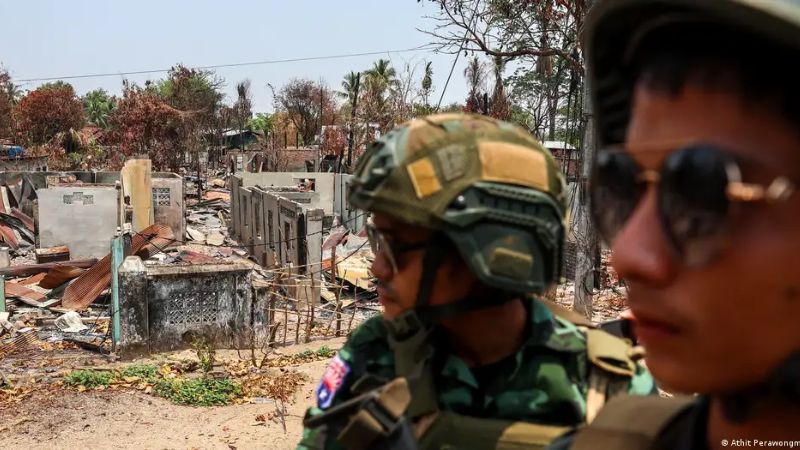
Myanmar's military junta has barred international media from entering earthquake-stricken regions as the official death toll rises to 2,056. The regime cited logistical challenges, including accommodation shortages, power outages, and water supply disruptions, as reasons for the ban.
"It is not possible for (foreign journalists) to come, stay, find shelter, or move around here. We want everyone to understand this," said junta spokesperson Zaw Min Tun in an audio statement issued on Sunday.
With local reporters already facing strict press restrictions, the move has sparked concerns over transparency in the junta's handling of the disaster. Human rights groups and aid organizations have also accused the military of blocking humanitarian assistance from reaching regions outside its direct control.
Earthquake Aftershocks and Rising Casualties
The devastating 7.7-magnitude earthquake struck Myanmar on March 28 at 12:51 p.m. local time, with the epicenter located just 20 kilometers from Mandalay, the country's second-largest city. The initial quake was followed minutes later by a 6.4-magnitude aftershock, and Myanmar’s Department of Meteorology and Hydrology has since recorded 36 additional aftershocks as of Monday morning.
According to the State Administration Council, at least 2,056 people have died, 3,900 have been injured, and 270 remain missing. The National Disaster Management Committee has declared a state of emergency across the Sagaing, Mandalay, and Magway regions, parts of Shan State, Naypyidaw, and the Bago region.
Junta Faces Criticism Amid Crisis
The military's restrictions on media access and reports of ongoing airstrikes in conflict zones have drawn international condemnation. Since seizing power in a 2021 coup, Myanmar's military has been engaged in a civil war with multiple armed resistance groups, further complicating disaster response efforts.
International organizations, including the United Nations, have called for unhindered access for journalists and humanitarian aid. Myanmar Now, an independent news outlet, pointed to the junta’s long-standing crackdown on the press, highlighting the 2023 arrest of photojournalist Sai Zaw Thaike, who was sentenced to 20 years in prison while covering Cyclone Mocha.
Meanwhile, neighboring Thailand has also suffered casualties, with at least 19 deaths confirmed after a 30-story skyscraper collapsed in Bangkok during the tremors.
As rescue operations continue, aid groups warn that the death toll could rise sharply in the coming days, particularly in remote areas still cut off from communication and relief efforts.
BOB Post