In 2018, while working as a journalist, I joined a government-guided tour of Myanmar’s northern Rakhine State, the heartland of the Rohingya people. These tightly controlled trips followed the Rohingya refugee crisis, an event that captured global headlines. At the time, northern Rakhine was largely inaccessible to independent media, so reporters welcomed the rare opportunity to witness events on the ground, even under heavy government scrutiny.
The intention behind these tours remains unclear. Under the de facto civilian leadership of Aung San Suu Kyi, Myanmar’s government appeared to want to project transparency. Yet, the tours only highlighted the destruction and suffering inflicted by the military’s campaign against the Rohingya, undermining any propagandist ambitions.
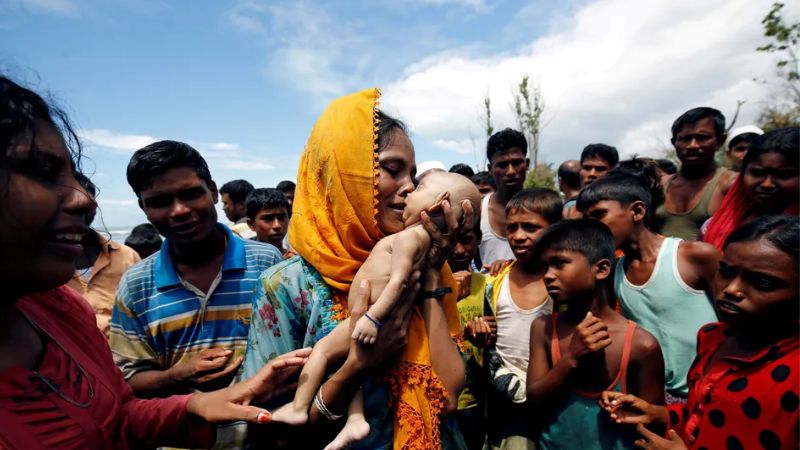
Driving through northern Rakhine, one could see village after village reduced to rubble, the remains of homes stark reminders of the violence that forced over 740,000 Rohingya to flee to Bangladesh after the August 2017 military crackdown. Even attempts to present a semblance of rebuilding—model homes for returning refugees—felt hollow and insincere, dwarfed by the scale of the devastation around them.
The atrocities of the 2017 “clearance operations” were evident. Journalists on earlier tours described harrowing sights: smoldering homes and scenes of active arson. The brutality was undeniable, yet Myanmar’s military faced no immediate accountability.
In February 2021, the same military staged a coup, detaining Suu Kyi and dismantling what little remained of civilian governance. The subsequent crackdown on protests and dissent has left over 6,000 dead, 20,000 imprisoned, and more than three million displaced, with children comprising nearly 40% of the displaced population.
The coup, like the earlier military campaign against the Rohingya, defied logic. Myanmar’s military already wielded significant power under the country’s political structure. Yet emboldened by impunity, they escalated their abuses, targeting not just the Rohingya but the entire nation.
Last month, a significant step toward justice emerged. On November 27, the International Criminal Court's prosecutor’s office requested an arrest warrant for General Min Aung Hlaing, the architect of both the 2017 Rohingya expulsions and the 2021 coup. This move, long advocated by Amnesty International and other human rights organizations, represents a critical opportunity to hold Myanmar’s military accountable.
Should the ICC issue the warrant, the international community must act decisively to ensure Min Aung Hlaing’s arrest and transfer to The Hague. Anything less would perpetuate a dangerous precedent of inaction, emboldening further atrocities and deepening the despair of Myanmar’s people.
Justice for the Rohingya is justice for all of Myanmar. The international community must continue pushing for broader accountability, including referring the entire Myanmar situation to the ICC. While this arrest warrant is just one step, its potential impact is seismic. It sends a powerful message: impunity is not infinite, and justice remains within reach.
(CREDIT: Published by Amnesty International’s Myanmar Researcher Joe Freeman)