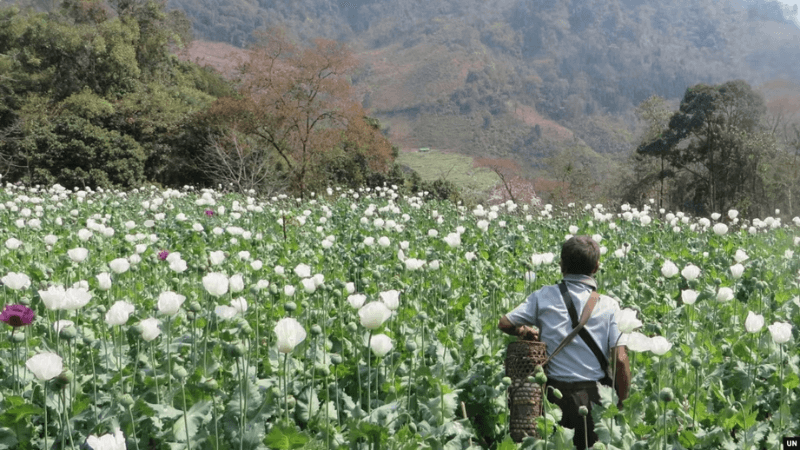
Myanmar has taken over Afghanistan as the world's leading opium producer, according to a report released by the United Nations Office on Drugs and Crime (UNODC). The report reveals that Myanmar produced an estimated 1,080 metric tons of opium in 2023, surpassing Afghanistan's production of 870 metric tons. This shift is attributed to several factors, including increased opium poppy cultivation in Myanmar, which has surged by 33% since the military coup in 2021. In contrast, Afghanistan's cultivation has declined by 17% since the Taliban takeover in 2021.
The UNODC report highlights the following key points:
1. Increased Cultivation in Myanmar: Opium poppy cultivation in Myanmar has risen by 33%, reaching an estimated 47,000 hectares in 2023. The country's economic downturn post-coup has driven farmers to opium cultivation, with the area under cultivation at its highest since 2013.
2. Decreased Cultivation in Afghanistan: Afghanistan, once the world's leading opium producer, has seen a drastic decline in cultivation by 95%, dropping to around 330 metric tons. The Taliban's strict ban on poppy farming has contributed to this significant reduction.
3. Limited Enforcement Capabilities in Myanmar: The breakdown of law and order following the military coup has hampered the Myanmar government's ability to control opium poppy cultivation and trafficking. The opiate economy's estimated value in Myanmar now ranges between $1 billion and $2.4 billion, a significant portion of the country's GDP.
4. Global Demand for Heroin: The demand for heroin, derived from opium, remains high globally due to factors like poverty and lack of access to treatment. This sustained demand contributes to the profitability of opium production.
The implications of Myanmar's emergence as the top opium producer are profound. Opium production serves as a major income source for armed groups, fueling instability and violence in the region. Additionally, opium cultivation has severe environmental consequences, leading to deforestation and soil erosion, along with pollution from the chemicals used in processing.
The UNODC calls for increased international support to address Myanmar's opium issue. Key recommendations include providing assistance to farmers to transition to alternative crops, strengthening law enforcement capabilities to combat production and trafficking, and investing in drug treatment and prevention programs. Myanmar's economic turmoil and insecurity have led to a surge in opium farming, and the international community must act swiftly to prevent further escalation. The UNODC report suggests that without alternatives and the rule of law, more people may turn to opium cultivation, exacerbating the existing challenges.
This shift in global opium production dynamics also raises concerns about the potential impact on the heroin market. As Afghan supplies diminish, there is a likelihood of Golden Triangle heroin, primarily from Myanmar, re-entering markets in Europe and North America. The surge in opium production is not without costs. The UNODC notes an increase in opium use among farmers, highlighting the need for programs to address addiction. Rising opium prices also pose challenges for initiatives encouraging farmers to switch to alternative crops, like coffee.
Myanmar's position as the world's top opium producer underscores the urgency for comprehensive measures to address the economic, social, and environmental repercussions. International collaboration is crucial to tackle the root causes of opium cultivation and facilitate a sustainable transition for affected communities.
BOB Post