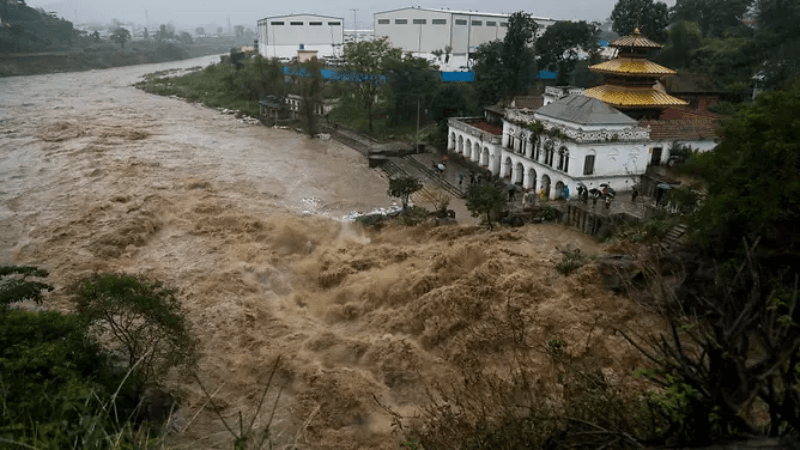
At least 39 people have died and 11 others are missing across Nepal after relentless heavy rainfall over the past 36 hours triggered widespread landslides and flash floods, authorities said on Sunday (October 5).
The torrential downpour has devastated communities, sweeping away bridges, destroying roads, and leaving several areas isolated. The majority of the deaths occurred in eastern Nepal, with data from the Armed Police Force Headquarters confirming 36 fatalities in Koshi Province and three in Madhesh Province. Thirteen other people have been injured nationwide.
The district of Ilam in Koshi Province was the most severely affected, with landslides accounting for 27 deaths, while five more people remain missing in the area. Elsewhere, two people were killed in Udayapur, and a lightning strike killed one person in Khotang. A road accident amid the severe weather in Panchthar claimed six lives. In Madhesh Province, three people were struck and killed by lightning in Ranirhat. Authorities also reported one fatality in Bara, four in Rasuwa, and one in Kathmandu after an individual was swept away by a river.

Nepal Police spokesperson Vinod Ghimire confirmed that 11 people have been swept away by floodwaters since Saturday and are officially listed as missing. Shanti Mahat, a spokesperson for the National Disaster Risk Reduction and Management Authority (NDRRMA), stated that rescue operations are ongoing in all affected regions.
The severe weather ha s crippled transportation, blocking multiple highways and washing away entire sections of road, leaving hundreds of travelers stranded. In the Kathmandu Valley, several rivers have overflowed, submerging homes and cutting the capital off from other parts of the country. Domestic flights have been severely disrupted, though international services remain operational, according to an airport spokesperson.
In southeastern Nepal, the Koshi River is flowing above the danger level, prompting officials to open all 56 sluice gates of the Koshi Barrage. This is a significant increase from the 10 to 12 gates used during normal conditions. The river, which often causes severe flooding in India’s Bihar state, has doubled its usual flow.
Nepal experiences deadly floods and landslides annually during the monsoon season, which typically runs from mid-June to mid-September. The Department of Hydrology and Meteorology has warned that rainfall is likely to continue until Monday, and authorities have said they are maintaining maximum alert to assist affected communities.
BOB Post