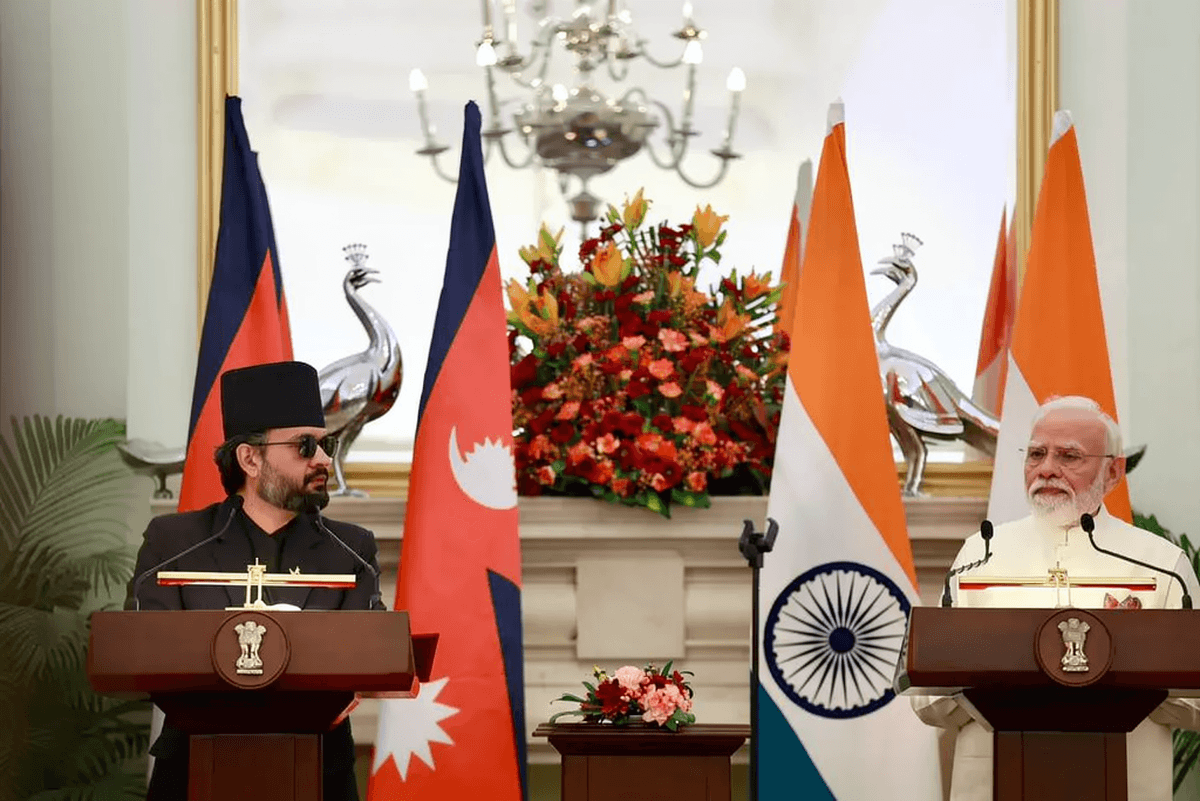
India has announced a 24,000 crore Nepali rupee assistance package for flood-hit Nepal, signalling a fresh push to strengthen bilateral ties under its new leadership. The announcement came during Nepalese Prime Minister Balendra Shah's first bilateral visit to New Delhi since taking office.
Indian Prime Minister Narendra Modi announced the package after talks with Shah on Tuesday, saying the funds would support reconstruction and development in areas devastated by floods.
The assistance will focus on restoring damaged infrastructure, rebuilding communities, and helping families who lost their homes and livelihoods. Modi also expressed condolences over the disaster and praised Shah's development vision, describing his electoral mandate as a reflection of the hopes of Nepal's younger generation.
The two leaders also discussed regional cooperation, economic ties, and energy security. Modi said India would continue supplying fuel, fertilizer, and other essential commodities to Nepal despite difficulties in global oil supplies.
According to NDTV World, Shah thanked India for standing beside Nepal during natural disasters and other difficult periods. He described the relationship between the two countries as exceptionally close, saying their historic ties could hardly be captured in words.
The visit also produced eight memoranda of understanding covering civil service training, space research, healthcare, urban development and traditional medicine. The two sides further inaugurated connectivity and energy projects and launched new initiatives to expand cooperation.
Beyond bilateral commitments, the meeting carries strategic importance for India as competition for influence in South Asia intensifies. China has steadily expanded its footprint in Nepal through investments in airports, highways and hydropower projects, challenging India's traditional position in the landlocked Himalayan country.
Nepal remains heavily dependent on India for petroleum products and other essential supplies. However, energy cooperation has increasingly become a two-way relationship, with India importing around 1,200 megawatts of electricity from Nepal.
Despite deep economic and cultural connections, relations have periodically faced tensions over territorial disputes and allegations of Indian political interference in Nepal's domestic affairs.
Modi's engagement with Shah therefore comes at a critical moment for India's neighborhood policy. New Delhi is seeking to maintain its strategic influence while addressing Nepal's demand for a more balanced and independent foreign policy.
BOB Post