Rakhine-based civil society organizations have called for an international no-fly zone over Myanmar’s western Rakhine State, warning that continued military airstrikes are putting thousands of civilians at risk.
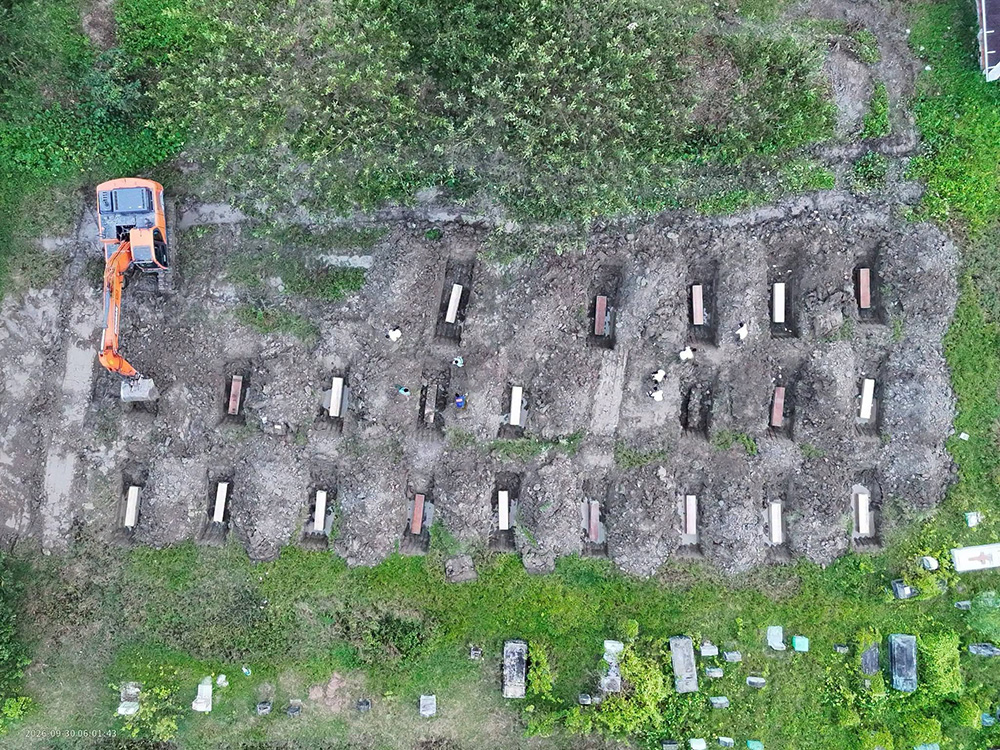
The appeal comes amid a growing wave of attacks on civilian areas, including markets, monasteries and displacement camps. A September 28 airstrike on a crowded market in Kyauktaw killed at least 50 people, including women and children, triggering international condemnation.
The Arakan Civil Society Charitable Organizations (ACSO), an umbrella network of 70 local and international groups, has urged the UN Security Council, ASEAN and world governments to move beyond statements and take concrete steps to stop further civilian deaths.
According to The Irrawaddy, ACSO is also seeking sanctions to block aviation fuel, weapons and military equipment supplies to Myanmar's military, alongside cross-border humanitarian channels to deliver food and medicine directly to displaced communities.
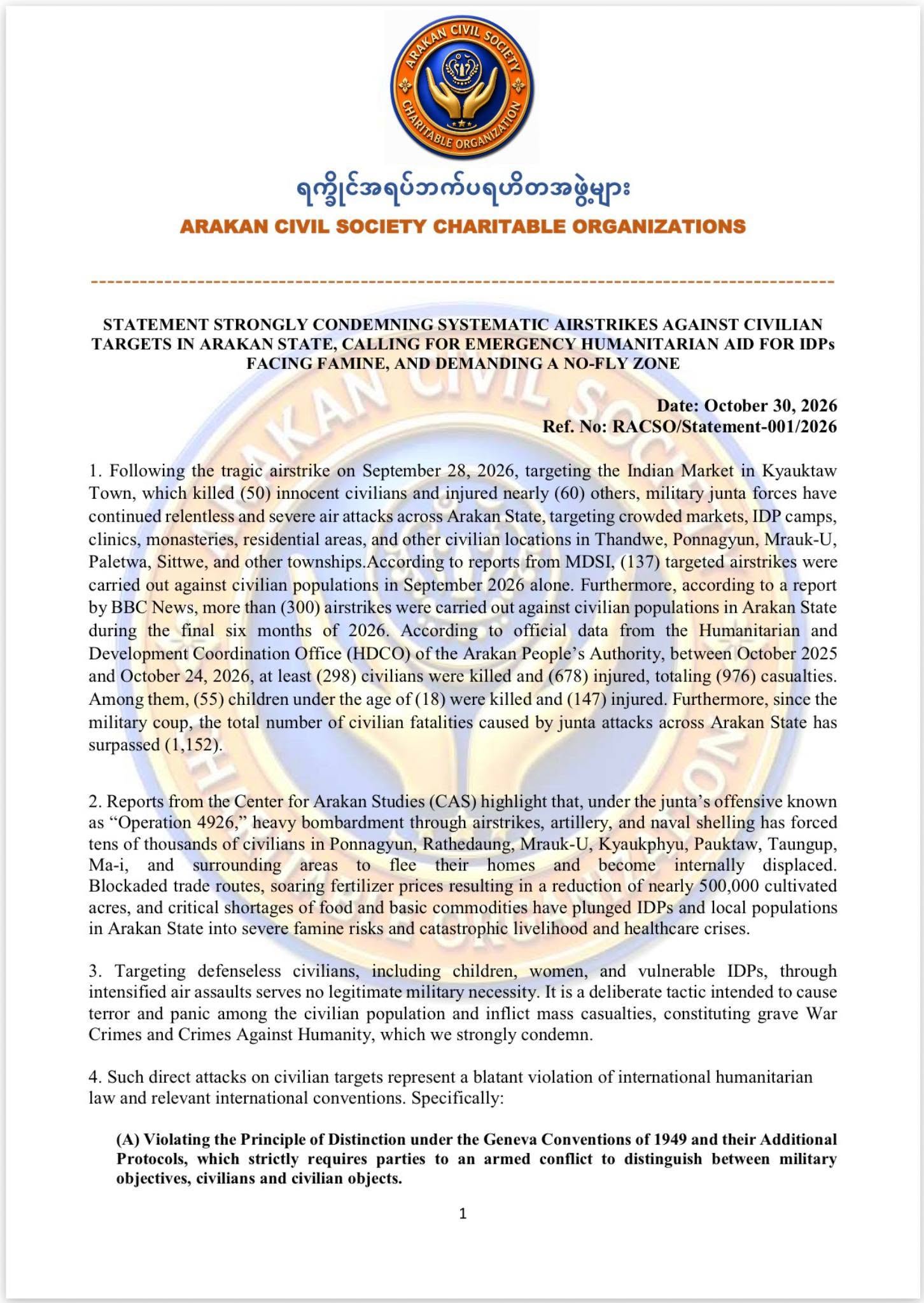
An ACSO representative said local aid workers had witnessed the deaths of children and pregnant women in the Kyauktaw attack. The group estimates that more than 600 airstrikes have hit Rakhine and neighbouring areas over the past six months.
Figures from the Myanmar Defense and Security Institute show that 136 aerial attacks were recorded in Rakhine in September alone, killing 62 civilians and injuring 82. The state recorded the country's highest civilian casualty toll for that month, ahead of Sagaing and Magwe.
The organisation has also called on the Independent Investigative Mechanism for Myanmar to collect evidence of alleged war crimes and ensure those responsible face justices.
The military's air campaign has intensified since the Arakan Army (AA) captured 14 of Rakhine's 17 townships during its 2023-24 offensive, along with Paletwa in neighbouring Chin State. Fighting remains concentrated around Sittwe and Kyaukphyu, two strategically important areas still held by the military.
Meanwhile, diplomatic efforts to ease the military leadership's international isolation have raised further concerns. China, Russia and Belarus recently blocked efforts to condemn Myanmar's human rights record at the UN General Assembly, drawing criticism from rights advocates.
For Rakhine's civil society groups, the message is increasingly urgent: without meaningful international intervention, civilians will continue to bear the cost of a war they did not choose.
BOB Post