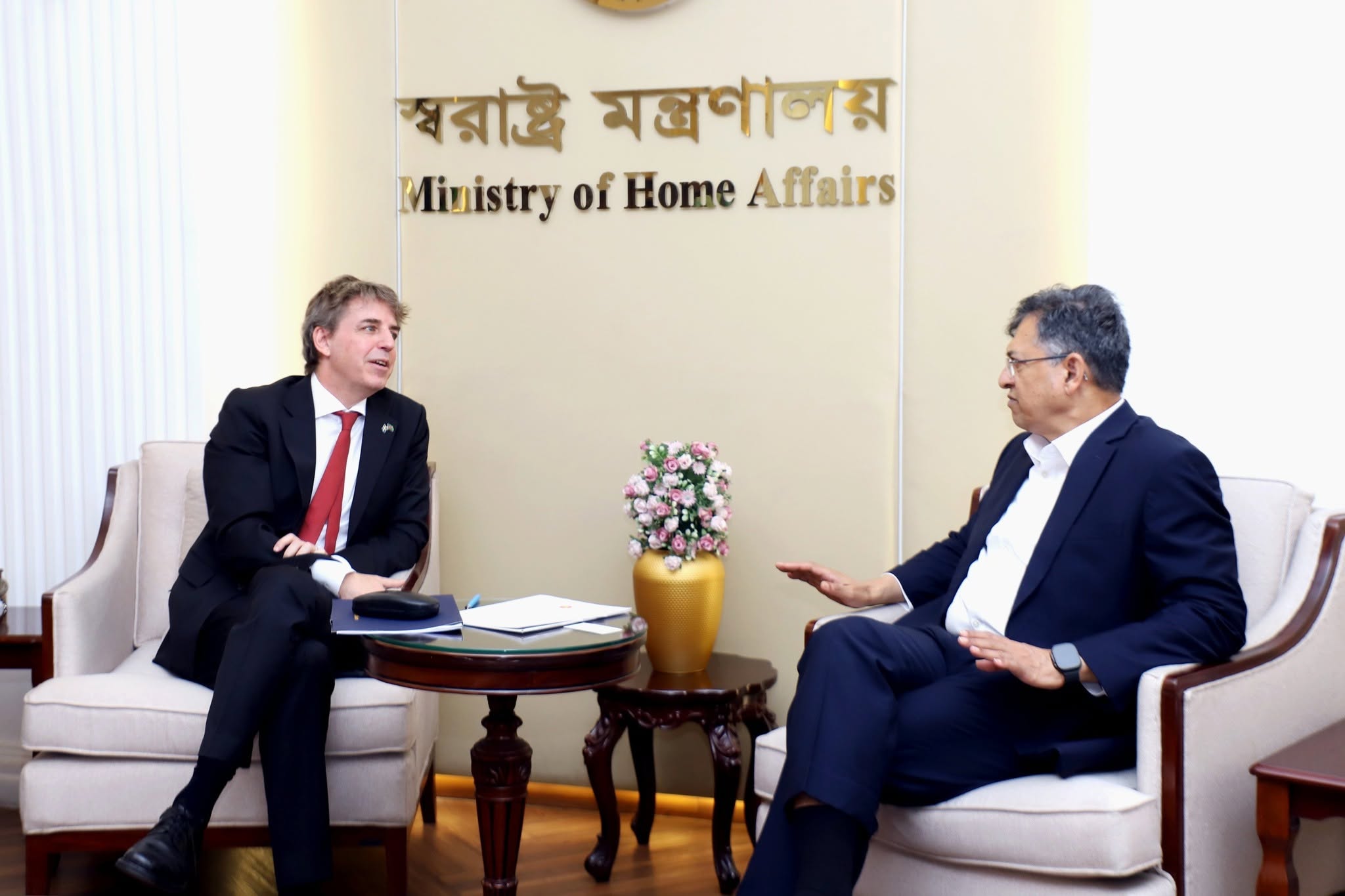
Bangladesh has called for stronger international support for the Rohingya refugees while warning that the prolonged crisis is becoming an increasingly serious security concern for the wider region.
Home Minister Salahuddin Ahmed made the remarks on Tuesday during a meeting with Swedish Ambassador to Bangladesh Nicolas Linus Ragnar Wicks at the Bangladesh Secretariat in Dhaka.
Ahmed urged Sweden to increase humanitarian assistance for the Rohingya, who have fled violence and persecution in Myanmar’s Rakhine State, and stressed that their safe, dignified and sustainable return to Myanmar remains the only lasting solution to the crisis.
“The Rohingya crisis is a major threat to regional security,” the minister said, according to a statement from Bangladesh’s Home Ministry.
He also highlighted Sweden’s role as co-chair of the Rohingya donor group, saying Stockholm could play an important part in keeping the crisis on the international agenda at a time when attention and funding for the refugees have come under growing pressure.
More than a million Rohingya refugees are currently living in Bangladesh, most of them in overcrowded camps in Cox’s Bazar after fleeing successive waves of violence in Myanmar. Despite repeated diplomatic efforts, large-scale repatriation has yet to begin, with security, citizenship rights and conditions in Rakhine remaining major obstacles.
Swedish Ambassador Wicks reaffirmed his country’s support for the safe return and rehabilitation of the Rohingya. He also said Sweden was interested in supporting education and protection programmes for Rohingya women and children.
The two sides also discussed regional security, irregular migration, trade and investment, technical education and skills development, as well as possible avenues for a sustainable resolution to the Rohingya crisis.
Ahmed described Sweden as an important development partner for Bangladesh and sought Swedish cooperation in upgrading technical education and vocational training. He said Bangladesh was planning to establish new technical institutions across the country to build a workforce capable of competing in international labour markets.
The minister pointed to growing demand for skilled workers, including caregivers, in Sweden and other European countries and called for closer cooperation to improve training standards and facilitate the overseas employment of Bangladeshi workers.
Wicks said Bangladesh was the only country in South Asia with which Sweden maintains a bilateral development cooperation strategy. He added that commercial ties between the two countries were gradually expanding, with opportunities emerging in sectors including ready-made garments and healthcare.
The ambassador said around 10,000 Bangladeshis currently live in Sweden, many of them students. He also raised concerns about irregular migration, saying some Bangladeshis were being deceived by human traffickers who exploit their hopes of securing better lives abroad.
Ahmed said Bangladesh was taking stronger measures against trafficking and irregular migration. He attributed much of the problem to economic aspirations and false promises made by trafficking networks.
The government is also working with the International Organization for Migration (IOM) on awareness campaigns and other measures aimed at preventing irregular migration, he said.
The meeting comes as Bangladesh seeks to keep the Rohingya crisis on the regional and international agenda while balancing the growing humanitarian burden of hosting the displaced population with concerns over trafficking, cross-border crime, irregular migration and wider security risks linked to the prolonged conflict in Myanmar.
BOB Post