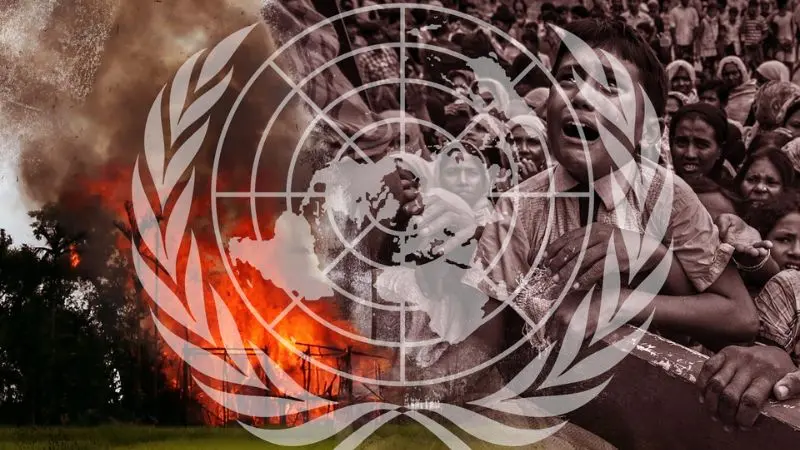
For the first time in years, Rohingya political voices appear to be moving in the same direction. As global attention builds toward the UN’s high-level pledging conference on September 30, a stronger and more coordinated Rohingya movement is taking shape — challenging long-standing narratives of disunity and dysfunction.
The launch of the Arakan Rohingya National Council (ARNC) on July 13 has sparked cautious optimism across camps and diaspora communities. Backers of the new council call it a platform for consolidation, not competition. Support is growing among youth activists, camp representatives, and civil society leaders who see this as a necessary shift away from outdated politics and fragmented advocacy.

“This is not just another group — it’s an attempt to pull together different strands of our struggle,” said Abdul Karim, a youth leader from Balukhali. “We are finally talking to each other, not just about each other.”
The momentum, however, is not without resistance. Several Western-backed NGOs, consultants, and lobbying groups have expressed unease over the emergence of a more assertive Rohingya leadership. Community members and political observers suggest these actors have grown comfortable with a fragmented status quo — one that keeps Rohingya dependency intact while controlling access to international platforms.

“Some INGOs don't want us to build our own path,” said Dr. Mohammad Salim, a policy researcher based in Brussels. “They claim to support our rights but fear losing control when we begin speaking with our own voice.”
Such claims are gaining traction across the camps in Cox’s Bazar. Refugees frustrated by years of stagnant leadership and foreign-led initiatives are now rallying behind new efforts like the ARNC. Critics who dismiss the council as a recycled version of past groups are being drowned out by those demanding a united front at the upcoming UN conference.
“The criticism comes from the same old figures who failed to deliver results,” said Nur Jahan, a Rohingya women’s rights advocate. “Now that others are stepping up, they call it a threat.”
While some rival organizations have accused the ARNC of copying names or undermining previous efforts, behind-the-scenes talks suggest a shift in tone. The Rohingya Consultative Council (RCC), which was launched in May after extensive community outreach, is now engaging with ARNC leaders to explore areas of alignment. Both bodies are said to be considering a joint platform for New York — a move that could present the strongest Rohingya delegation in over a decade.
“This is not a time for ego battles,” said Razia Ahmed, a diaspora-based lawyer involved in the consultations. “We need a unified message, one that reflects the pain and priorities of our people, not just boardroom agendas.”
Bangladesh’s recent actions inside the camps — including the arrest of ARSA commander Ataullah Abu Ammar Jununi — have further shifted the political landscape. Dhaka’s crackdown on armed groups has opened space for civil leadership and independent voices, many of whom are pushing for greater Rohingya agency.
Even so, obstacles remain. Visa barriers, UN accreditation rules, and donor preferences may limit which Rohingya figures are able to attend the September summit. Activists worry that international gatekeepers could once again marginalize voices that speak for the most vulnerable — those still inside Myanmar or stuck in limbo in Bangladesh.
Despite this, the momentum for unity is real. Rohingya leaders across continents are pushing for coordination, not competition. With time running out before the UN conference, there is growing resolve to present a common roadmap focused on justice, repatriation, and survival.
“We’ve seen what division brings — nothing,” said Dr. Ambia Parveen of the European Rohingya Council. “This time, we intend to show the world that we are ready to lead our own future — not through charity, but with dignity and determination.”
BOB Post