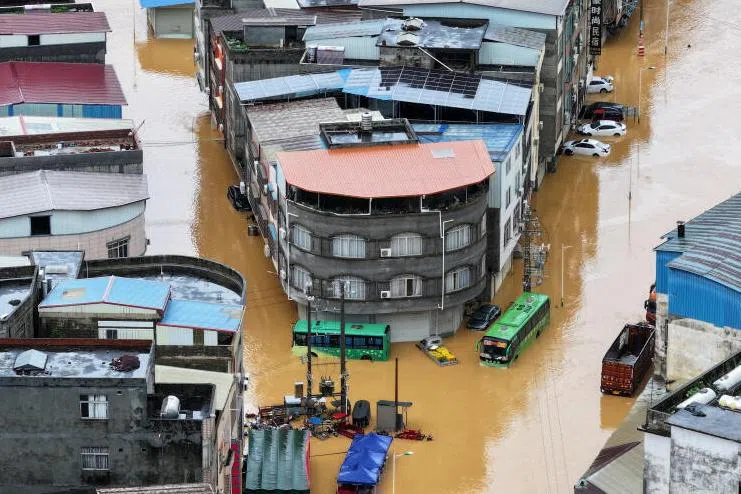
Typhoon Maysak unleashed torrential rain across southern China's Guangxi Zhuang Autonomous Region, triggering severe flooding, dam breaches and mass evacuations as authorities raced to contain the disaster.
Although the storm weakened into a tropical storm after making landfall, relentless rainfall continued to batter the region, prompting officials on July 6 to raise flood emergency measures. In Nanning, the regional capital, authorities upgraded the city's flood control emergency response to its highest level after surging floodwaters breached multiple reservoirs.
According to The Straits Times, dramatic footage broadcast by state-run CCTV showed powerful torrents of muddy water roaring through a breached section of the Liulan Reservoir dam, sending floodwaters rushing toward nearby communities. Chinese state media described Liulan as a medium-sized reservoir.
Local authorities also confirmed that the Yunbiao Reservoir dam had failed, while the Liuwang Reservoir overflowed after water levels exceeded its capacity. The incidents underscored the mounting pressure on flood-control infrastructure as days of intense rainfall overwhelmed reservoirs across the region.
The flooding forced the evacuation of more than 800 residents in the coastal city of Fangchenggang, where emergency teams moved people from low-lying and high-risk areas. Rescue and disaster response operations remained underway as authorities monitored the evolving situation.
The downpour pushed water levels above official warning thresholds at 66 hydrological monitoring stations across 55 rivers in Guangxi, highlighting the scale of the flooding. In one of the hardest-hit areas, Luwei Town in Nanning recorded an extraordinary 637 millimetres (25 inches) of rainfall within a 24-hour period between the morning of July 5 and the morning of July 6, according to CCTV.
Emergency officials have urged residents in vulnerable areas to remain alert as saturated ground, swollen rivers and damaged reservoirs continue to pose significant risks despite the storm's gradual weakening.
BOB Post