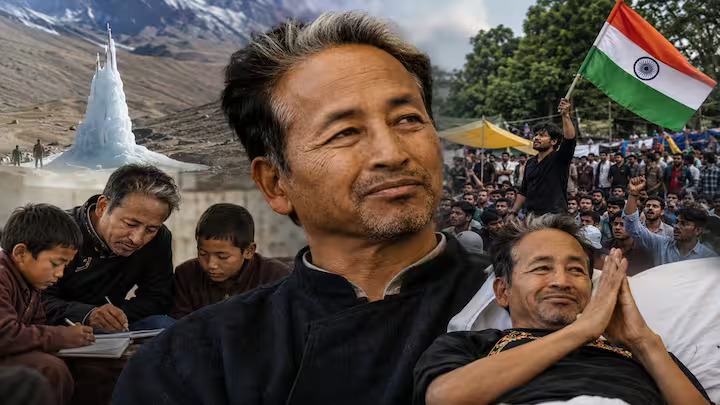
Indian Prime Minister Narendra Modi’s government has been “terribly weakened” by recent youth-led protests, prominent activist Sonam Wangchuk has said, arguing that the demonstrations have changed the political mood in the country.
Wangchuk, whose 26-day hunger strike helped energise the movement, told the BBC that a new sense of confidence had emerged among young Indians following mass protests that led to the resignation of India’s education minister on July 25.
“People now feel they can change things if they want to,” Wangchuk said, adding that young people no longer feel they must “take everything lying down.”
The protests, described as one of the biggest public challenges to Modi’s government since it came to power in 2014, were driven by anger over alleged exam paper leaks and broader concerns among young people over unemployment and governance.
The movement, known as the “Cockroach” movement, drew its name from comments made by India’s chief justice, who faced criticism after comparing some unemployed young people to “cockroaches” during a court hearing.
Wangchuk, a 59-year-old engineer and climate activist, staged his hunger strike in New Delhi during June and July, surviving only on salt and water for 26 days in extreme heat. He said he lost 11 kilograms during the fast and has since regained around six kilograms.
According to the BBC, Wangchuk was taken to hospitals against his will during the final six days of his hunger strike, facilities he described as being “more like prisons.” By that stage, protests had expanded beyond the exam paper leak issue into a wider wave of public anger against the government.
The demonstrations have highlighted growing frustration among sections of India’s youth over employment opportunities, examination systems and government accountability, posing one of the most significant grassroots challenges to Modi’s administration in recent years.
BOB Post