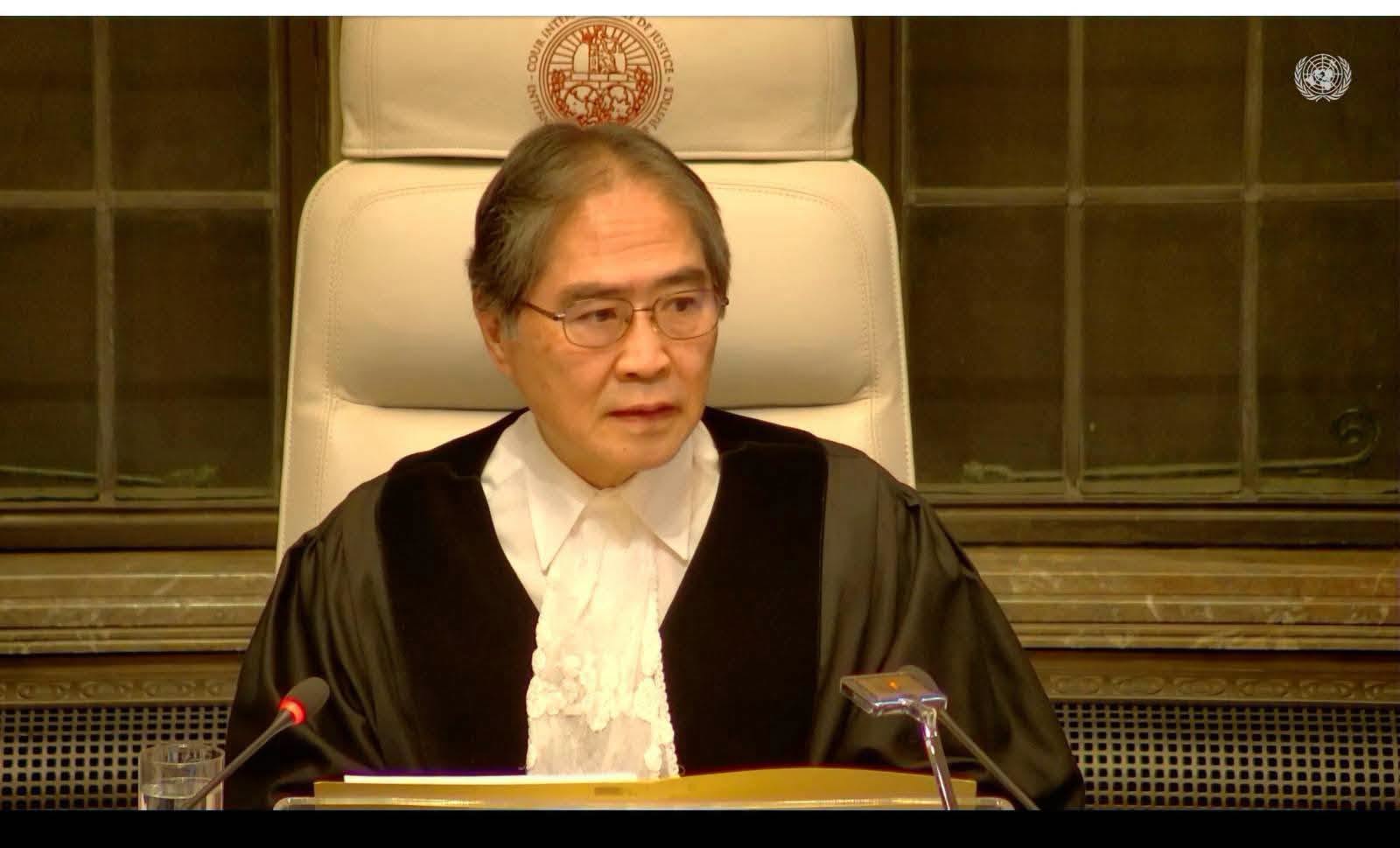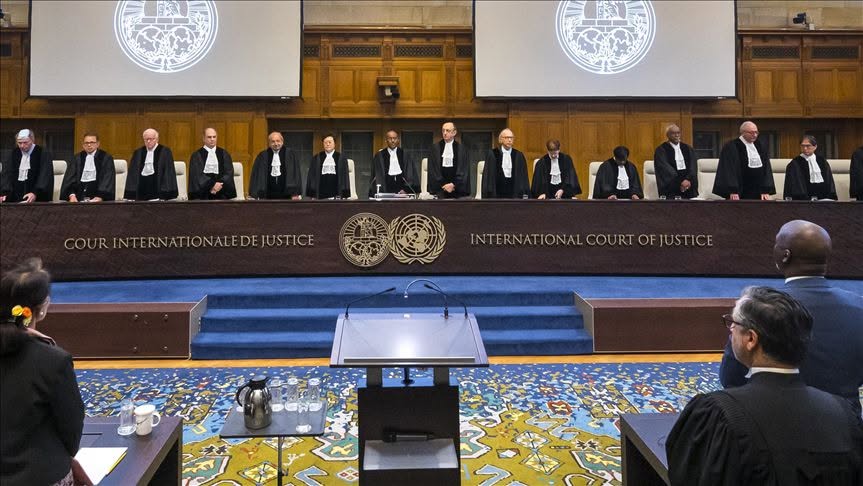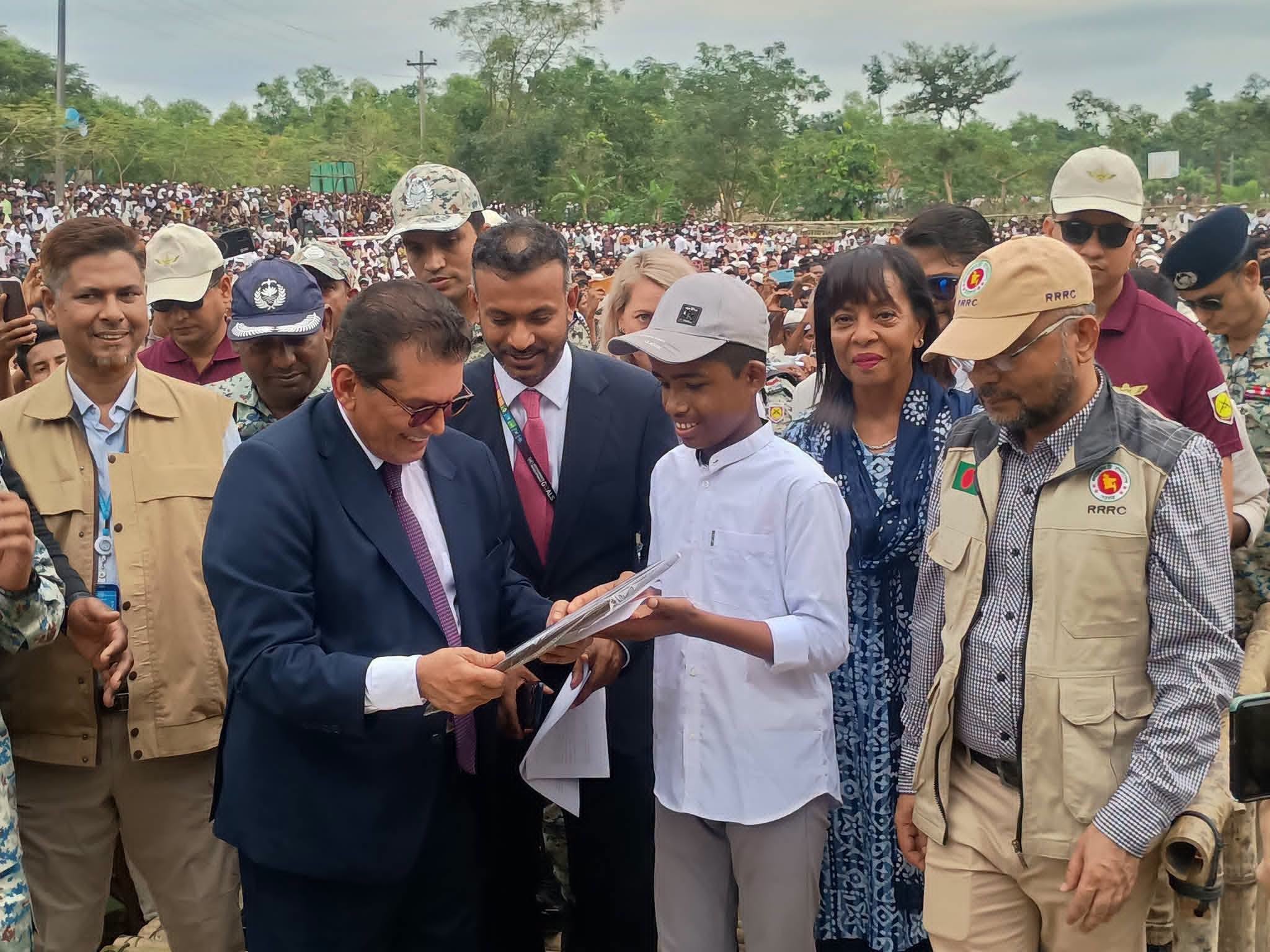
A day after the International Court of Justice (ICJ) delivered its landmark ruling in the genocide case against Myanmar, United Nations General Assembly (UNGA) President and Bangladesh Foreign Minister Dr Khalilur Rahman visited Rohingya refugee camps in Cox’s Bazar, describing the verdict as a historic breakthrough in the pursuit of justice for the persecuted community.
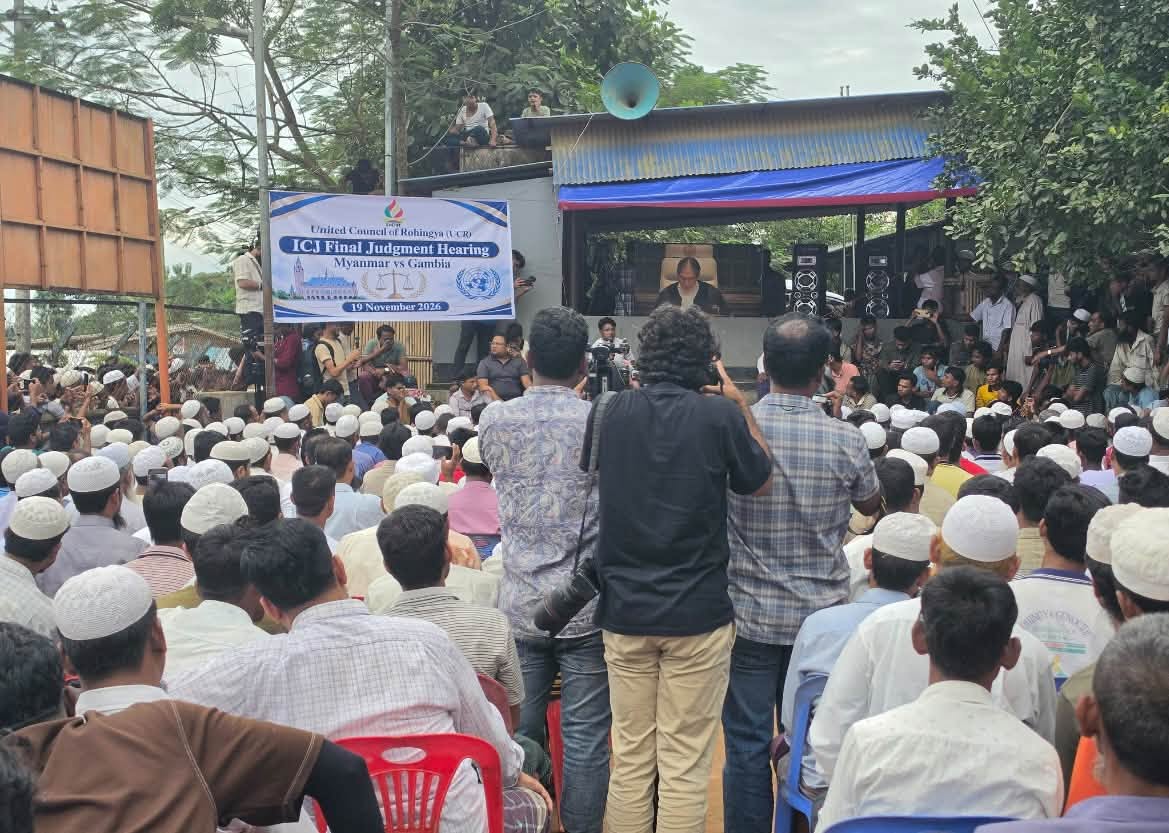
Khalilur arrived at Camp No. 4 in Ukhiya around 8:45am on Friday, where hundreds of Rohingya refugees gathered to welcome him. He met with refugees, heard their accounts of persecution and insecurity, and listened to their hopes of returning to their homeland.
Speaking during the visit, he said the ICJ ruling had opened a new chapter in international justice, noting that it was the first time in the court’s history that a state had been held responsible for genocide against a community.
“I have come to the camp this morning at a special time, on a special day and at a historic moment,” he said, referring to Thursday’s judgment on the atrocities committed against the Rohingya by Myanmar.
According to the Dhaka Tribune, the refugees welcomed Khalilur with applause as he arrived at the camp’s football ground, where many had gathered from early morning to hear from the visiting UNGA president.
Khin Maung, president of the United Council of Rohingya (UCR), expressed gratitude to Bangladesh for providing shelter to those who fled Myanmar but stressed that living in refugee camps could not be a permanent solution.
“We do not want to remain in refugee camps forever. Our ultimate goal is to return to our homes in Myanmar,” he said, adding that citizenship, security, freedom of movement and fundamental rights must be guaranteed before repatriation.
He also urged Khalilur, in his capacity as UNGA president, to bring the Rohingya crisis and their demands for a safe return to greater international attention.
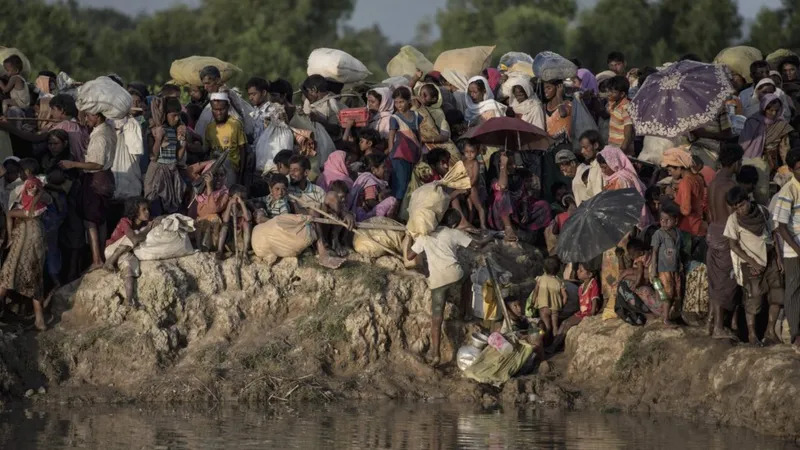
For the more than one million Rohingya refugees living in Bangladesh, the ICJ judgment has raised hopes that years of persecution and displacement may finally lead to accountability.
However, refugees and rights advocates have repeatedly stressed that legal recognition alone will not secure their return. Any repatriation process, they say, must be voluntary, safe and dignified, backed by concrete guarantees of citizenship, security and fundamental rights in Myanmar.
The latest visit comes at a significant moment for the Rohingya crisis, as the ICJ ruling adds fresh momentum to calls for international accountability and a lasting solution to one of the region’s most protracted refugee situations.
BOB Post