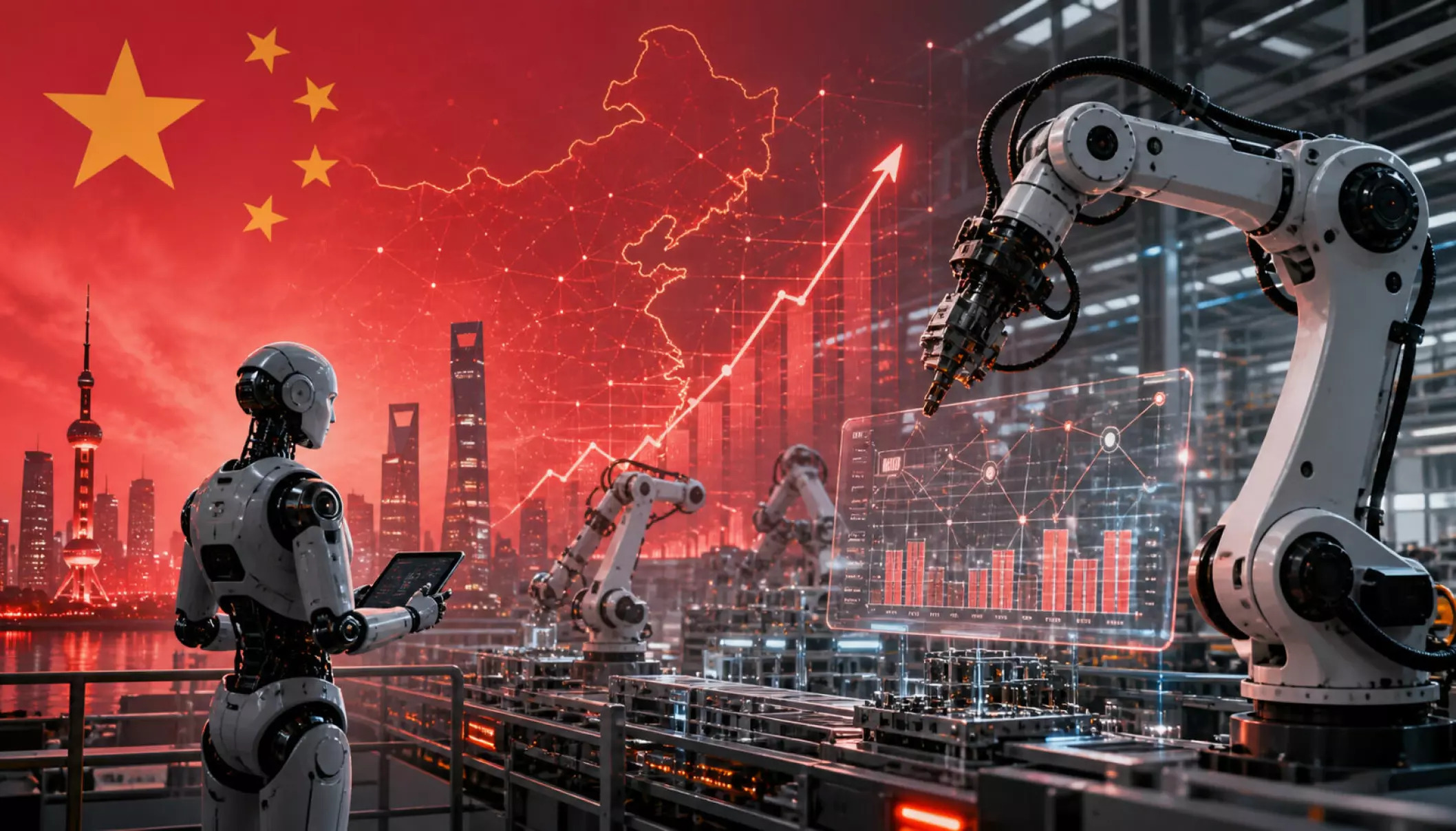
China is positioning artificial intelligence (AI), robotics and innovative pharmaceuticals as its new generation of strategic industries, describing them as the country's "next new three" growth drivers aimed at sustaining economic modernization and strengthening global competitiveness.
Chinese Minister of Science and Technology Yin Hejun unveiled the strategy at a recent policy briefing, saying the three sectors will play a central role in advancing high-quality development and improving public well-being.
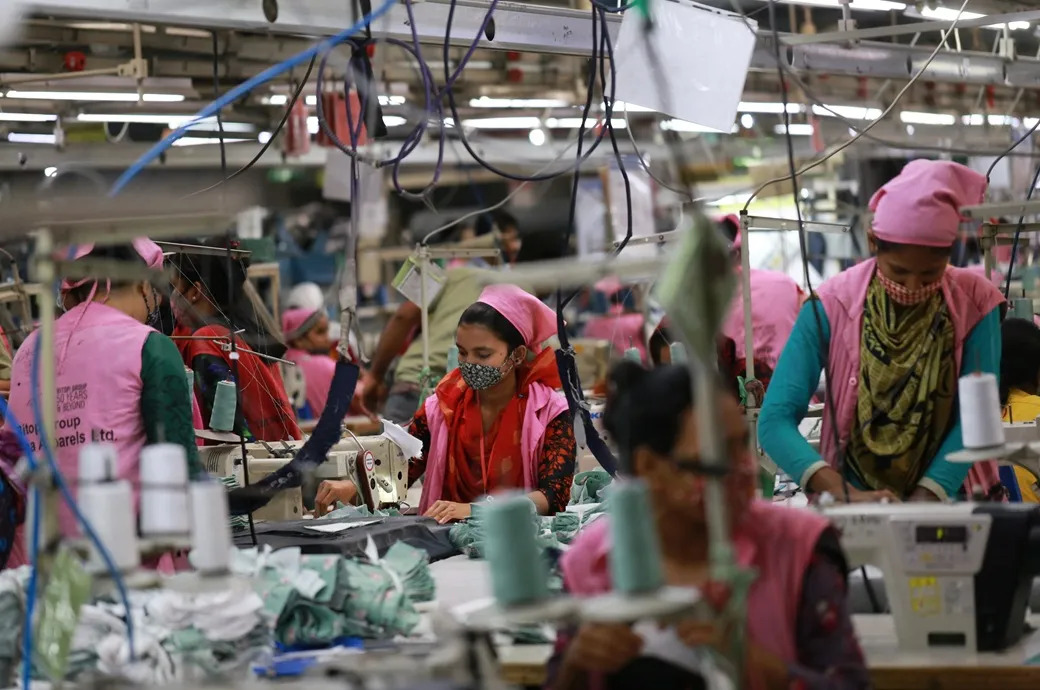
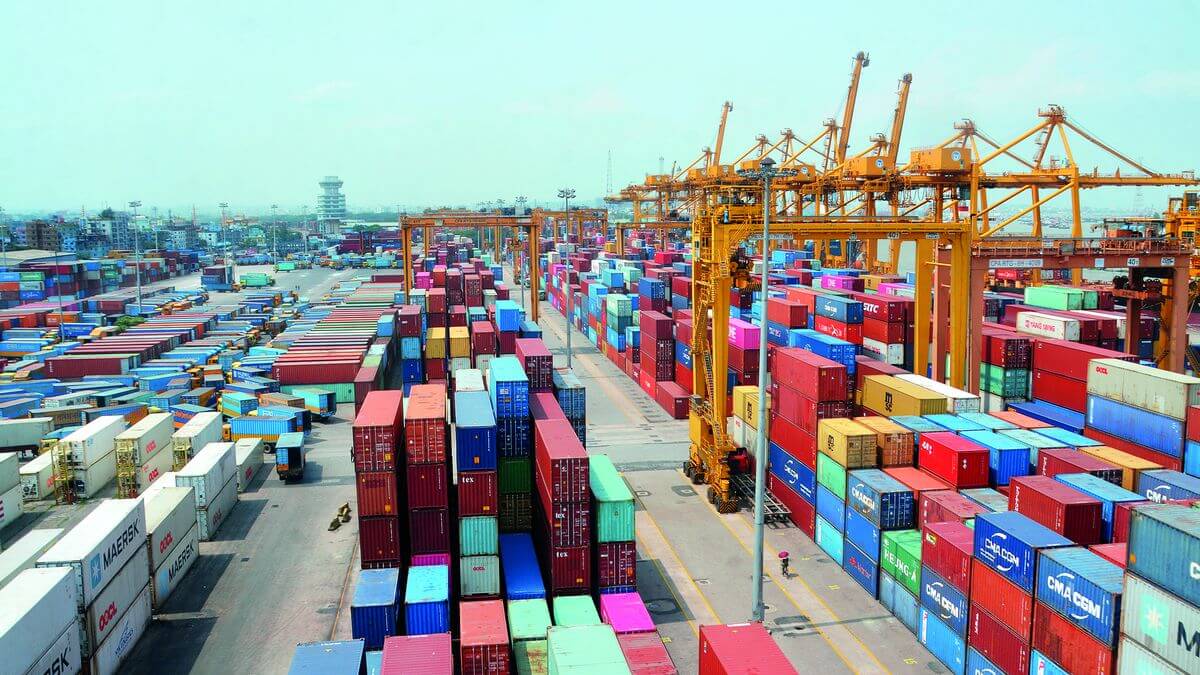
The initiative marks another shift in China's industrial development. For decades, the country's export strength was built on labor-intensive industries such as apparel, furniture and home appliances, commonly referred to as the "old three." More recently, electric vehicles, lithium batteries and photovoltaic products became the "new three," driving China's transition toward high-value and green manufacturing.
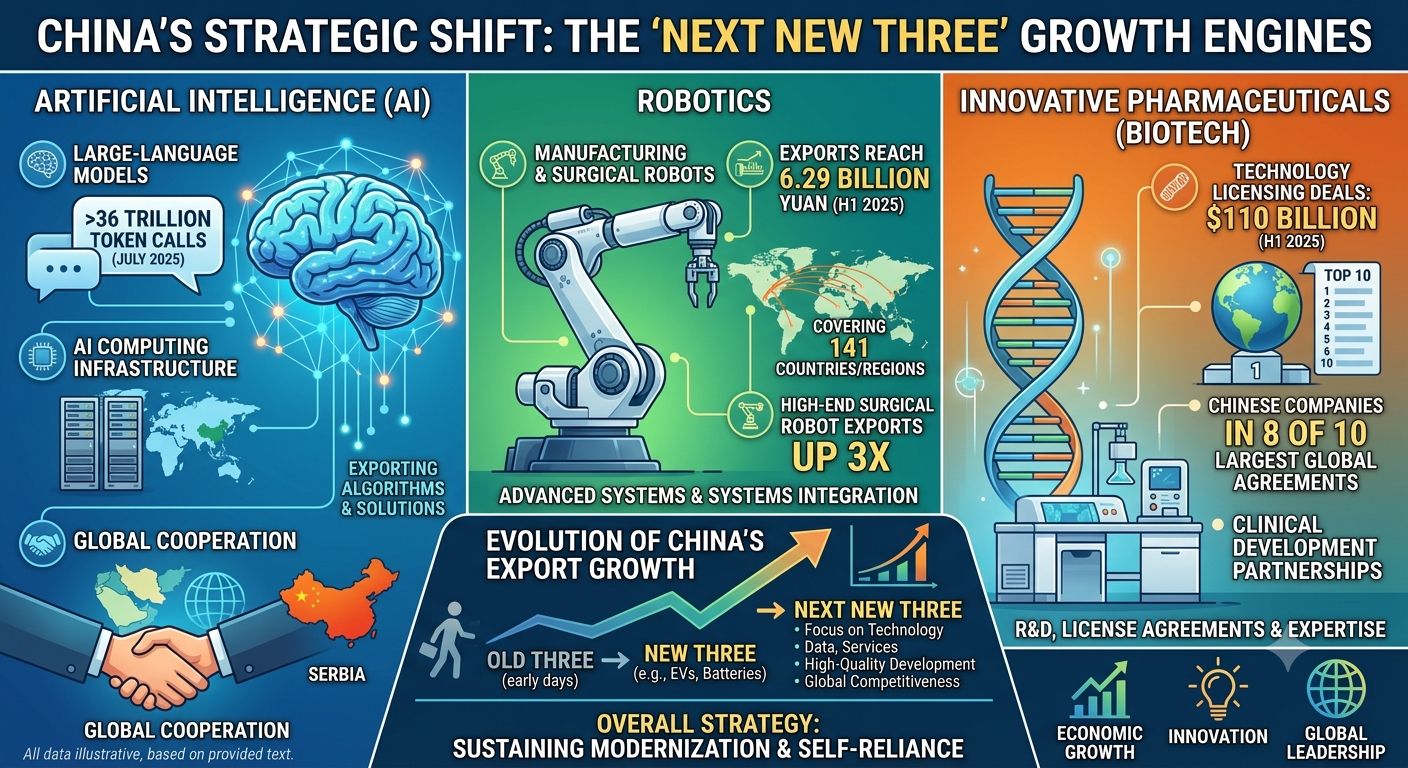
According to Global Times, China is now seeking to move beyond the export of physical goods by expanding its technological capabilities and service-based industries, with AI, robotics and innovative drugs expected to become the country's next major engines of growth.
Official data shows exports of the "new three" industries reached nearly 1.3 trillion yuan (about $192 billion) in 2025, more than tripling compared with 2020. Authorities believe the emerging sectors will further strengthen China's position in advanced manufacturing and knowledge-intensive services.
Recent industry figures point to rapid expansion across the three sectors. China's domestic AI large-language models recorded more than 36 trillion token calls during a single week in July, while robotics exports reached 6.29 billion yuan in the first half of the year, covering 141 countries and regions. Exports of high-end surgical robots also increased more than threefold from a year earlier.
China's innovative pharmaceutical industry has also expanded its global presence. During the first six months of the year, outbound pharmaceutical technology licensing deals totaled $110 billion, with Chinese companies involved in eight of the world's ten largest licensing agreements.
Unlike previous export-driven industries, the "next new three" focuses on exporting technology, expertise and integrated solutions rather than finished products. Chinese firms are increasingly offering AI algorithms, robotics systems, pharmaceutical research, clinical development and technology licensing to overseas markets.
China says the strategy is already supporting international cooperation. Chinese companies have helped develop AI computing infrastructure in the Middle East, collaborated with Serbian partners on multilingual AI applications, and expanded digital mobility platforms across parts of South America.
The latest initiative reflects Beijing's broader push to strengthen technological self-reliance while expanding its role in global innovation. Chinese officials argue that continued investment in AI, robotics and biotechnology will help sustain economic growth despite growing geopolitical uncertainty and trade tensions.
BOB Post