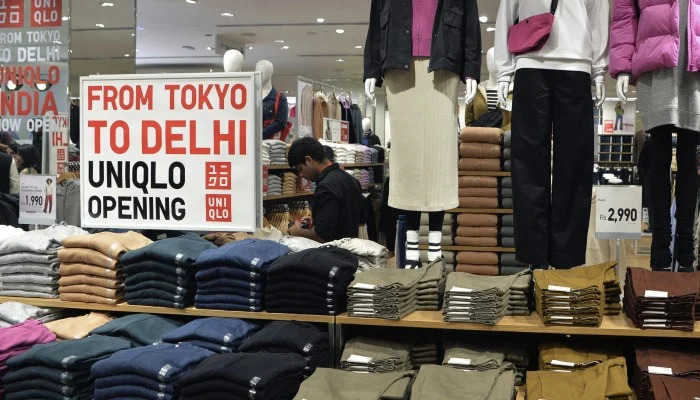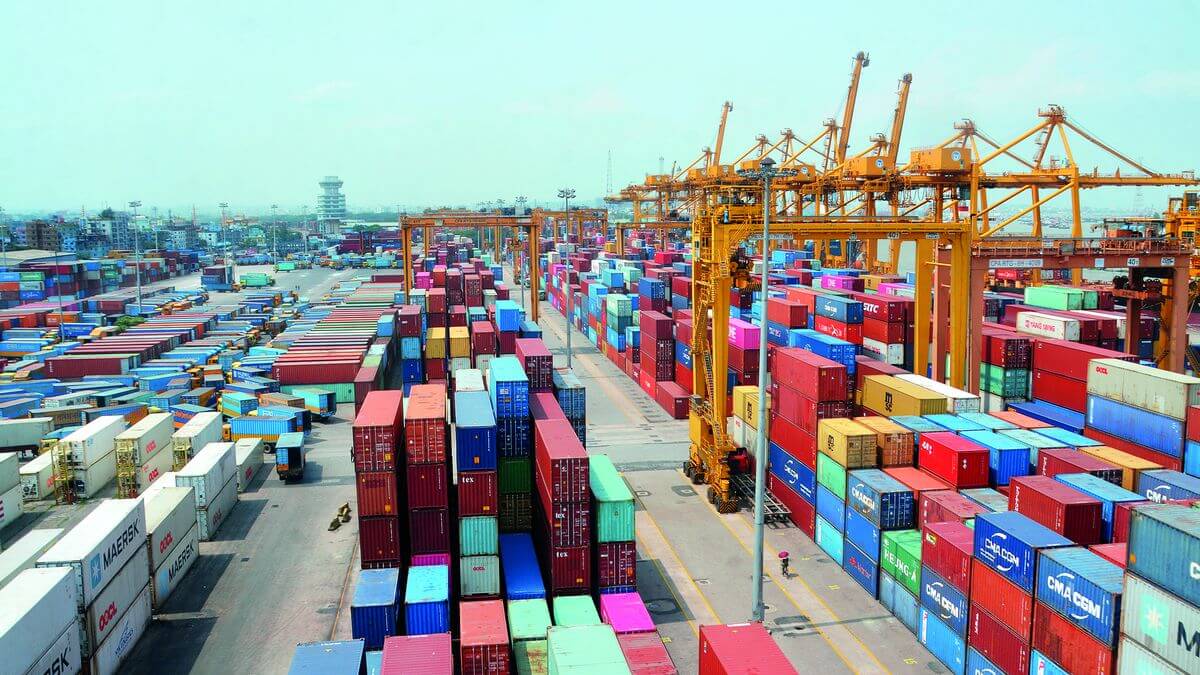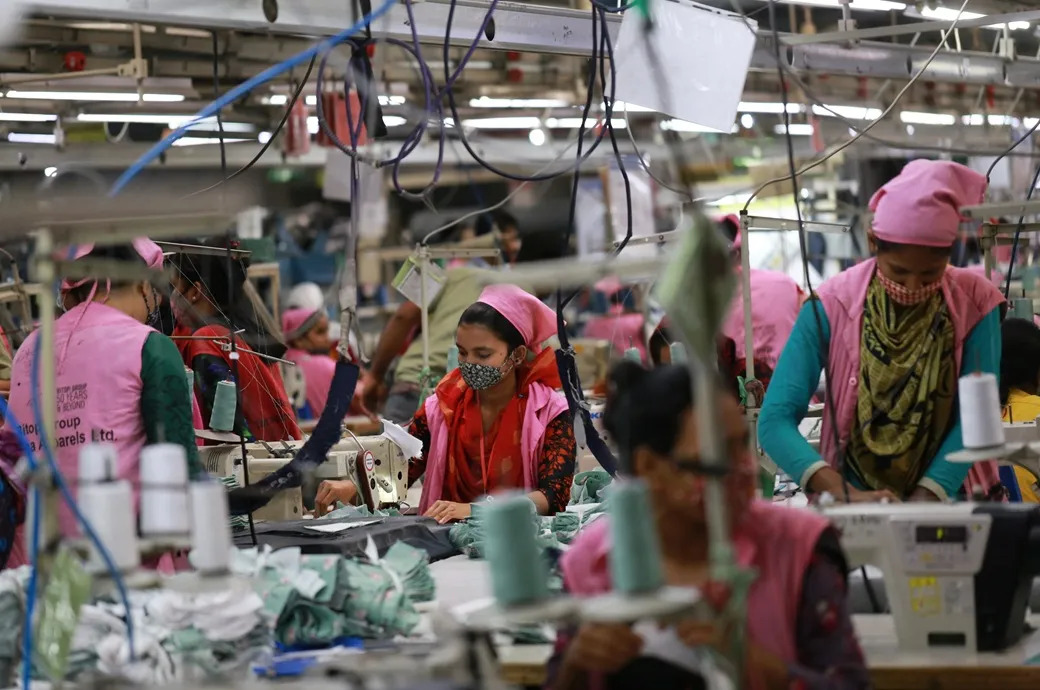
Bangladesh’s garment industry is entering a new phase in global trade. Labour compliance is no longer just a factory audit issue. It is increasingly tied to market access, shipment clearance and buyer decisions in major Western markets.
The shift is creating new pressure for Bangladesh, whose ready-made garment (RMG) sector remains the country’s biggest export earner. The industry has long depended on competitive labour costs, a large workforce and preferential access to major markets.
A new policy paper, From Compliance to Competitiveness: The Growing Importance of Labour Issues for Bangladeshi Exporters in the European Union and the United States, by economist Selim Raihan, executive director of the South Asian Network on Economic Modeling (Sanem), highlights the growing risks.
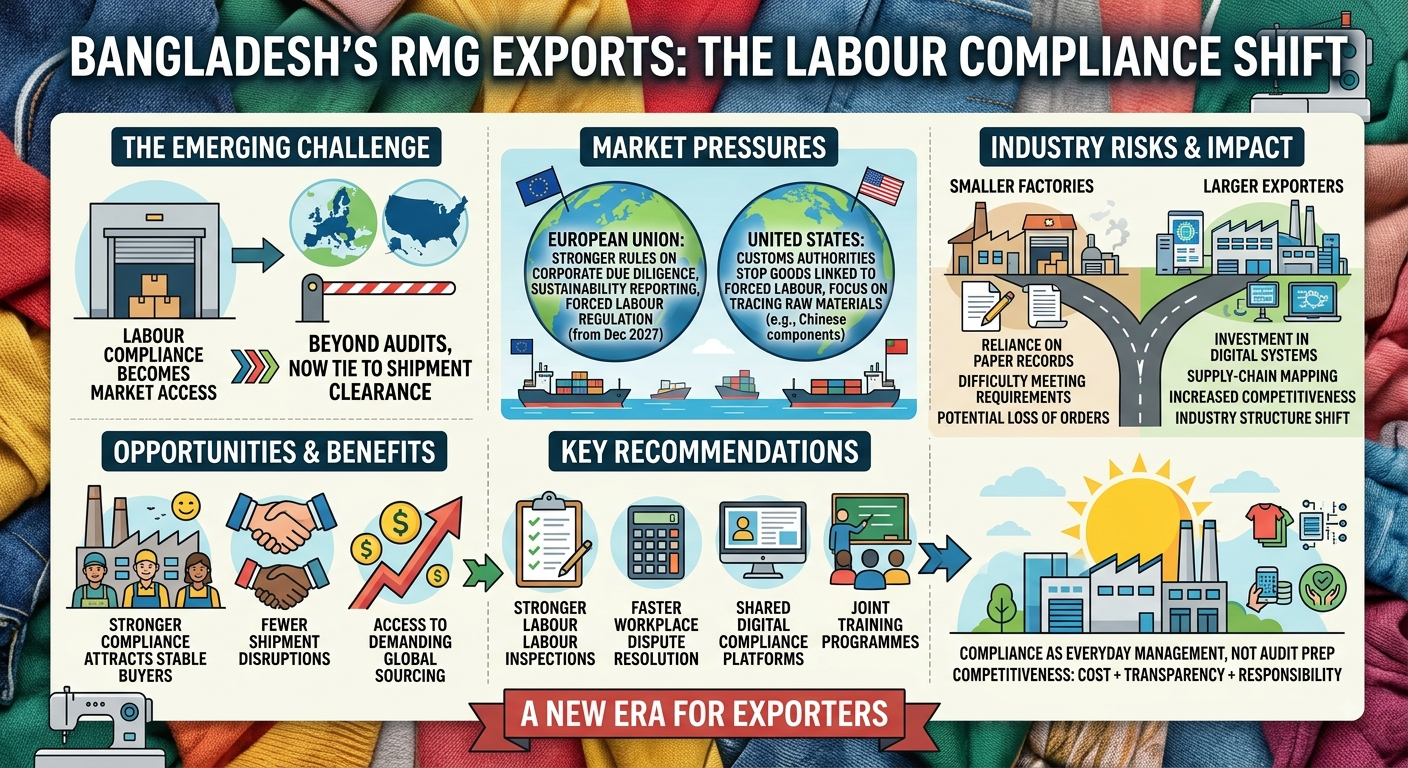
The European Union and the United States are Bangladesh’s two biggest apparel markets. The EU takes around half of Bangladesh’s apparel exports and currently provides duty-free, quota-free access under the Everything But Arms (EBA) scheme.
The US is Bangladesh’s largest single-country apparel market. But it does not offer the same tariff benefits.
Both markets are now tightening labour and supply-chain requirements. The pressure is expected to increase as Bangladesh moves out of the UN’s least developed country category.
For the EU, exporters will face stronger rules on corporate due diligence, sustainability reporting and forced labour. The EU Forced Labour Regulation is scheduled to apply from December 2027. It could block products linked to forced labour at any stage of production from entering the European market.
Bangladesh is expected to retain EBA-equivalent benefits for three years after its LDC graduation. Those benefits could end around late 2029. After that, Bangladesh may need to qualify for the EU’s GSP+ system to maintain wider duty-free access, according to the paper.
The US presents a different challenge. Its customs authorities can stop goods linked to forced labour. This is particularly important for Bangladesh because many garment factories use cotton, yarn and fabric sourced from China.
Exporters may therefore have to show where their raw materials came from and prove that restricted inputs did not enter their production chains.
According to a Fibre2Fashion News report, growing compliance demands in major export markets are making supply-chain transparency and labour standards increasingly important for Bangladesh’s apparel exporters.
The pressure is not limited to government regulations. Major international brands and retailers are also imposing their own standards. These cover child labour, forced labour, workplace safety and workers’ rights.
This means exporters will increasingly need detailed records on workers, subcontractors and raw materials. Buyers may also demand information beyond the main factory, including the sources of yarn, fabric and other inputs.
Smaller factories could face the biggest difficulties.
Large exporters can invest in digital record systems, supply-chain mapping and worker grievance mechanisms. Many small factories and subcontractors still depend heavily on paper-based records.
That gap could change the structure of Bangladesh’s garment industry. Larger exporters may become more competitive, while smaller units could lose orders if they cannot meet new requirements.
Yet stronger compliance could also create opportunities. Factories with better labour and safety systems may attract more stable buyers. They could also face fewer shipment disruptions and gain access to more demanding global sourcing programmes.
The policy paper calls for stronger labour inspections and faster systems for resolving workplace disputes. It also recommends shared digital compliance platforms, joint training programmes and mechanisms to reduce repeated audits.
Industry bodies, it said, can play a bigger role by helping smaller exporters build traceability systems.
For exporters, the message is becoming clear: compliance can no longer be treated as something to prepare for before an audit. It needs to become part of everyday production and supply-chain management.
As the EU and US raise the bar, Bangladesh’s competitiveness will increasingly depend not only on how cheaply it can make garments, but also on how transparently and responsibly it can produce them.
BOB Post