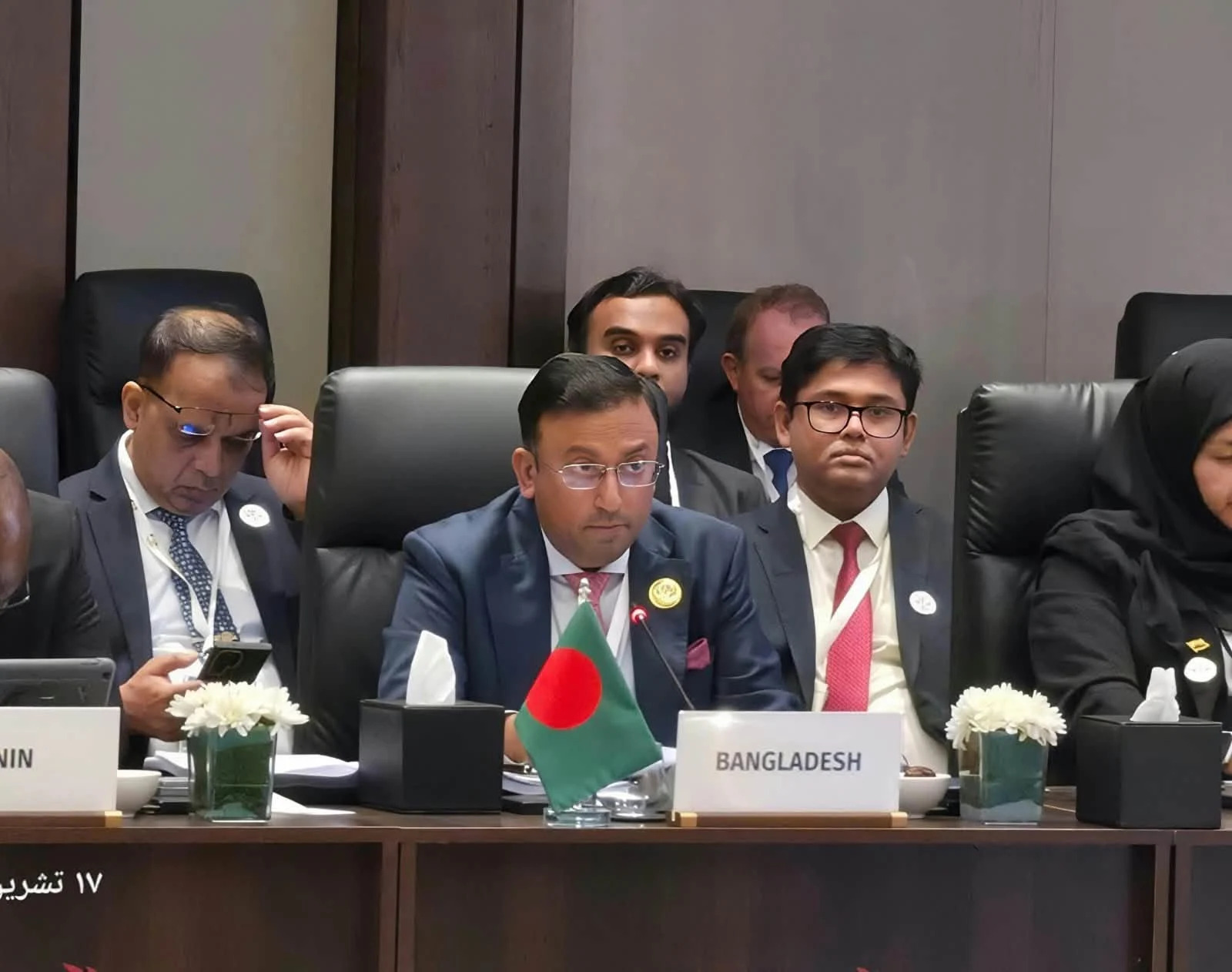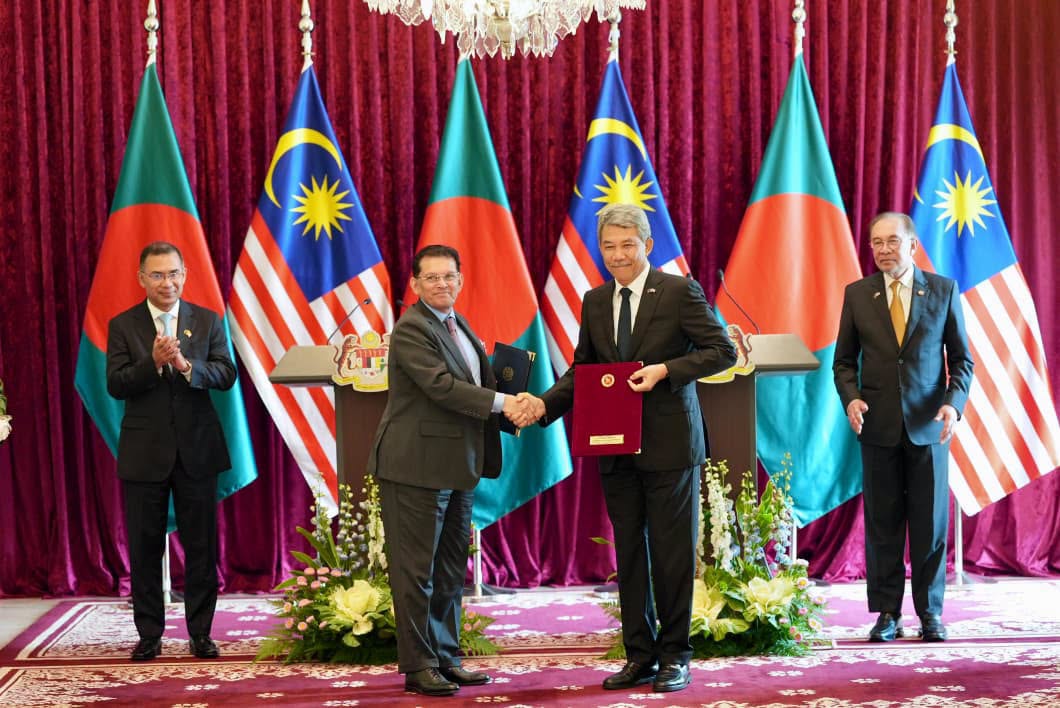
Bangladesh and Malaysia have agreed to conclude a comprehensive Free Trade Agreement (FTA) by 2027 and establish a Joint Working Group (JWG) to streamline and strengthen the recruitment of Bangladeshi workers to Malaysia, according to a joint statement issued after bilateral talks between Bangladesh Prime Minister Tarique Rahman and Malaysian Prime Minister Anwar Ibrahim.
The two leaders also discussed expanding economic cooperation and enhancing trade and investment ties between the two countries. Malaysia, Bangladesh's second-largest trading partner in South Asia, expressed its commitment to accelerating negotiations for the proposed Malaysia-Bangladesh Free Trade Agreement (MBFTA), with both sides aiming to finalize the deal by 2027.
According to RTV, the leaders emphasized the importance of a modern, forward-looking trade framework that would benefit both economies and align with evolving global trade dynamics.
The joint statement said the two countries welcomed progress toward establishing the Malaysia-Bangladesh Joint Business Council (JBC), which is expected to provide a structured platform for engagement between private-sector stakeholders. The council will focus on promoting bilateral trade, investment, and cooperation in high-value sectors, including semiconductors, the digital economy, halal industries, energy, and infrastructure.
Energy cooperation also featured prominently in the discussions. Bangladesh invited Malaysian companies to invest in oil and gas exploration in the Bay of Bengal, as well as in the extraction of mineral resources such as coal and limestone and renewable energy transition projects.
Both governments agreed to maximize the benefits of the existing Memorandum of Understanding (MoU) on liquefied natural gas (LNG), LNG infrastructure, and petroleum products, while encouraging direct negotiations between Petronas and Petrobangla.
On labor migration, the two sides agreed to form a Joint Working Group comprising officials from both countries to address labor market issues and ensure the continued, safe, and mutually beneficial migration of Bangladeshi workers to Malaysia.
The JWG will assess the effectiveness of the current labor migration MoU, identify challenges, and propose recommendations for improving recruitment procedures. It will also work toward drafting a revised agreement that reflects current labor market demands and changing migration realities in both countries.
The statement noted that both leaders acknowledged the significant contribution of Bangladeshi migrant workers to Malaysia's economic development and underscored the importance of strengthening people-to-people ties.
Malaysia responded positively to Bangladesh's request for increased worker recruitment but clarified that approvals for new foreign worker quotas would continue to be determined on a case-by-case basis, subject to verified employer demand and sector-specific requirements.
Both countries reaffirmed their commitment to ensuring that any approved recruitment is conducted through credible and qualified agencies, maintaining transparency, fairness, competitiveness, and non-discrimination throughout the process.
BOB Post