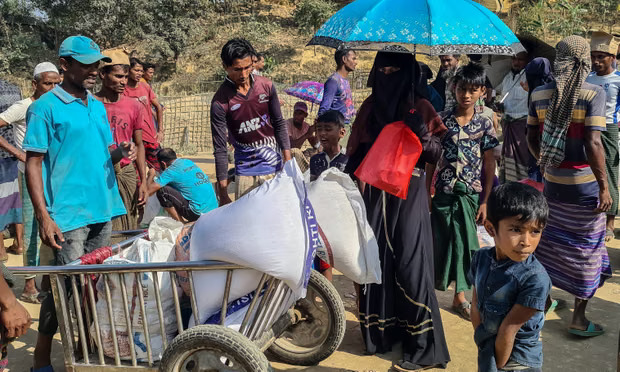
The World Food Program is set to overhaul its food assistance program for Rohingya refugees in Bangladesh from April, introducing a needs-based system aimed at ensuring minimum food security for every household.
The move comes as humanitarian agencies grapple with intensifying funding constraints in the ninth year of the Rohingya crisis. More than one million refugees, most of whom fled brutal military operations in Myanmar in 2017, remain confined to overcrowded camps in Bangladesh, with limited access to livelihoods and education.
Under the revised approach, the WFP will implement a tiered assistance model that allocates monthly food support based on household vulnerability levels identified in a 2025 assessment. Rather than cutting overall aid, the agency says the system is designed to prioritize those in greatest need while maintaining a baseline level of support for all.
According to The Straits News, the restructuring reflects a broader shift in humanitarian operations towards more targeted interventions in protracted crises, where resources are stretched but needs remain acute.
WFP spokesperson Kun Li said the differentiated ration system aligns with global best practices and aims to ensure fair and effective distribution. “This approach will help guarantee that the most vulnerable households receive the support they urgently require,” she noted.
The WFP currently provides food assistance to nearly 1.2 million Rohingya refugees in Bangladesh, including around 150,000 new arrivals since 2024. Officials say about 33 per cent of households are classified as highly vulnerable, 50 per cent moderately vulnerable, and 17 per cent vulnerable, underscoring the scale of humanitarian needs in the camps.
BOB post