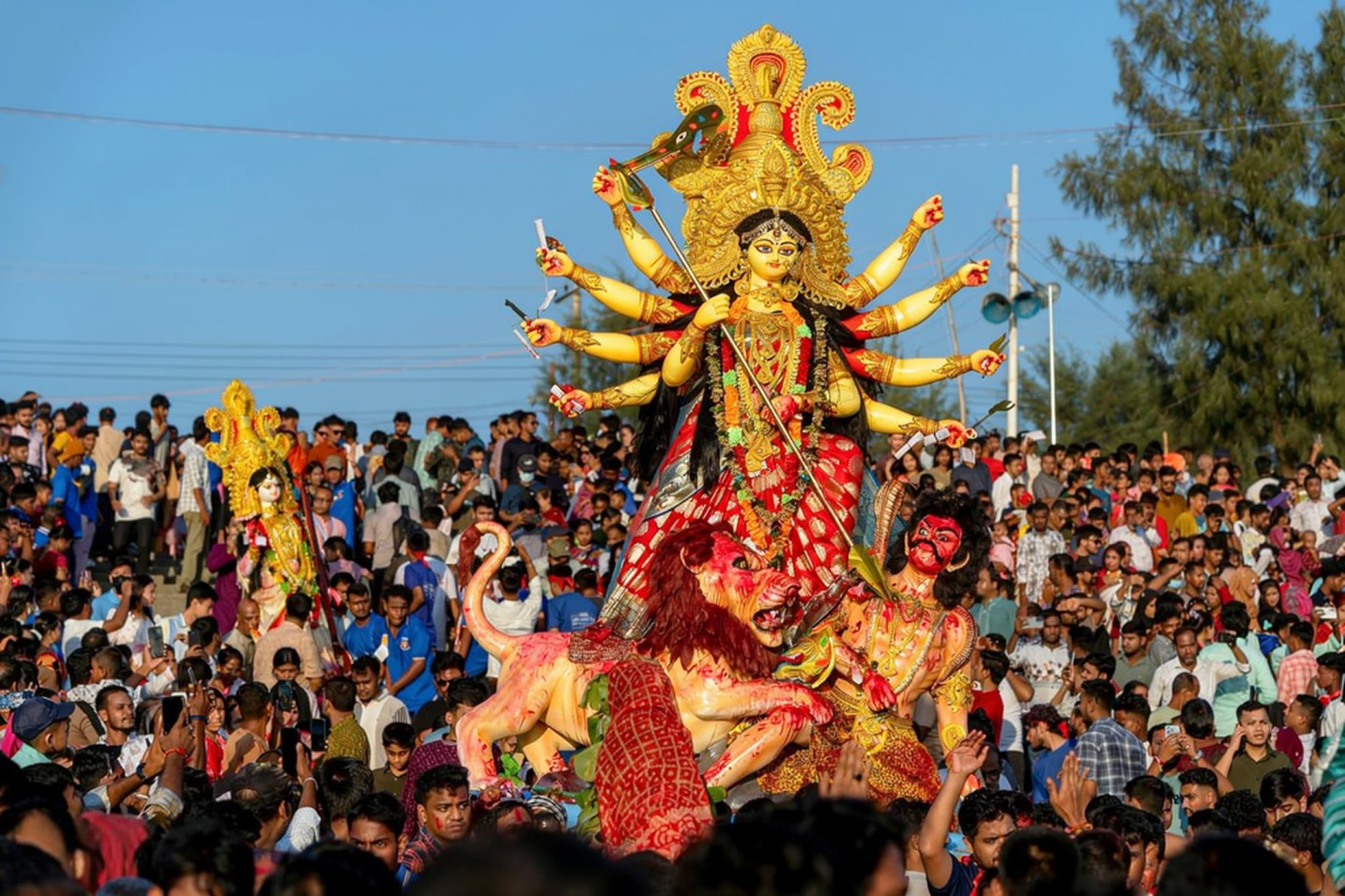
Hindu devotees across Bangladesh are celebrating Bijoya Dashami, the final day of Durga Puja, with traditional rituals, colourful processions and the immersion of Goddess Durga’s idols, bringing the six-day festival to a close.
Married women took part in the traditional Sindur Khela ritual at temples and puja mandaps, smearing vermilion on one another’s faces and exchanging sweets while praying for happiness and prosperity. Devotees also performed the final Dashami puja and Darpan Bisarjan, a symbolic ritual observed before the formal immersion of the idols.
According to the Bangladesh Sangbad Sangstha (BSS), large gatherings of worshippers were seen at major temples in Dhaka, including Dhakeshwari National Temple, Ramna Kali Mandir, Siddheshwari Kalimandir and Ramakrishna Mission and Math. Thousands of devotees also visited puja mandaps in Kalabagan, Banani and Shakhari Bazar.
Following the religious ceremonies, processions carrying Durga idols moved through city streets towards nearby rivers and other water bodies for immersion. The idols were transported on decorated trucks, pickup vans and boats as devotees chanted “Aschhe bochhor abar hobe”, expressing hope for the Goddess’s return next year.
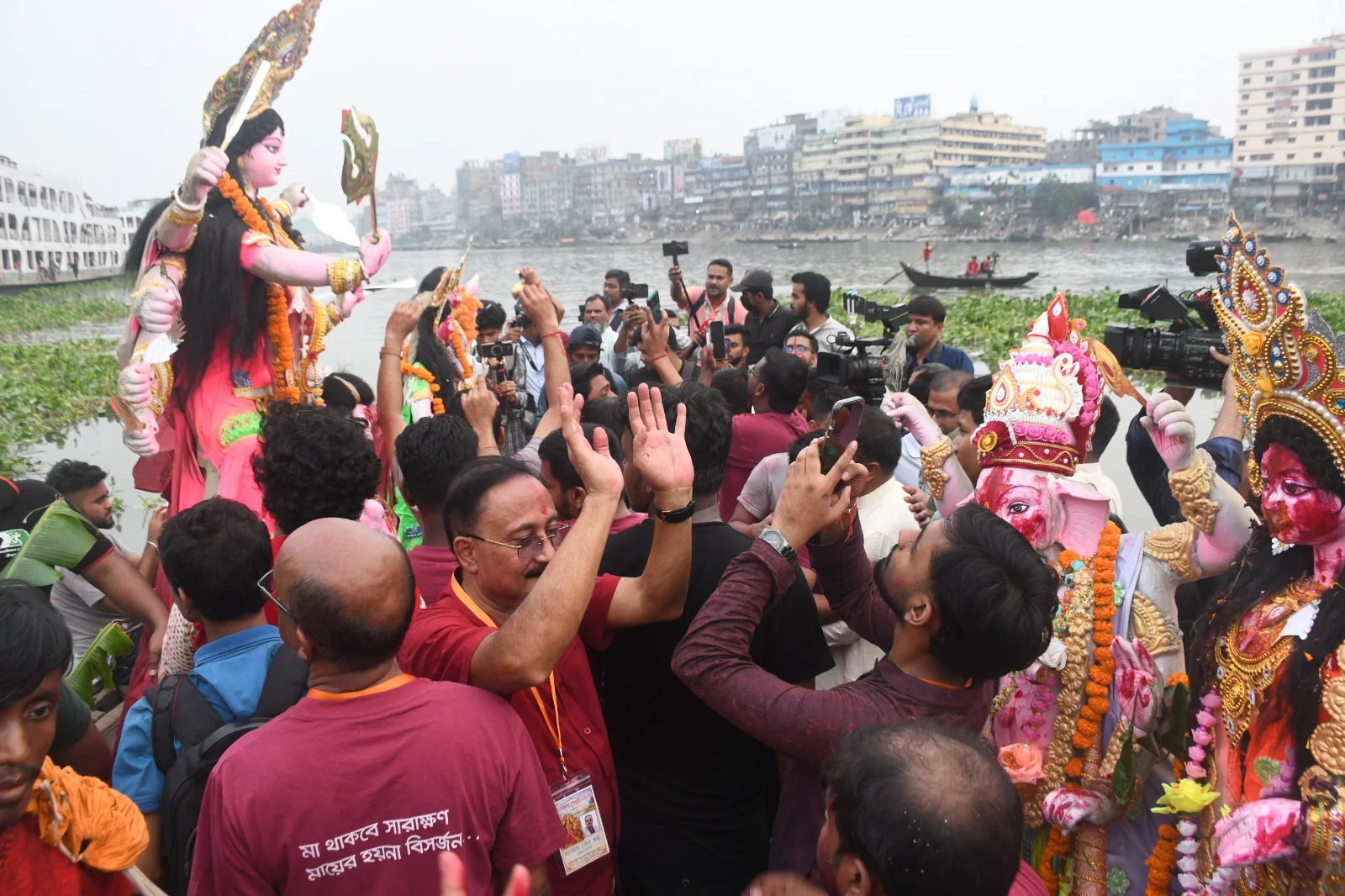
The immersion ceremonies are expected to draw large crowds in the capital, with law enforcement agencies maintaining security and taking steps to ease traffic congestion. Similar celebrations are being held in Chattogram, Rajshahi, Khulna, Sylhet, Barishal and towns across the country.
The festival is also being marked with traditional fervour in Kolkata, the capital of India’s West Bengal state, where Durga Puja is one of the year’s biggest cultural and religious events. Devotees are bidding farewell to the Goddess through Sindur Khela and immersion processions, with crowds gathering at prominent puja pandals and along routes leading to the Hooghly River and other designated immersion sites.
Bijoya Dashami also marks the beginning of a period of exchanging greetings and renewing family and social ties. In Bangladesh, younger family members seek blessings from elders, while relatives, friends and neighbours exchange embraces and traditional sweets, including chomchom, kalojam, sandesh and narkeler naru.
The celebrations reflect the festival’s religious significance as well as its longstanding traditions of community participation and communal harmony.
BOB Post