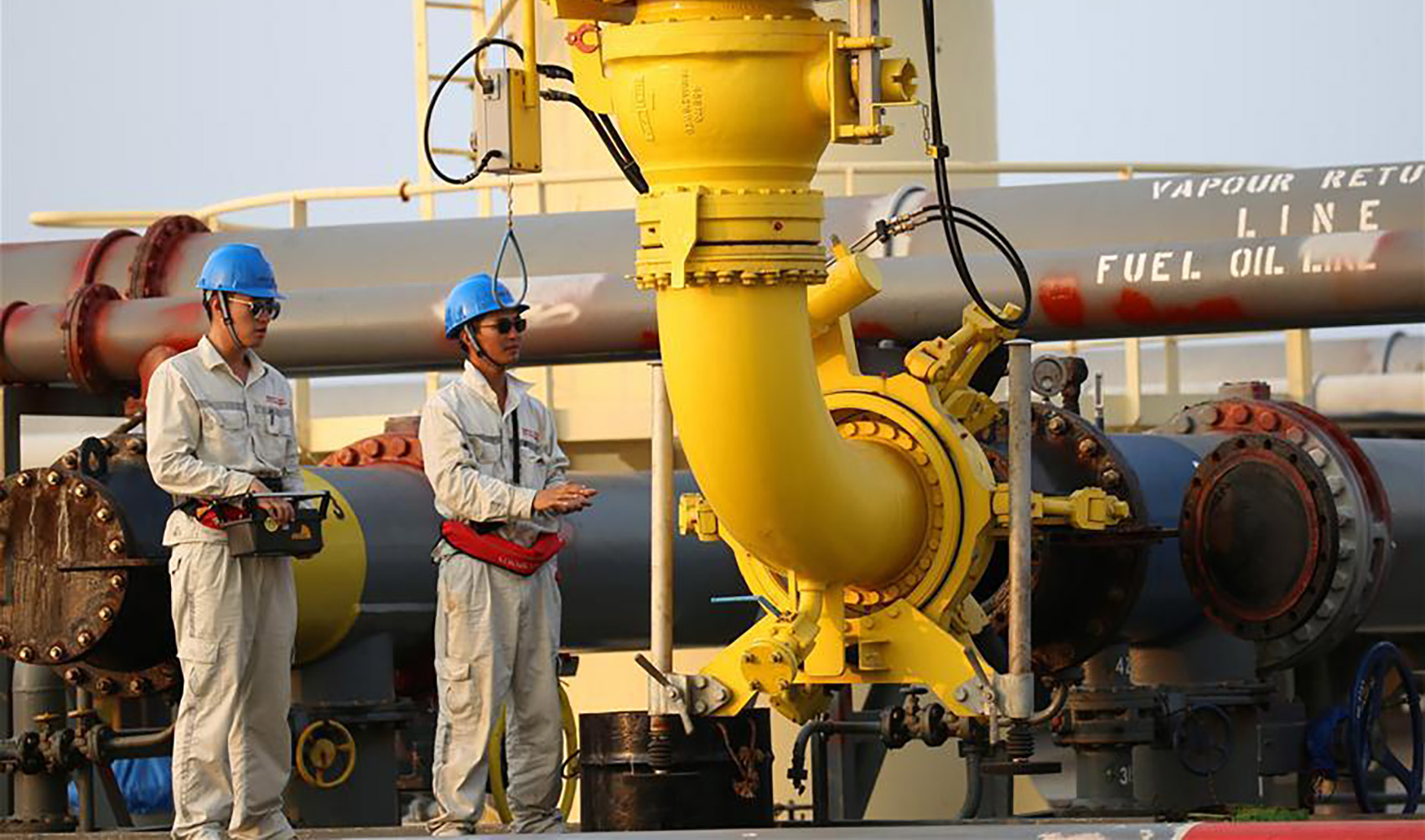
The China-Myanmar crude oil pipeline has transported more than 100 million tonnes of crude oil since it began operations in 2017, strengthening energy supplies to southwest China and providing an alternative route for importing oil from overseas.
The pipeline enters China through Ruili in Yunnan province, near the Myanmar border, before running 618 kilometres to the Yunnan Petrochemical refinery in Anning. It is one of China's four major energy import corridors, linking Myanmar's coast with China's inland energy infrastructure.
According to a CCTV News report on Monday, citing China Oil and Gas Pipeline Network Corp (PipeChina), the pipeline currently carries an average of 35,000 tonnes of crude oil a day. The operator has also introduced intelligent management systems to cope with the challenges of operating across Yunnan's mountainous terrain, including five smart stations and arrangements for emergency response.
Before the pipeline became operational, Yunnan depended heavily on refined oil products transported over long distances from China's eastern coastal regions, said Cheng Yutao, deputy manager of the marketing department at PipeChina's Yunnan branch.
The new route allows imported crude oil to be refined locally, with petroleum products then distributed through the southwest China refined oil pipeline. The arrangement connects crude oil imports, domestic refining and the transportation of finished products within a single supply chain.
The pipeline also offers Beijing an alternative to shipping routes through the Strait of Malacca, a strategic waterway through which much of China's seaborne energy imports pass. According to China Energy News, the Myanmar route shortens the transportation distance by 1,820 nautical miles compared with the route through the strait, potentially reducing shipping costs and exposure to maritime disruptions.
The pipeline's domestic section was commissioned in June 2017, when crude oil transported through the system reached Yunnan Petrochemical after 19 days of transportation within China.
Beyond meeting domestic demand, the project has helped expand energy trade between China and Southeast Asia. Yunnan Petrochemical began exporting gasoline and diesel to regional markets in 2018, with products supplied to Yunnan, Sichuan, Chongqing and Guizhou, as well as overseas destinations.
In April 2019, the refinery exported nearly 50 tonnes of liquefied petroleum gas to Myanmar, marking the first LPG exports to Southeast Asia by China National Petroleum Corp. By June that year, the refinery was exporting more than 10,000 tonnes of refined petroleum products a month on average, using 14 customs clearance points and export routes.
The latest milestone comes as China continues to expand its domestic energy infrastructure. More than 2,500 kilometres of major oil and gas pipelines have been built across the country since the beginning of 2026, bringing the total length of China's major pipeline network to 112,900 kilometres, according to CCTV News.
The network now spans 30 provincial-level regions and the Hong Kong Special Administrative Region, reflecting China's continued investment in energy transportation and efforts to improve the reliability of supplies to inland regions.
BOB Post