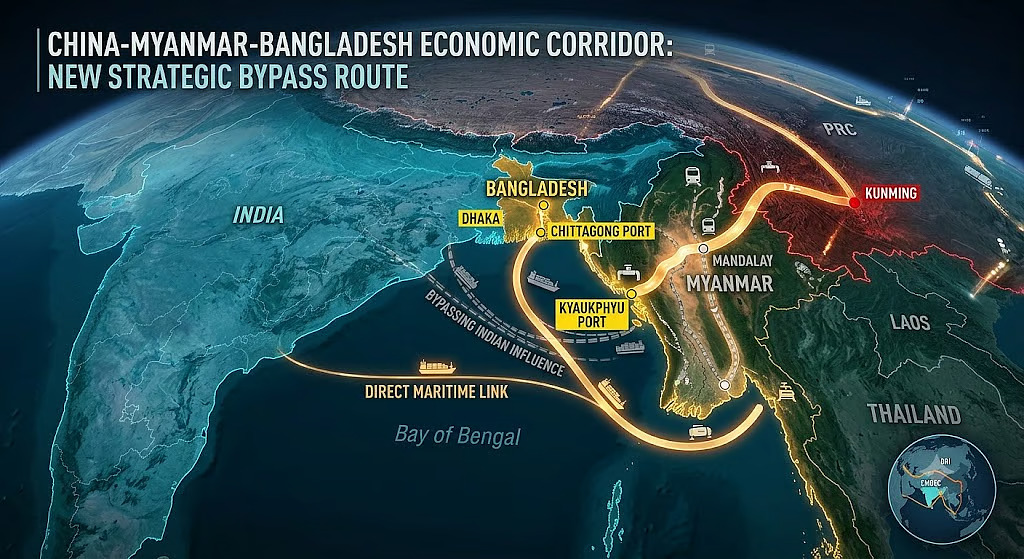
The proposal for a China-Myanmar-Bangladesh Economic Corridor (CMBC) has once again entered public discussion following Prime Minister Tarique Rahman's visit to Beijing. While the project remains uncertain because of Myanmar's ongoing conflict, dismissing it as unrealistic would overlook its long-term strategic value. For Bangladesh, the corridor is not about immediate construction, it is about securing a place in Asia's future trade network.
If realised, the corridor would connect China's Yunnan Province with the Bay of Bengal through Myanmar, placing Bangladesh at the centre of a new regional transport and logistics route.
That offers clear economic advantages. More cargo through Chattogram and Mongla ports would create demand for logistics, warehousing, transport, manufacturing and related industries. Combined with projects such as the Bay Terminal, Matarbari Deep Sea Port and the planned Chinese industrial zone in Anwara, the corridor could strengthen Bangladesh's ambition to become a regional trade hub.
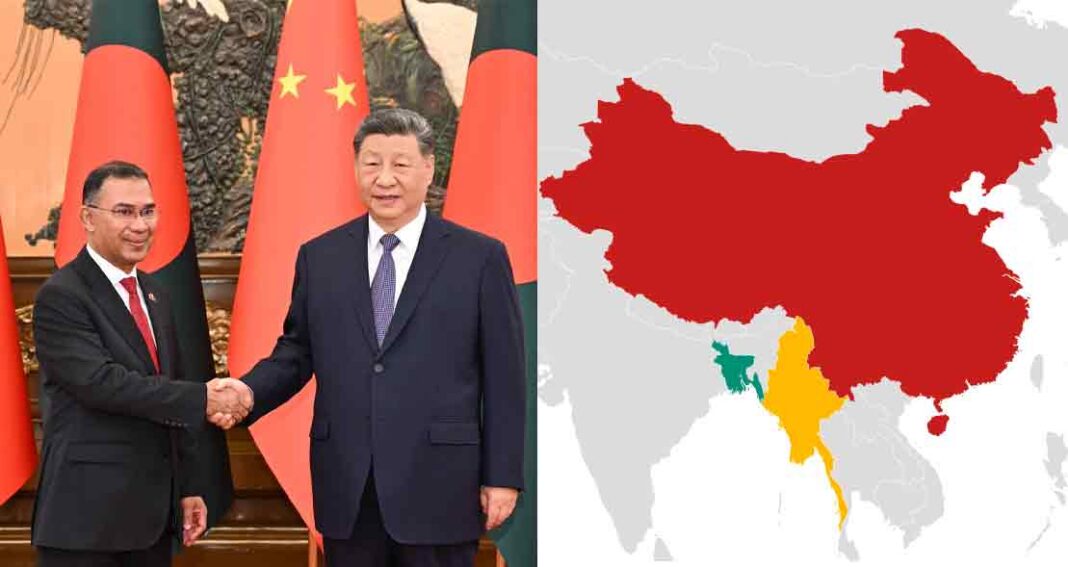
The benefits would extend beyond Bangladesh. China would gain a shorter route to the Indian Ocean, reducing dependence on longer maritime shipping lanes, while Myanmar could benefit from greater trade and infrastructure investment once stability returns. In that sense, the corridor is a regional economic opportunity rather than a zero-sum geopolitical project.
The biggest obstacle, however, remains Myanmar.
Fighting in Rakhine State has stalled major infrastructure projects, delayed investment and created an uncertain environment for long-term planning. Without lasting peace, no transport corridor can operate reliably.
Bangladesh's cautious approach is therefore justified. Dhaka has made it clear that any overland connectivity must be linked to stability in Rakhine, where the Rohingya crisis also remains unresolved. Sustainable connectivity cannot be separated from the safe and dignified return of displaced Rohingya refugees.
That does not mean Bangladesh should lose sight of the bigger picture.
Large connectivity projects often take years even decades to materialise. Bangladesh can continue modernizing its ports, highways and industrial zones, investments that will strengthen the economy regardless of when the corridor becomes a reality.
The CMBC is unlikely to reshape regional trade overnight. But if peace eventually returns to Myanmar, Bangladesh's geographic position gives it a rare opportunity to become the natural gateway between South Asia, Southeast Asia and southwestern China. That is a strategic advantage worth preparing for today, even if the corridor itself belongs to tomorrow.
BOB Post