A blockade by the Central Young Lai Association (CYLA), an Indian civil society organization based in Mizoram, has disrupted the key trade route for goods entering war-ravaged Rakhine State through Chin State’s Paletwa Township. The action aims to pressure the Arakan Army (AA) to withdraw from Chin State.
This blockade adds to the isolation of Rakhine, already experiencing shortages and price surges due to a junta-imposed blockade since the AA began its offensive in November.
Merchants had been relying on the Mizoram-Paletwa route to transport goods from India to Rakhine after the AA seized Paletwa Township in January.
However, some ethnic Chin groups are unhappy with the AA’s control over Paletwa.
In Chin State, the formation of the Chinland Council in December has split the resistance forces into two major groups, each fighting the junta separately.
The Chinland Council, led by the Chin National Army (CNA) since 1988, aims for ethnic equality for the Chin people. Meanwhile, opposing groups have merged as the Chin Brotherhood.
On June 9, the Chin Brotherhood launched Operation Chin Brotherhood to expel junta troops from Myanmar’s poorest state, bordering Bangladesh and India. The operation was joined by the AA and the Yaw Army from Magwe Region.
Simultaneously, the Chinland Council initiated its own military campaign to seize Matupi, resulting in clashes and casualties between the rival Chin groups.
The CYLA announced this week that it had stopped all trade with Myanmar, claiming that aid meant for Rakhine locals was being redirected to the AA, which is attacking Chin communities.
“We have blocked [roads] because of the fighting,” said CYLA chairman HC Vanlalruatpula. “The AA and its Chin Brotherhood allies are attempting to seize Matupi. We told them to stop the fighting, but they didn’t reply.”
CYLA, representing the Lai ethnic Chin tribe from Haka and Thantlang, reportedly supports the Chin National Army. The group has urged locals in Mizoram’s Lawngtlai and Siaha districts to adhere to the blockade.
Previously, CYLA blockaded the route on May 25 over border security concerns but reopened it on June 12 following negotiations with the AA’s political wing, the United League of Arakan (ULA).
“The route is crucial,” stated CYLA’s chair. “It also links ASEAN countries. The ULA must stop fighting and hold talks with us. We will not reopen the road until the fighting ceases. This is our primary demand.”
The blockade is expected to have significant impacts, as northern Rakhine and Paletwa Township heavily rely on Indian goods, including food, pharmaceuticals, and fuel.
“The AA sends goods from Lawngtlai to Rakhine townships like Kyauktaw and Mrauk-U through Paletwa. Chin residents in Paletwa don’t rely on those goods. They have been displaced and can survive on crops even if they don’t have rice,” said a Paletwa resident.
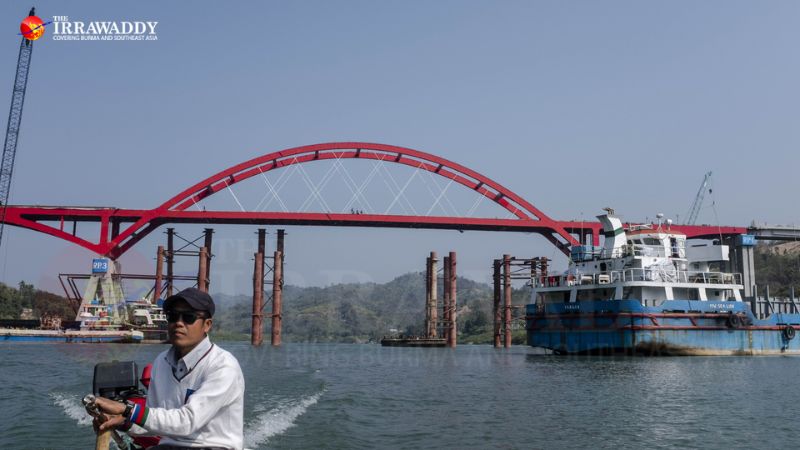
Chin analyst Naisok Thang noted that the blockade will also affect India’s Kaladan multi-modal transit transport project, which aims to connect Kolkata with Rakhine’s capital of Sittwe by sea and link Sittwe’s seaport to Paletwa and Mizoram by road.
“The current trade route links northeast India with Assam, Mizoram, and Meghalaya, covering over 2,000 miles [3,200 km]. The distance is halved using the Sittwe-Paletwa-Mizoram-Kolkata route. The blockade will impact the whole of northeast India,” Thang said.
The AA controls the entire route except for Sittwe. Mizoram State MP Vanlalvena met AA officials in February to discuss the construction of the project’s road section.
The Irrawaddy reached out to AA spokesman Khaing Thukha regarding the CYLA’s blockade but received no response.
BOB Post