

As Myanmar grapples with an economic freefall since the military coup in February, the junta-appointed authorities are attempting to navigate the complex terrain of stabilizing the kyat currency and reviving an economy in disarray. However, their efforts seem to be overshadowed by a blame game that shifts responsibility onto various external factors.
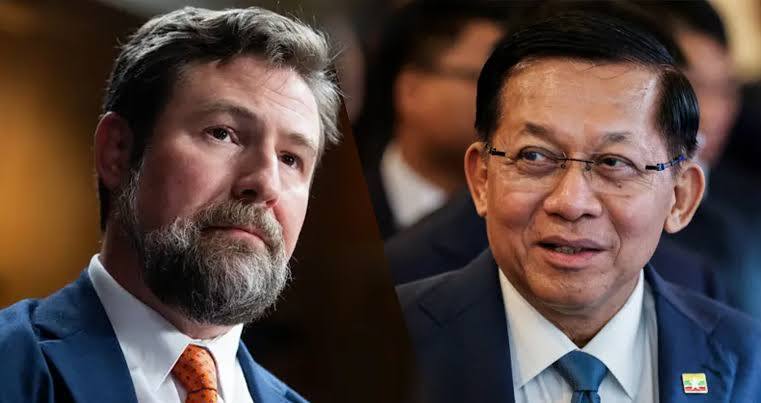
The kyat's alarming devaluation, losing over 60% of its value in September alone, has plunged the nation into economic turmoil. The military-appointed investment minister, while acknowledging the impact of the COVID-19 pandemic, places a significant portion of the blame on alleged sabotage by opponents of the junta, citing foreign elements as co-conspirators.
Inflation has soared to 6.51%, a stark contrast to the 1.51% rate before the military takeover. The foreign reserves stand at 11 trillion kyat, equivalent to $6.04 billion at the official exchange rate, indicating a precarious financial position for the nation.
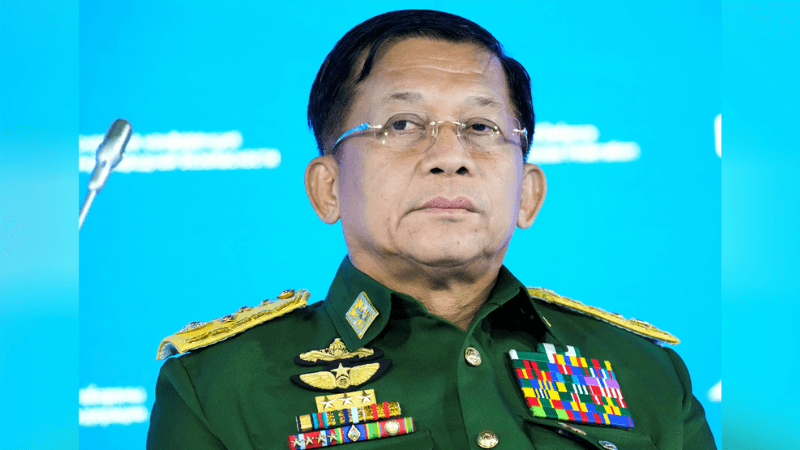
The junta's leader, Min Aung Hlaing, has delegated the task of analyzing the economic downturn to four ministries, with their findings placing blame squarely on the National League for Democracy (NLD). However, this finger-pointing narrative appears to be a familiar tactic from a leader who, instead of addressing mounting military and economic challenges, seeks refuge in blaming external entities.
As the junta boss expands his list of supposed culprits, it now includes "foreign drone experts," bank staff supporting the National Unity Government, and even the citizens of Myanmar themselves. Min Aung Hlaing's accusations against senior ex-general Thein Sein, attributing the economic slump to his quasi-civilian government's actions from 2011 to 2016, showcase a desperate attempt to deflect responsibility.
Despite seizing power through a coup, Min Aung Hlaing accuses ethnic armed organizations (EAOs) of attempting to overthrow the government with force. This narrative conveniently ignores the junta's loss of administrative control over vast territories, particularly after the Brotherhood Alliance launched Operation 1027 on October 27.
The blame extends further to ethnic groups like the Kachin Independence Army (KIA), accused of involvement in the narcotics trade and collaborating with "foreign experts." Min Aung Hlaing's accusations against the KIA, along with blaming the ethnic Rakhine Arakan Army and the Karen National Union, point to a pattern of scapegoating rather than addressing the root causes of the crisis.
In a surprising turn, Min Aung Hlaing shifts blame to the ousted NLD government for Myanmar's economic challenges, particularly singling out the administration of Thein Sein. This redirection of responsibility contradicts earlier engagements where Min Aung Hlaing sought advice from former generals, now painting them as responsible for the country's woes.
The economic downturn is further complicated by allegations against bank staff, highlighting a reluctance to acknowledge the civilian resistance. Min Aung Hlaing's finger-pointing at the citizens of Kawlin Town suggests an attempt to divert attention from the junta's loss of control over key regions.
The junta's blame game reveals a leadership more focused on evading accountability than addressing the deepening economic crisis. As Myanmar faces unprecedented challenges, the urgent need is for transparent governance and responsible leadership rather than a relentless pursuit of external scapegoats.
BOB Post